

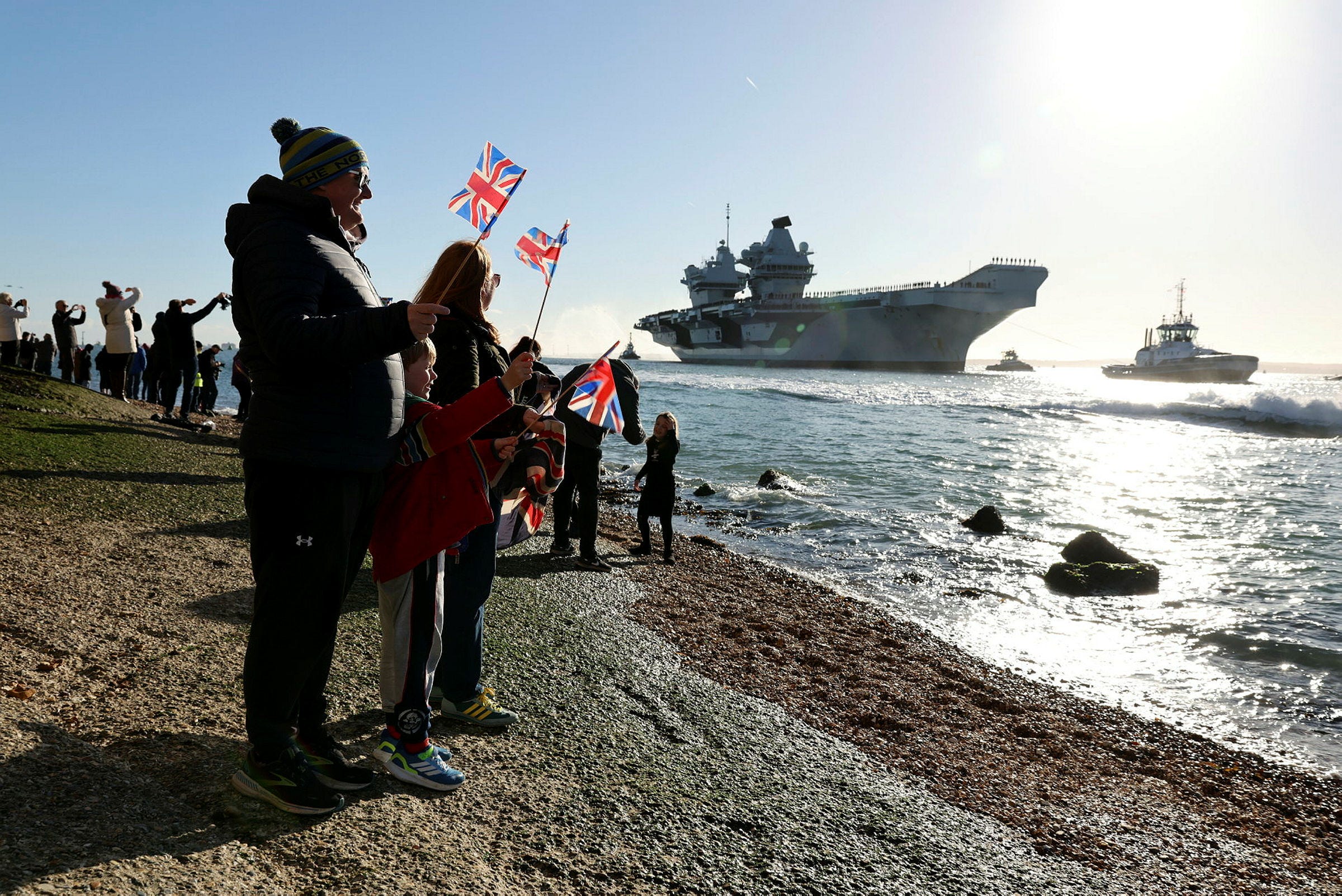
Future Navy usually focuses on AI, digital command systems, and the emerging technologies reshaping maritime operations. But the world is changing faster than the platforms we build. No amount of future technology will matter if we do not have the sovereign industrial base, political will, and strategic freedom to build, crew, and sustain a fighting fleet. At sea, autonomy begins not with algorithms, but with steel, supply chains, and national choices.
That reality has been sharpened recently by a sobering intervention from the Royal United Services Institute. In a newly released Global Security Briefing, former Deputy Prime Minister Sir David Lidington made clear that the risk facing Europe is no longer hypothetical. The United States is shifting its centre of gravity toward the Indo‑Pacific, and European security is no longer guaranteed to sit at the top of Washington’s priority list. This is not just about Donald Trump or one electoral cycle. It is about a structural change in how the United States views its global obligations.
The Greenland episode is emblematic rather than exceptional. When access, leverage, and sovereignty become bargaining tools within an alliance, dependence stops being a convenience and becomes a liability. As senior figures now acknowledge openly, Europe and the UK may need a decade to replace capabilities that the United States currently provides as a matter of course. The uncomfortable truth is that we have not started that clock seriously enough.
Against that backdrop, this piece is a deliberate step away from the usual Future Navy focus on AI‑enabled command, autonomous systems, and digital transformation. Those things matter. But they rest on foundations that are far weaker than we like to admit. The question is no longer whether advanced technology can transform naval warfare. It is whether Britain retains the freedom to deploy and sustain power at sea without permission.
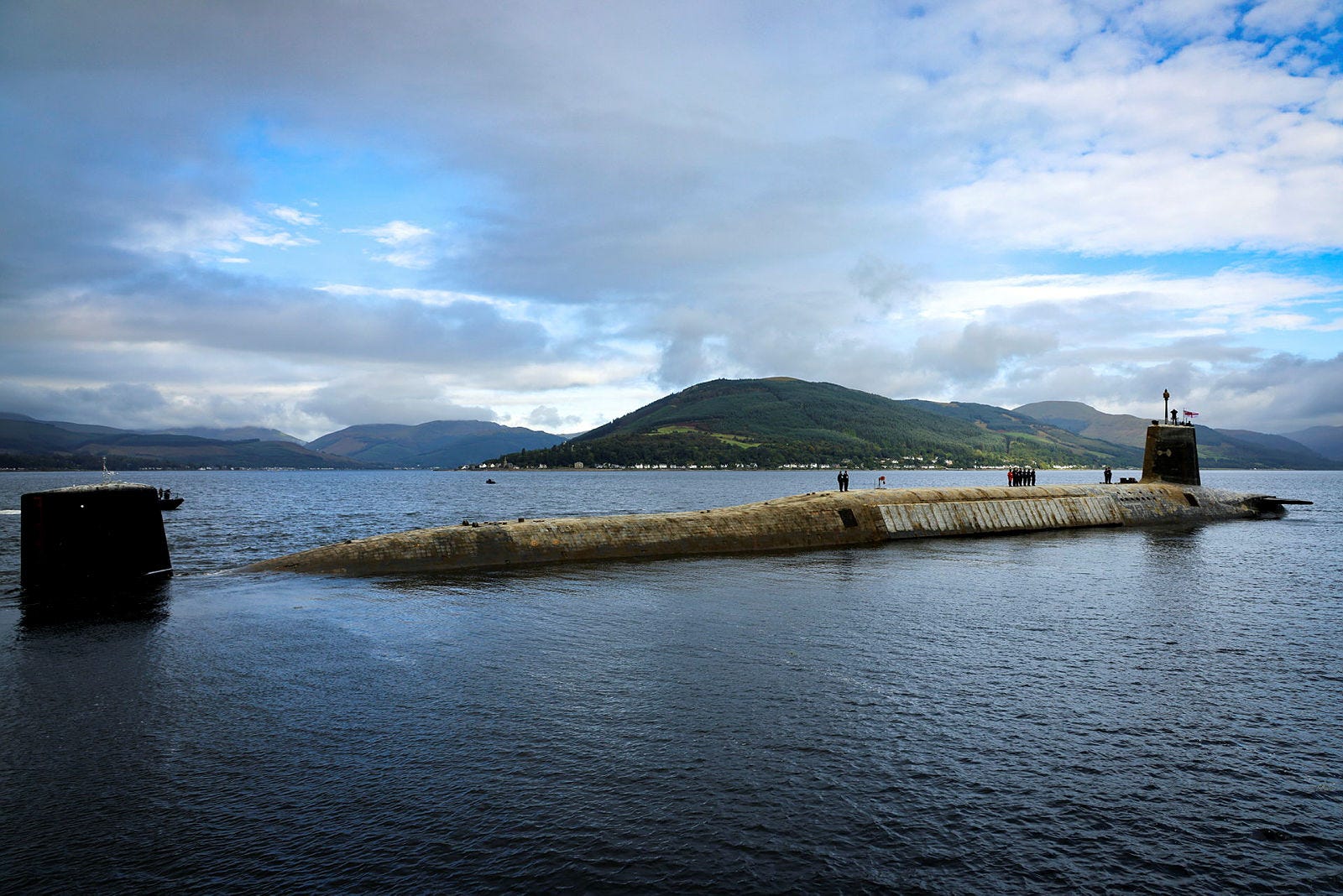
1. A Nuclear Deterrent Tied to Washington
We can repeat the phrase “independent nuclear deterrent” as often as we like, but operational reality tells a different story. Britain’s Trident missiles are leased from a United States stockpile. They are maintained, refurbished, and stored at Kings Bay in Georgia. Our warheads are designed to fit U.S. missile bodies and rely on shared technical standards. Guidance, targeting data, and satellite dependencies are inseparable from American infrastructure.
The system only works because Washington allows it to work. That is not independence. It is a political dependency that we have chosen to normalise. In most scenarios, it is stable. In a world of transactional alliances, it is also a strategic vulnerability. No other core element of British defence is so exposed to the policy choices of another state, yet it remains largely undiscussed in public.
2. Warships Powered by Foreign Code
Modern Royal Navy warships are digital platforms as much as steel hulls. Combat systems, navigation, engineering control, and logistics increasingly sit on commercial software stacks. In practice, that means Microsoft operating systems, VMware virtualised environments, and U.S.-controlled licensing and update regimes.
This is not a theoretical cyber debate. Imagine a carrier or amphibious group operating under heightened tension in the North Atlantic or Baltic, while access to U.S.-controlled GPS correction services, software updates, or secure cloud‑linked services is degraded or delayed. Navigation accuracy drops. Weapon alignment becomes less precise. Secure data exchange slows or fragments. The platform still floats, but its effectiveness erodes quickly.
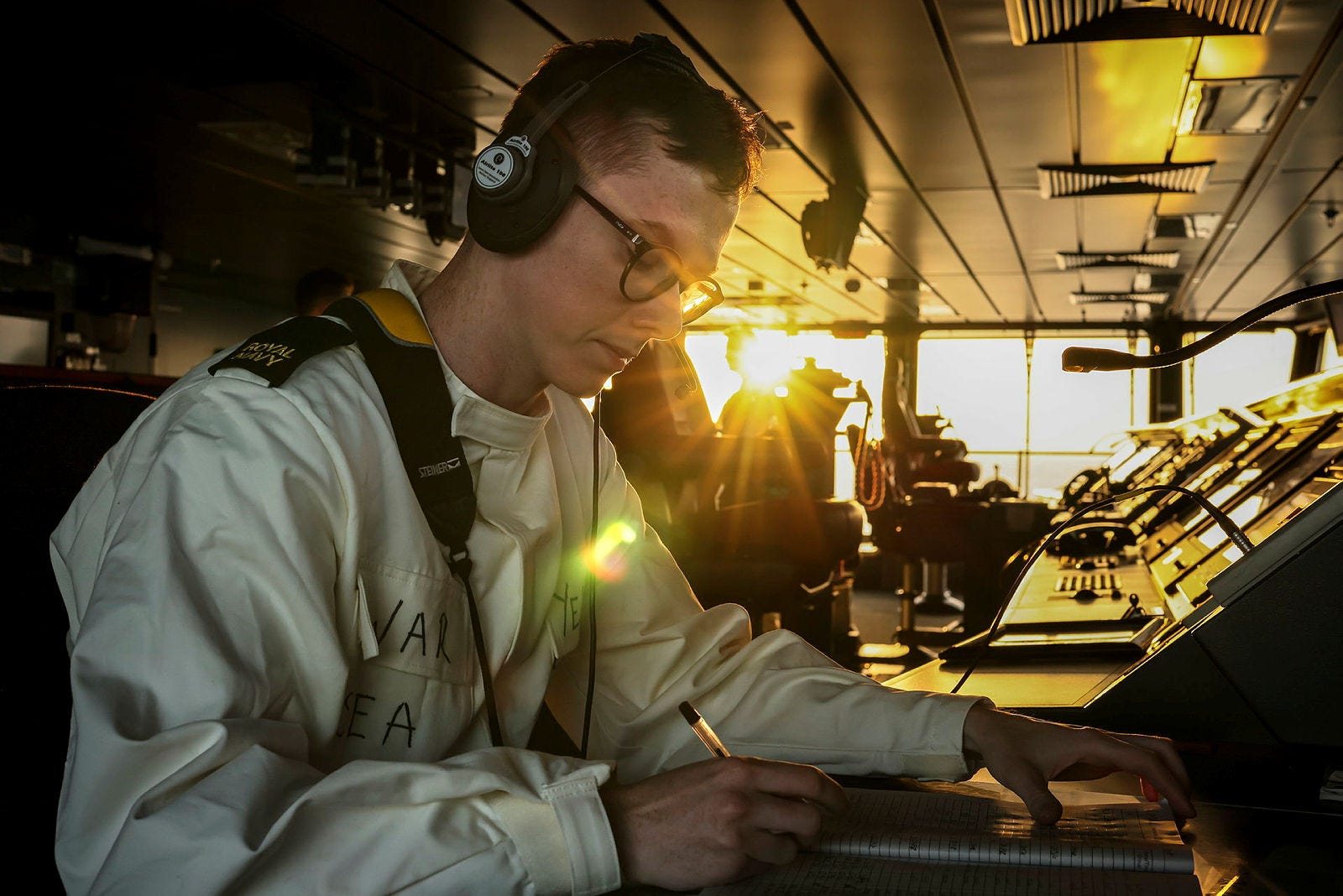
These systems were adopted for speed and cost efficiency, not strategic resilience. Yet we have built no serious sovereign alternative, and little contingency planning for a future in which access is constrained by politics rather than adversaries.
3. A Shrinking, Ageing Fleet
The Royal Navy now operates with fewer than twenty escorts, and that headline number hides how many are actually available at any given moment. Type 23 frigates are beyond their intended service lives, kept going by skill and determination rather than margin. Type 45 destroyers have spent years in remediation for fundamental power and propulsion flaws.
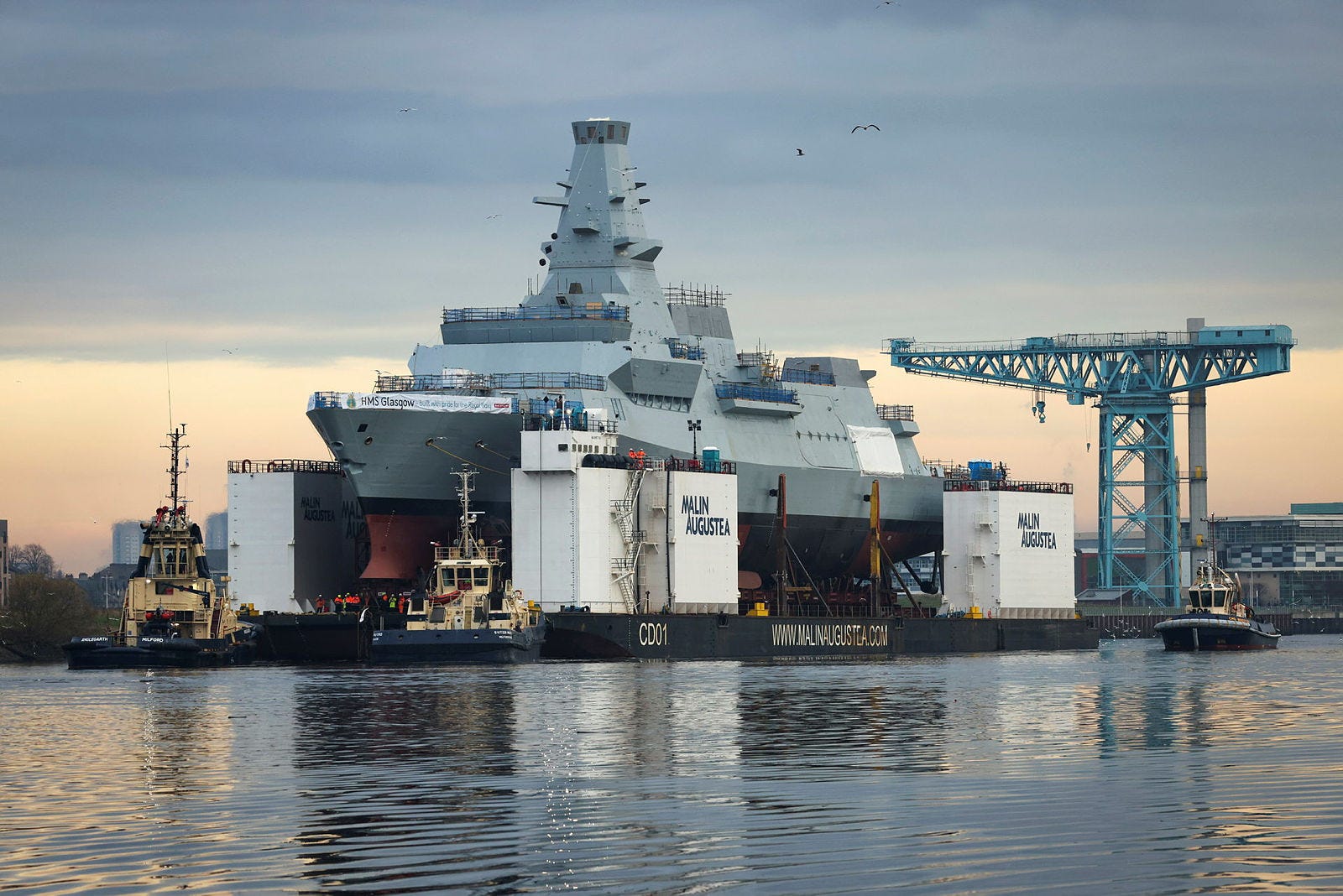
New ships are coming, but far too slowly. The first Type 26 began construction in 2017 and will not be operational until the late 2020s. Type 31 is faster, but still does not close the gap created by retirements. In the meantime, commitments are met by stretching deployments, accepting risk, and quietly gapping tasks. This is not a strategy. It is a managed decline.
Why geography now matters again
This is not an abstract force‑planning issue. Last year, Future Navy examined the re‑emergence of the North Atlantic as a contested front line, stretching from the Greenland–Iceland–UK gap into the wider Atlantic. That analysis argued that Europe would increasingly be required to hold this space itself: monitor undersea cables, track submarine movements, and sustain deterrence long before U.S. reinforcements could arrive.
What has changed since then is not the geography, but the politics. The Atlantic Bastion concept assumed that allied solidarity would hold under pressure. Recent events suggest that the assumption now needs stress‑testing. If access, support, or reinforcement becomes conditional, the burden of early action falls squarely on European navies, including the Royal Navy, which is already stretched thin and structurally dependent.
4. An Industrial Base on Life Support
Strategic autonomy cannot exist without industrial resilience. In 2025, construction of vital Royal Fleet Auxiliary solid support ships nearly stalled because the yard could not afford steel. That should have triggered an alarm across the government. Instead, it was treated as an awkward procurement problem.
British shipbuilding today depends on a narrow set of yards, fragile supply chains, and intermittent political attention. Foreign ownership and emergency financing have become substitutes for long‑term planning. A serious maritime power does not discover its production limits in the middle of a crisis. We are discovering them in peacetime.
5. Patchwork Fixes Are Not a Strategy
The Royal Navy innovates: autonomy, modularity, digital experimentation. Yet these sit atop major structural weaknesses. Dependencies in deterrence, software, build rates, and industry can’t be solved by innovation alone.
The reality is, a single political shock—whether in Washington, the global economy, or a critical supplier—could cascade rapidly through these dependencies. That is not resilience. It is exposure.
6. What Needs to Change
End strategic complacency. Defence planning must assume constrained U.S. support as a credible scenario, not an awkward hypothetical.
Rebuild sovereign supply chains. Steel, propulsion, energetics, and critical components cannot be left to fragile commercial arrangements.
Reduce software dependency. Sovereign or allied alternatives to U.S.‑controlled operating environments must become a funded priority, not an aspiration.
Accelerate fleet renewal. Build rates must reflect strategic demand, not Treasury convenience.
Be honest with the public. Sovereignty costs money. The illusion of independence is cheaper, but far more dangerous.
Final Word
This is not an argument against alliances or technology, but one for realism: if Europe and the United States continue to diverge strategically over the next decade, Britain’s current structure will limit its freedom of action at sea.
As a veteran, I served in a Navy that acknowledged limits and planned for them. Today, rhetoric about global influence masks dependence on what we do not control. Hulls, supply chains, and sovereignty are still vital.
Until we address this honestly, we risk a future navy that appears advanced but operates under someone else’s shadow.
Further reading
Atlantic Bastion: Europe’s New Front Line — Future Navy analysis of the North Atlantic as a contested battlespace
The Digital Ocean: Securing the Invisible Fleet — on undersea infrastructure, cables, and maritime resilience
The Chain of Command Meets the Autonomous Ship — why AI and autonomy depend on trusted command and sovereign systems
Can Europe build a credible nuclear deterrent without the US? — UK Defence Journal
Keywords: Royal Navy, strategic autonomy, defence resilience, Trident, shipbuilding, Atlantic Bastion, naval sovereignty, UK defence industry
As my countrymen have pointed out, we here in Canada are starting to rejuvenate our armed forces, with many of the same sovereignty constraints facing the RN. This is exactly what Mark Carney was saying in his Davos speech. We have to diversify our defence supply chain away from the American hegemon. So if our two nations can lump ourselves among those middle powers, dependence on likeminded middle powers could give all of us some relative independence that over reliance on a global power cannot provide us. Certainly there are energy and mineral sources that the UK does not have but could be provided by Canada which has been and continues to want to be a reliable ally and partner with trusted nations.
No