

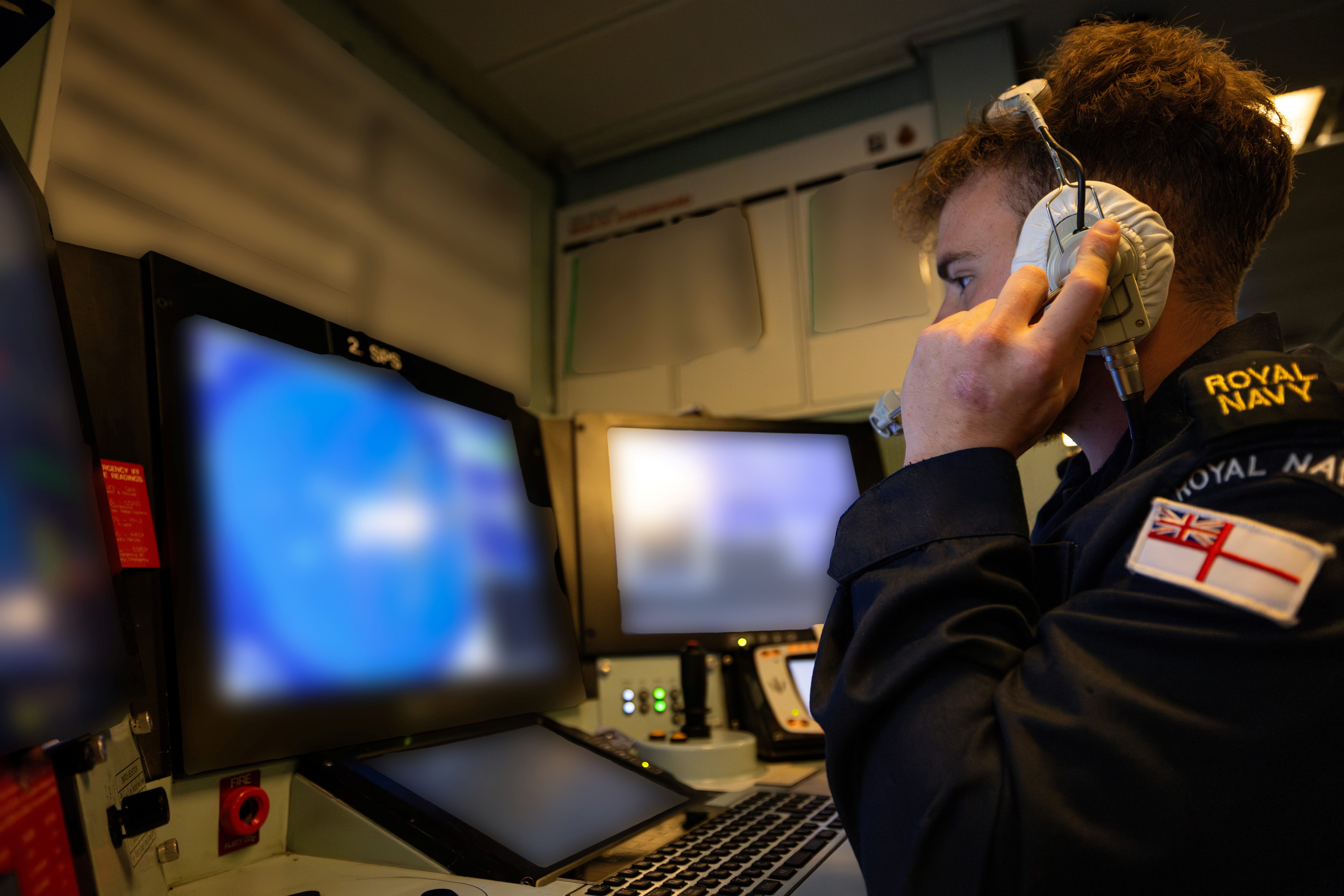
For decades, the Royal Navy has balanced two competing instincts: the discipline of command and the freedom to fight. It is a tension that defines every captain at sea. But the rise of autonomous systems, from drone swarms to digital copilots, is forcing that equilibrium to shift.
This issue extends beyond theory. The Royal Navy has traditionally been cautious about loosening its chain of command. Unlike the U.S. Navy’s “command by negation” doctrine, where units are free to act unless a flag officer intervenes, the Royal Navy follows a “command by direction” approach, which involves maintaining closer control over decision-making. While the commanding officer bears responsibility for actions taken, operational accountability also flows upward through the chain of command to the flag level.
That instinct can be valuable in many respects, including accountability, professionalism, and the trust that flows downstream. But it can also slow the adoption of autonomy and AI-enabled command tools that rely on decentralised decision-making. The result is a quiet cultural collision: the digital age meeting a centuries-old structure of authority.
Rewriting the Operating Code
Automation is already changing what it means to command. Combat management systems such as Thales’ TACTICOS, now fitted to the Type 31 frigate, blend human oversight with machine-speed data fusion. The goal is not to replace the watch officer, but to extend their reach: to run multiple simultaneous tracks, evaluate sensor data more quickly, and pre-calculate courses of action long before human reaction would allow.
It is command through collaboration rather than delegation. But it demands a new mindset.
The First Sea Lord, General Sir Gwyn Jenkins, has been blunt about that need. His “four-year readiness” mandate calls for innovation at pace and automation across the surface, subsurface and air domains. Speaking aboard HMS Prince of Wales earlier this year, he said the Navy must prepare to fight a war “we hope never to fight”, by building a fleet that can learn, adapt and self-organise.
That same thinking was evident when he spoke recently on The Agile CEO podcast, recalling how he applied Scrum principles as head of naval strategy in 2019 to break down rigid hierarchies and expedite decision-making cycles. What began as an experiment in policy planning is now reshaping the operating model of the fleet itself.
From Command to Collaboration
This shift is not confined to technology. It is redefining the roles of command, control, and communication, the old C2 triad that underpinned every naval operation from the Battle of the Atlantic to the Gulf War.
Tomorrow’s task groups will rely more on collaborative architectures than on vertical authority. A frigate’s combat system will coordinate directly with its uncrewed escorts, and airborne sensors will provide information to AI-driven threat evaluators before human approval is sought. Command will become a matter of orchestration, synchronising both human and machine actors across a dynamic battlespace.
The captain’s expertise will involve less issuing orders and more managing the tempo: knowing when to trust the algorithm, when to intervene, and when to step back entirely.
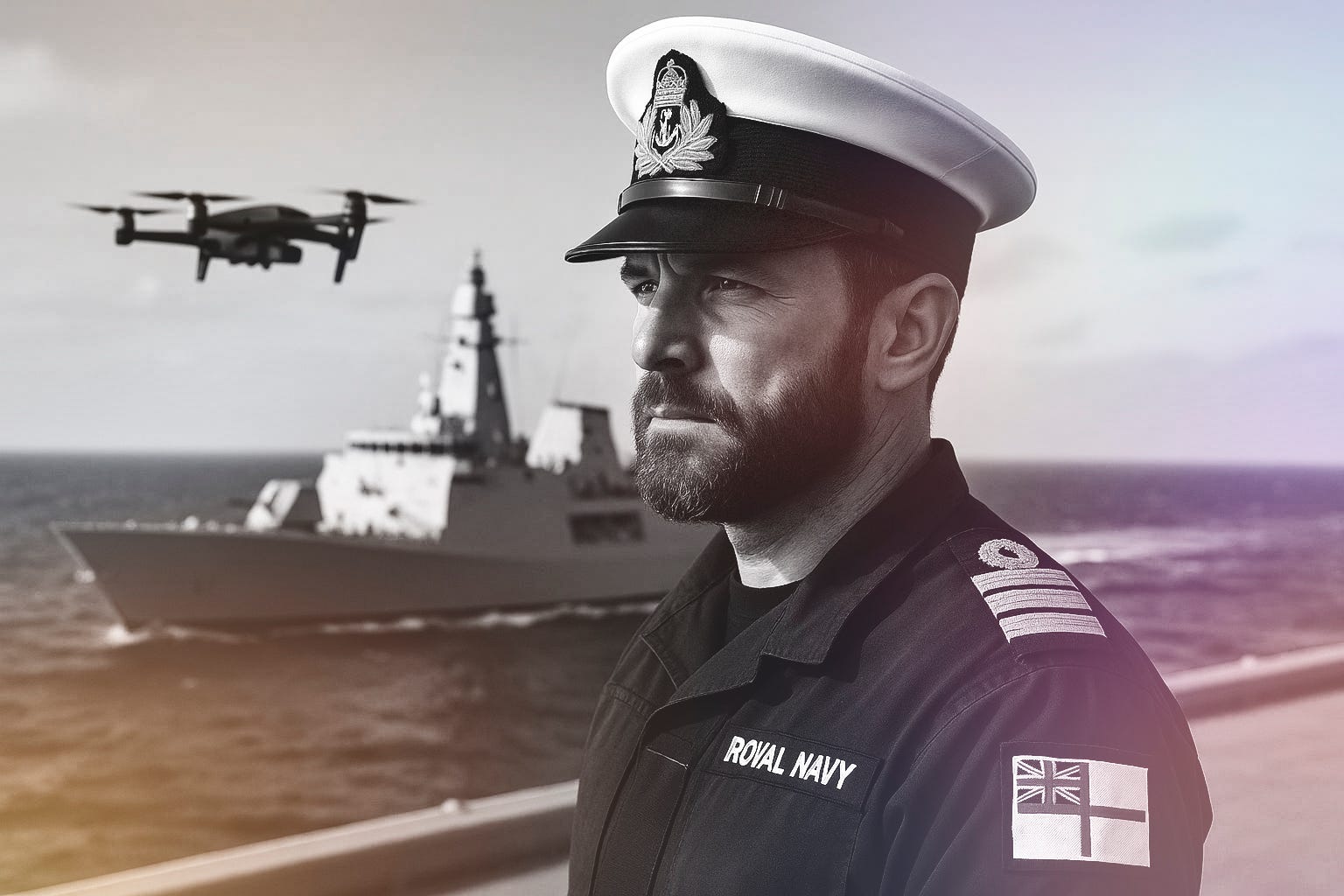
If Sir Gwyn Jenkins and his generation of digital reformers succeed, the Royal Navy that sails at the end of this decade will look profoundly different from the one that entered it. The signs are already there, in his four-year warfighting readiness plan, in the new scaling agency taking shape in Portsmouth, and in the foundations laid by Brigadier Dan Cheesman during his tenure as the Navy’s first Chief Technology Officer.
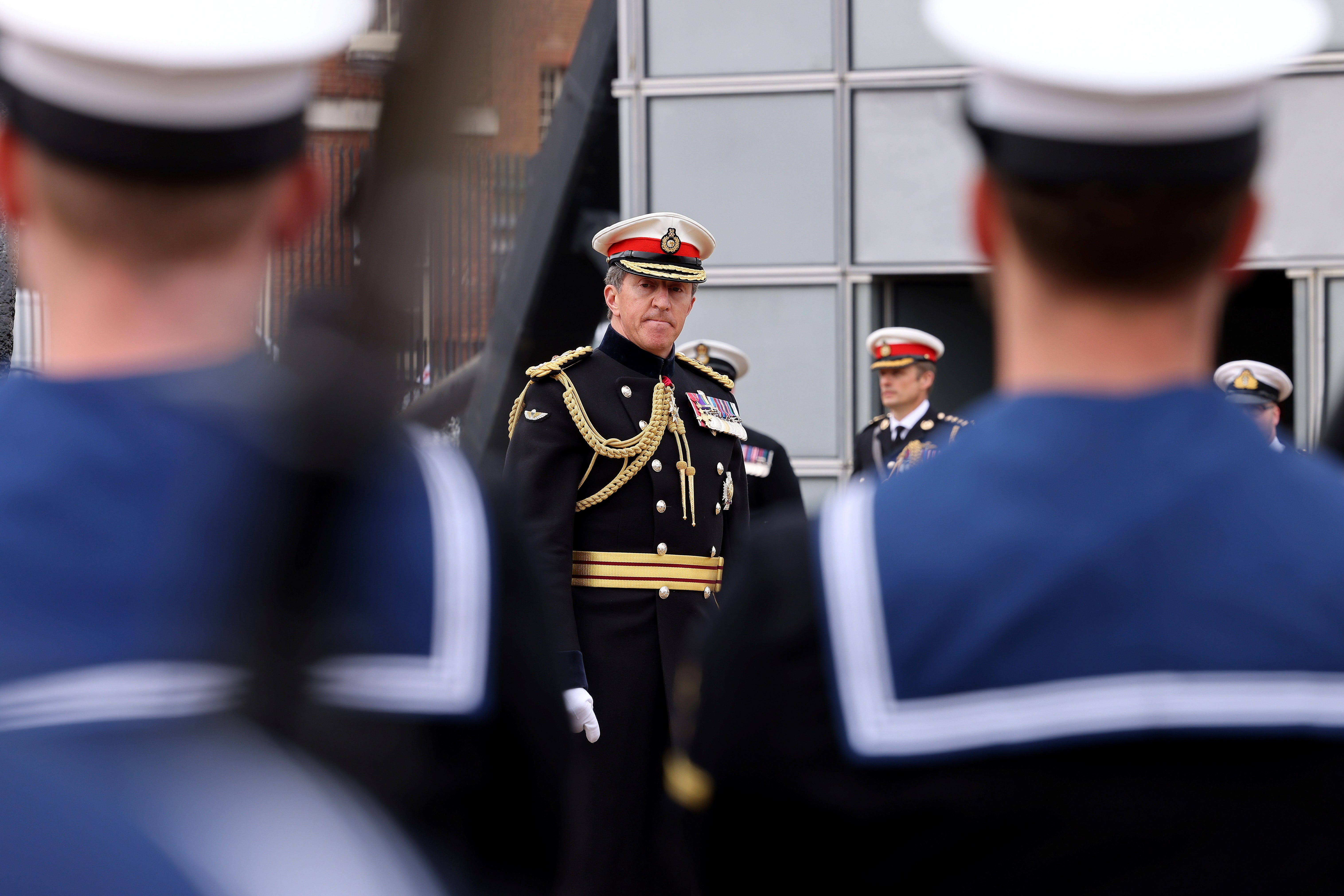
Together, they are challenging the very structure of command. The fleet that emerges will be hybrid: part-human, part-autonomous, fully networked. Uncrewed escorts and underwater sentinels will orbit lean-manned core ships, tied together through open combat systems such as TACTICOS and the MAPLE architecture that Cheesman championed.
Warfare teams will look less like watch bills and more like agile delivery cells, operating across domains and ranks, with mission intent rather than procedural control. Command will shift from supervision to orchestration, synchronising human judgement with machine persistence.
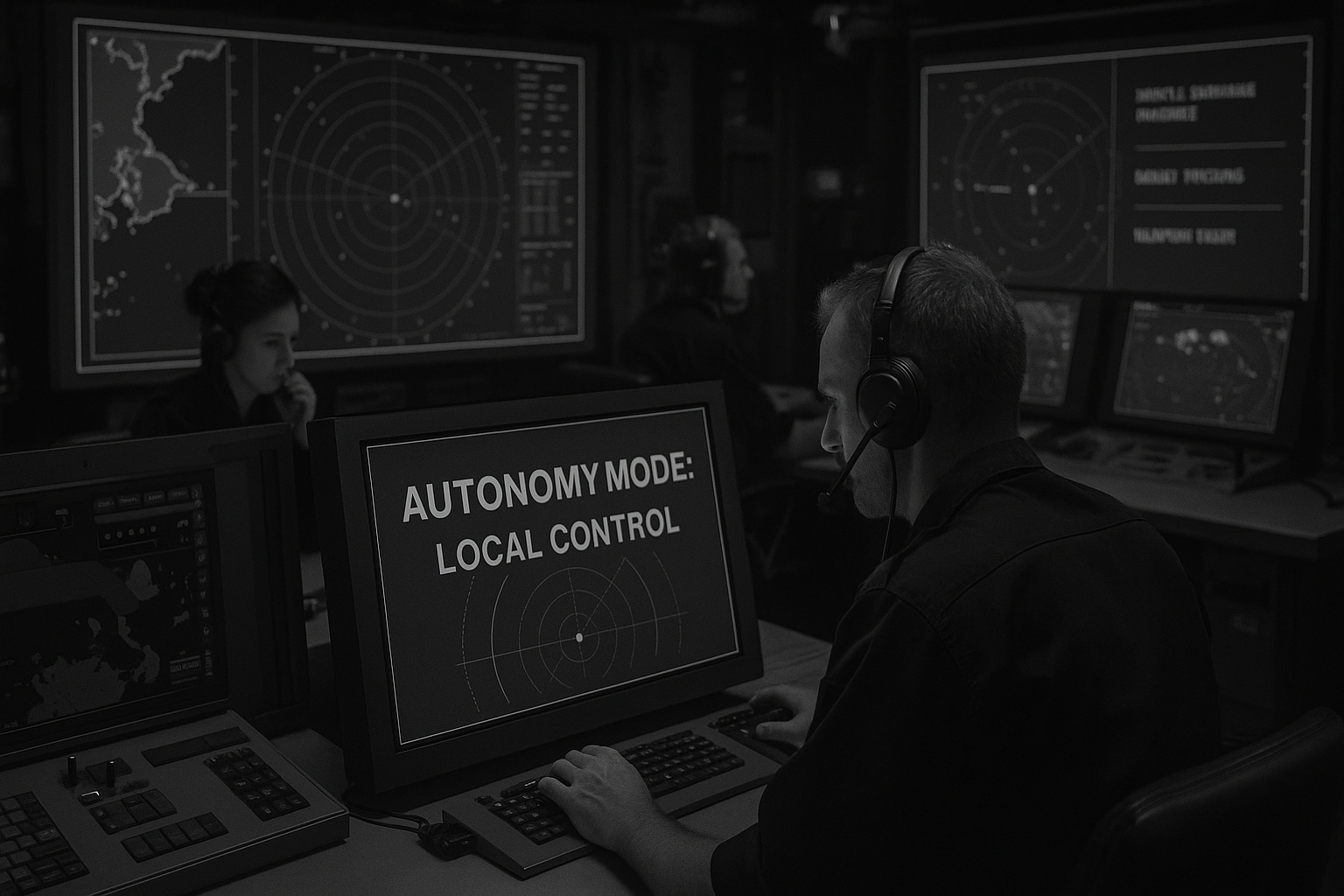
In this model, the operations room becomes a decision theatre: human operators and AI copilots work side by side through continuous sprints of assessment, rehearsal, and refinement. Leadership shifts from a hierarchical structure to a flow-based approach; commanders shape the tempo rather than issuing orders down a chain of command.
If Jenkins accomplishes even a fraction of this, the Royal Navy will have transformed itself into a learning organisation, not merely a fighting force; a fleet capable of outthinking and out-iterating its adversaries as much as outgunning them.
Further Reading
The Alan Turing Institute – AI Won’t Replace the General (2025)
BAE Systems – Exploiting the Underwater Battlespace (2025)
Royal Navy DSEI Speech – General Sir Gwyn Jenkins (2025)
Navy Lookout – First Sea Lord Sets Ambitious Targets for Transformation
Royal Navy aims for jet-powered carrier-launched drone at sea within two years - Navy Lookout, Oct 2025
Early confirmation of the First Sea Lord’s “hybrid air wing” vision, outlining plans for a catapult-launched, jet-powered uncrewed aircraft to operate from the Queen Elizabeth-class carriers by 2027. The project marks the first step toward the integrated air wing of crewed and uncrewed platforms described in Jenkins’s 100-Day Plan. Read on Navy Lookout