

The Royal Navy is investigating whether its six Type 45 destroyers should remain in service longer than originally intended. As Navy Lookout recently reported, the question is increasingly relevant because the ships are undergoing substantial investment just as their anticipated retirement period approaches.
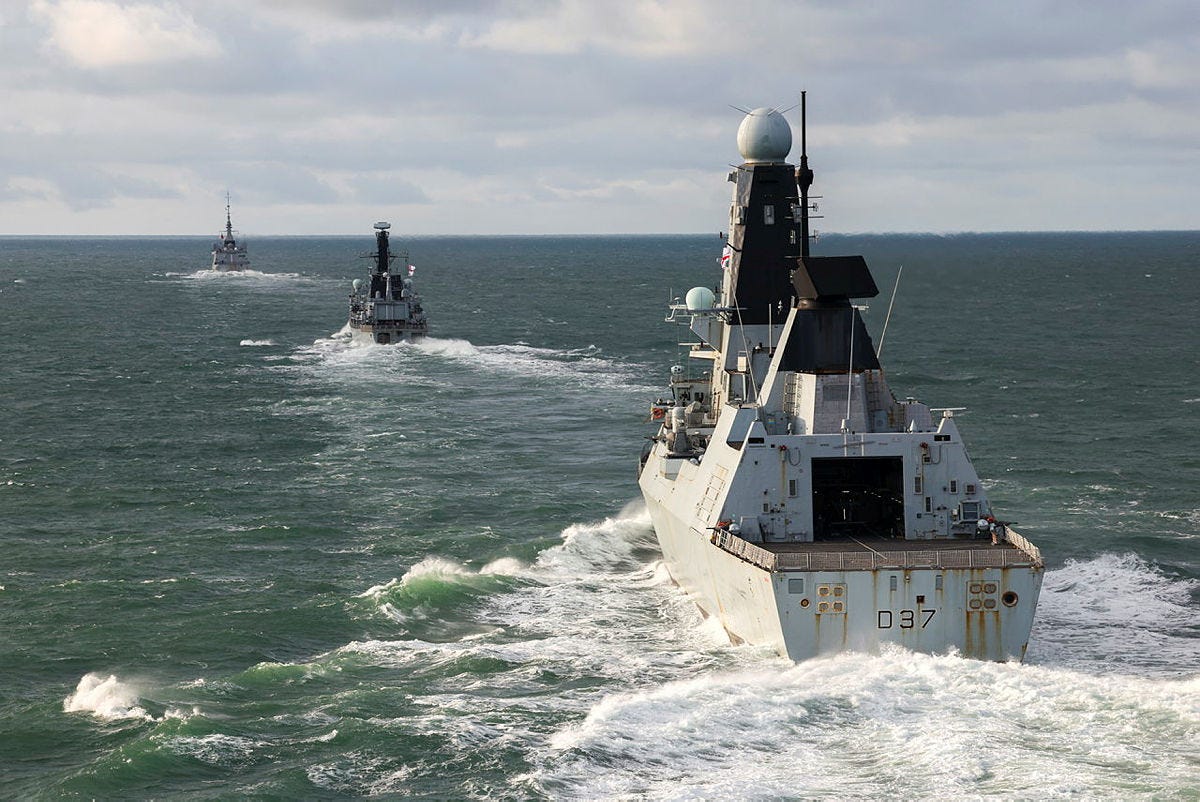
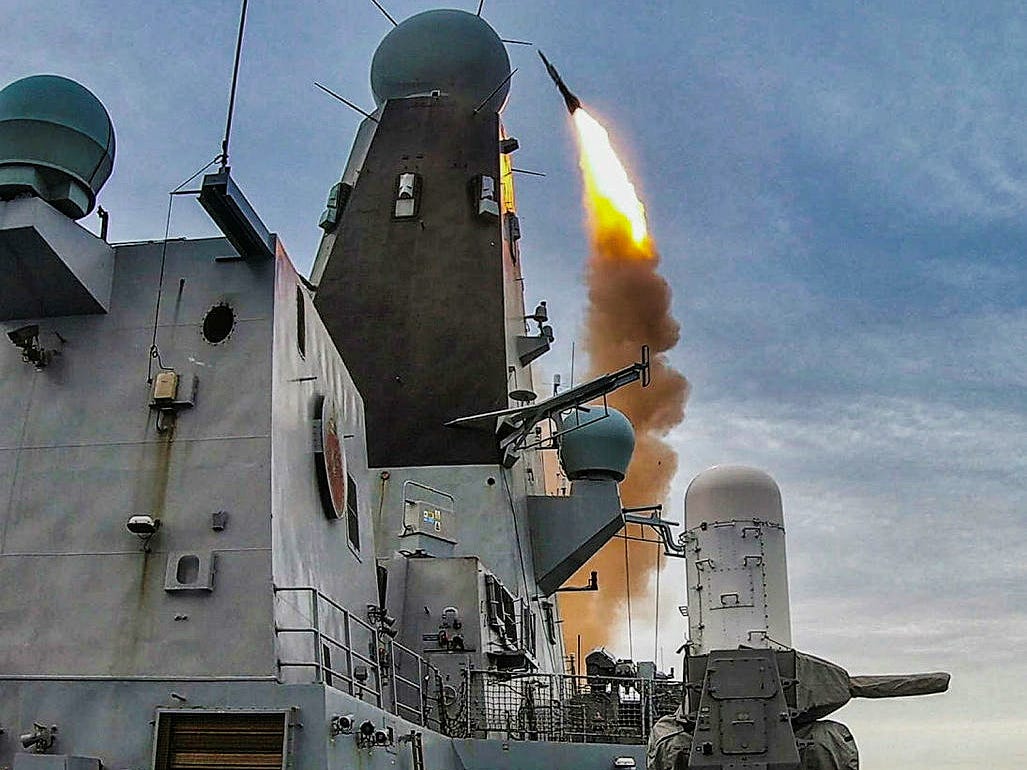
The Type 45 fleet is receiving the Power Improvement Project (PIP), an additional 24 Sea Ceptor (CAMM) missile cells and the Sea Viper Evolution (SVE) ballistic missile defence upgrade. These improvements are not expected to reach Full Operating Capability across all six ships until autumn 2032. With the class’s retirement generally expected to begin in the mid-2030s, extending at least some ships into the 2040s could allow the Navy to extract considerably more value from that investment.
On the surface, this is familiar: warships are expensive, defence replacement programmes generally take longer than expected, and existing ships are upgraded and given extensions to their operational lives to bridge the gap. The Royal Navy has been in this situation before; the extended operational life of the Type 23 frigates is a good example.
But this time, something more interesting could be happening. Recently, when discussing the matter with the Council on Geostrategy, General Sir Gwyn Jenkins may have given his clearest explanation to date of how the Royal Navy intends to replace the Type 45. The solution won’t be another destroyer.
Jenkins gave an unusually direct account of the earlier course of the Type 83 programme, saying the proposed successor would be ten metres longer, a couple of thousand tonnes heavier, would need another hundred people, and would cost several billion pounds more. It was the traditional naval procurement cycle taken to its logical end: replacing an increasingly complex warship with an even larger and more complex one.
Jenkins aims to break that cycle. According to him, the future maritime air-defence capability will be based on a smaller and less complicated crewed warship working with uncrewed escorts. These vessels would provide extra magazine capacity, increase sensor range, and carry electronic warfare or decoy equipment. Each air-defence capability would thus become, as Jenkins puts it, a “mini task force in its own right”.
The way in which we should consider extending the Type 45 is therefore different. The destroyers may not merely have to survive until their replacement comes. Maybe they need to survive long enough to help in creating it.
The Replacement for a Destroyer Is No Longer Necessarily a Destroyer
For over a century the majority of naval capability has been concentrated on individual platforms. A destroyer incorporates within one hull sensors, weapons, communication systems, command facilities, propulsion, personnel and protection. Whenever the capability is improved, there is a tendency to upgrade the ship: better radar requires more electrical power and more cooling, a greater number of weapons calls for more space, more equipment increases displacement, and greater complexity may call for more people as a result of which the costs go up, fewer ships can be afforded, and ever greater capability becomes concentrated in each hull.
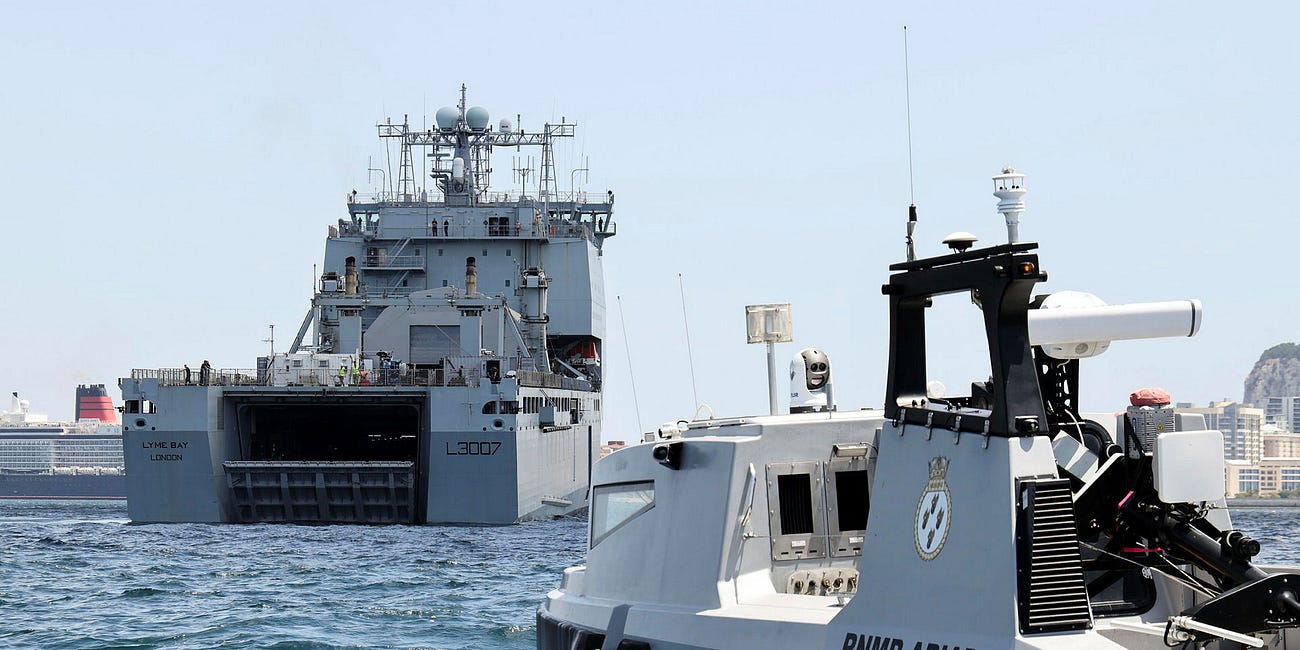
The Hybrid Navy potentially breaks that relationship. Instead of asking how everything needed to replace a Type 45 can be fitted aboard a Type 83, the question becomes which capabilities actually need to be aboard the crewed ship at all. The future crewed combatant might retain command and control, human decision-making and core combat capability, while an uncrewed missile vessel provides additional magazine depth. Another autonomous vessel could carry sensors further forward, while others might provide electronic warfare, decoys, communications or additional surveillance.
The individual ship becomes less important as the unit of capability; increasingly, the networked force itself becomes the capability.
The key point underlying the new ideas for the Type 91 missile vessel and the Type 94 sensor vessel is also why Jenkins’s remarks matter for the final design of the Type 83 replacement. The Royal Navy is considering separating the functions usually housed within the destroyer.
Doing so offers considerable advantages. Missile capacity can increase without making the crewed ship larger, sensors can be positioned further from the command platform, and high-risk tasks can be pushed towards uncrewed systems. An enemy may also have to find, classify and attack multiple targets rather than concentrate its effort on one exquisite warship. But distributing capability also distributes vulnerability.
Pulling Apart the Kill Chain
A Type 45 contains much of its air-defence kill chain within one ship. It detects a threat, its combat system develops the tactical picture, people make decisions, and weapons are selected and launched. Modern naval warfare already involves extensive information sharing between ships, aircraft, and other sensors, but the Hybrid Navy takes that principle considerably further.
Imagine that the sensor detecting an incoming missile is aboard an autonomous Type 94, the commander making the engagement decision is aboard the crewed warship tens of miles away, and the missile required to destroy the target is aboard an uncrewed Type 91 somewhere else again. The air-defence system now spans three vessels, and communications between them become as important as the platforms themselves.
The distributed model therefore creates difficult questions about how the force fights when that network is degraded. A sensor vessel may detect and track a target but lose its connection to the command ship, while the weapon needed to engage that target may be aboard a third platform. The challenge becomes more acute under satellite disruption, jamming, GNSS denial or emissions control. Decisions will be needed about how much authority individual nodes retain, how engagement-quality data is shared and how the overall system degrades gracefully rather than simply ceasing to function.
This is not a matter of minor communication problems. The network no longer supports the weapon system; it is now integral to it. Distribution may remove the single point of failure represented by the exquisite warship, but it risks replacing it with another critical vulnerability: the force’s ability to exchange trusted information quickly enough to fight.
This is where the Hybrid Navy becomes much harder than simply buying autonomous ships. Jenkins himself makes an important distinction. Large uncrewed vessels already operate worldwide, and he does not regard building the vessels themselves as the principal technological challenge. The harder problems include autonomous navigation that meets regulations, resilient data networks that can operate in difficult environments, and mission systems reliable enough to function at sea without sailors constantly available to repair them.
These are precisely the problems which must be solved before the Royal Navy can safely get rid of the existing model of maritime air defence; it is also in this area that the Type 45 becomes of particular interest.
Type 45 as the Bridge
The transition does not have to happen overnight. Rather than operating Type 45 until the day a completely new distributed air-defence system replaces it, the Royal Navy could progressively build that future system around the existing destroyer. Autonomous sensors could be introduced first, followed by electronic warfare and decoy vessels connected through increasingly resilient networks. An uncrewed missile magazine could then add distributed firepower, allowing the Navy to progressively experiment with cooperative engagement, weapons control, and command of a dispersed force.
Crucially, this would allow sailors to discover how the system behaves when things go wrong. Exercises could deliberately degrade communications. Autonomous vessels could be forced to operate without GNSS or beyond normal communications range. Crews could learn how much information they actually need to maintain command of a distributed force, and where additional autonomy becomes useful rather than merely impressive.
The progression might therefore look less like a simple transition from Type 45 to Type 83 and more like an evolution from Type 45, through Type 45 operating with autonomous systems, into a genuinely distributed Type 45 task group, before the eventual future crewed combatant takes its place at the centre of a mature autonomous escort family. This would not necessarily mean experimenting around a declining combat system. Sea Viper Evolution and the addition of Sea Ceptor should leave the Type 45 with a substantially modernised air-defence capability, potentially making it a more useful reference platform against which distributed alternatives can be tested.
It would mean the Type 45 became more than a legacy capability being maintained while the Navy waits for a new system, and could instead act as the operational link into the Hybrid Navy.
Prototype Warfare at Fleet Scale
Another key element in the developing picture is what is known as prototype warfare. A recent RUSI study outlined the concept of “prototype warfare” and stated that armed forces should become active participants in developing immature capabilities rather than merely acting as customers who wait for industry to deliver fully finished equipment.
Under this model, operators use prototypes, discover their weaknesses, generate operational data and feed that experience back into development. Systems that work are improved and eventually scaled, while those that fail are changed or discarded. The objective is not to eliminate failure, but to fail early enough that failure remains affordable and useful lessons can still influence the final capability.
Jenkins’s description of the Navy’s changing relationship with industry closely reflects this approach. He outlines a different kind of relationship with the industry in which the Royal Navy states the operational effect it wants rather than drawing up a detailed technical specification that exactly defines how the industry must meet that requirement. Atlantic Net is an early example, with the industry investing its own funds to develop possible solutions to the Navy’s need for persistent autonomous surveillance in the North Atlantic.
Jenkins goes further, suggesting that companies could provide early uncrewed escorts to the Navy so that they can be trialled and experimented with alongside existing warships. Applied to maritime air defence, Type 45 could therefore become something more important than an ageing destroyer. It could become the laboratory where the Royal Navy learns how to fight the Hybrid Navy at sea, rather than in simulation or on a PowerPoint slide.
The Human Bridge
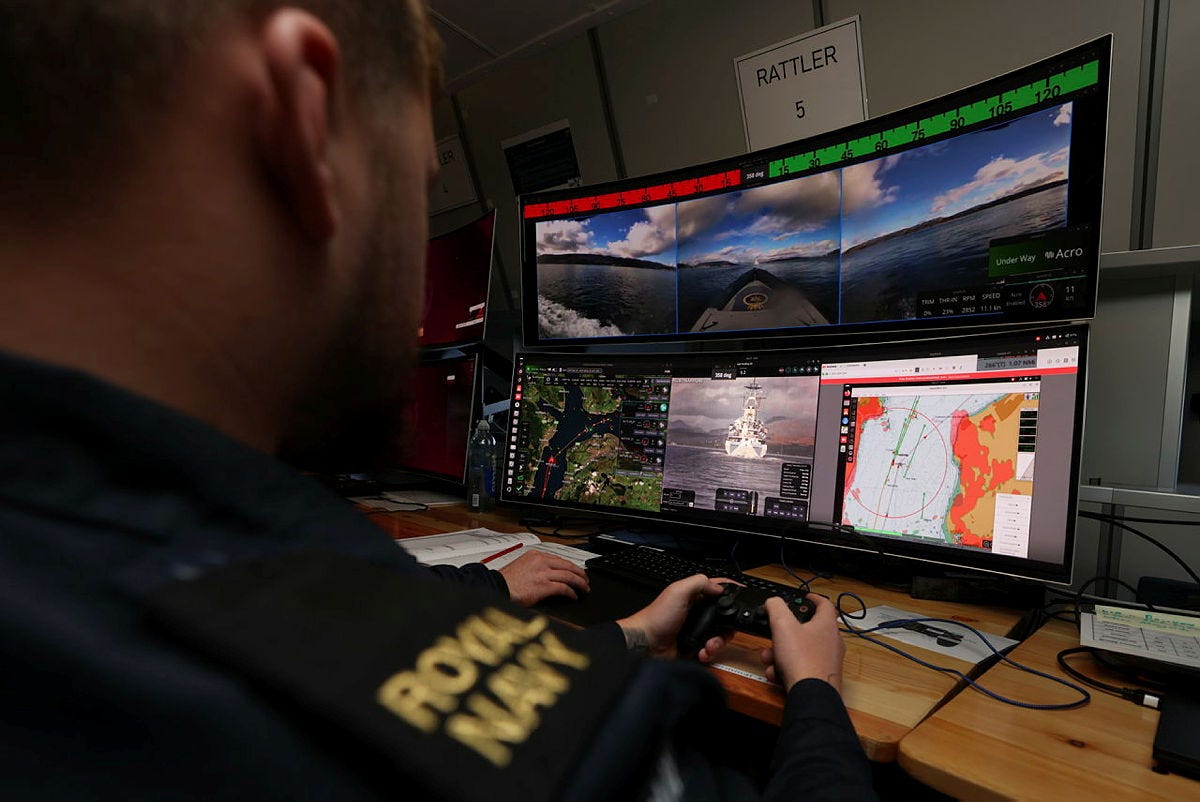
The transition also has a human dimension. Removing sailors from individual vessels does not remove people from the system. Someone still has to plan missions, maintain autonomous craft, load weapons, interpret ambiguous tracks, manage degraded networks, repair failures and decide when lethal force should be used.
The skills needed could also change a great deal. A future air-defence officer might not merely fight a ship; he or she could command a distributed combat system spread across crewed and uncrewed platforms, with some functions running autonomously while others require human approval. The problem then becomes understanding the behaviour and limitations of the whole network rather than becoming an expert in the systems installed on a single ship.
Trust and experience will therefore be important. A commander has to understand not only what an autonomous system is supposed to do, but also how it behaves when the environment is confusing, communications are intermittent, and the enemy is deliberately trying to deceive it. Experience cannot be simply included in doctrine before the systems arrive; it must be gained through repeated operational use.
According to Jenkins, the Navy is currently altering how it selects, trains, and educates its leaders for the age of the Hybrid Navy and autonomy. Hence, extending the Type 45 could act as a link not only for platforms but also for people, enabling the sailors who will one day operate the future air-defence system to start learning how to fight with it well before the new crewed warship enters service.
Life Extension Must Not Become Life Support
There is still a risk in giving too much weight to this argument, since keeping old ships in service because their replacements are not yet ready is by no means an innovative way to acquire vessels, and the Type 45s have already suffered from well-known propulsion and availability problems. The cost of maintaining old hulls, machinery, and combat systems increases steadily, obsolescence grows, and the number of skilled personnel and engineering resources remains limited. Eventually, extending the service life of the ships will no longer be worth it.
A shrewd narrative concerning experimentation should not conceal the fact that the capability programme is merely behind schedule. The argument for extending the Type 45 becomes convincing only if those extra years are intentionally used to speed up the transition. Each additional year for the Type 45 should advance the Hybrid Navy’s learning. There is also an opportunity cost. Money and engineering effort spent sustaining Type 45 into the 2040s cannot be spent twice. A life-extension programme that begins consuming the resources required to develop its replacement would eventually defeat its own purpose.
If the ships continue with present-day practices while everyone waits for their eventual replacements, then hardly anything will have changed. But if they gradually use the sensors, autonomous escorts, distributed weapons, and command systems meant to replace some of their own capabilities, those extra years will be far more valuable. The Royal Navy can find out what works while it still has its proven backup option.
Don’t Wait for the New Ship
The most important consequence is that the Royal Navy need not wait for the eventual Type 45 successor to begin fielding its next generation of maritime air defence. That represents another break with the traditional model, where a major new capability often arrived with the ship built to carry it. Design, construction, combat system and weapons were bound together into a programme that could take well over a decade.
A distributed architecture can evolve in different ways. The autonomous sensor need not wait for the new crewed ship, nor does the decoy vessel, the electronic warfare node or the distributed missile magazine. Progressive development of resilient communications, cooperative engagement, autonomous navigation, and new command-and-control arrangements is possible, with each element tested, improved, and then incorporated into the existing force.
When the future crewed combatant arrives, much of the surrounding system could thus already be in place. More significantly, the Royal Navy could already have the necessary knowledge to operate, maintain, and fight the system. The new ship would be added to an evolving combat system rather than mark the moment that system suddenly comes into being.
That might, in the end, become one of the Hybrid Navy’s biggest advantages, since capability needn’t wait until the commissioning pennant is hoisted.
Keep It Longer to Replace It
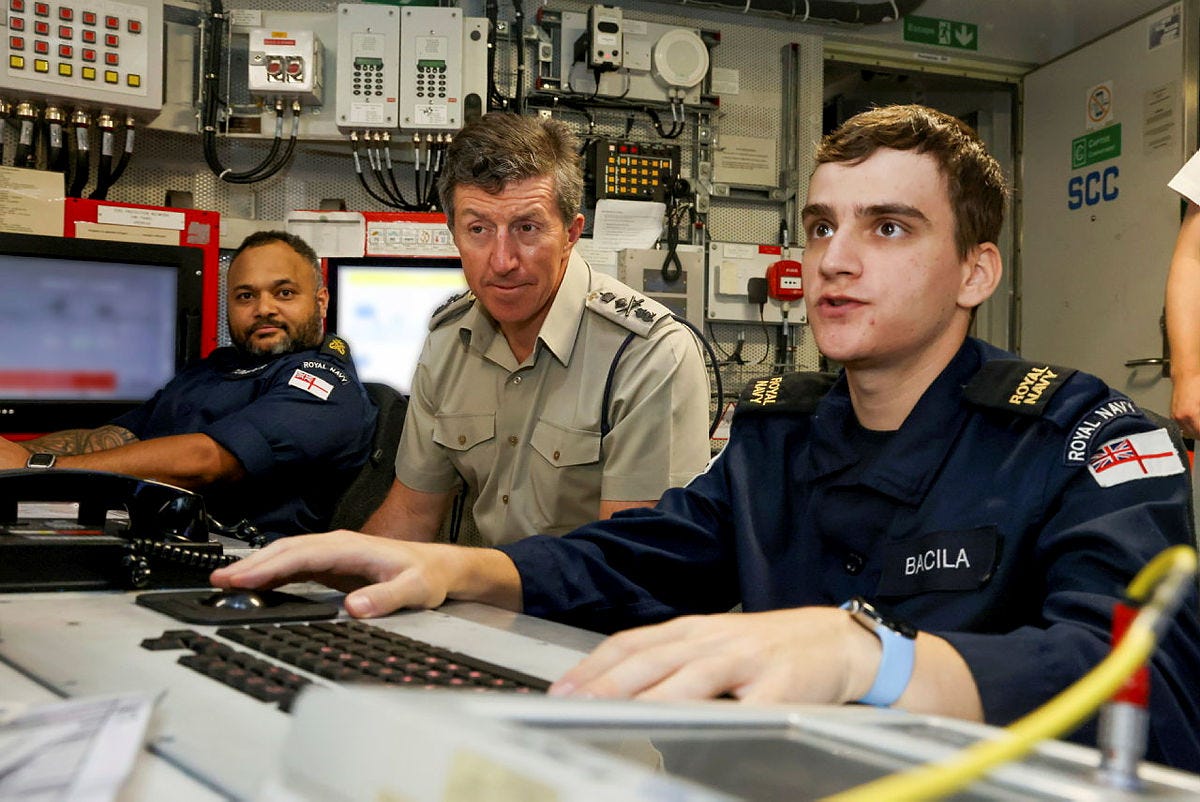
The First Sea Lord compares the present transformation to some of the major technological changes in naval history. He may be right, but those earlier changes were generally not straightforward. Steam did not immediately replace sail, aircraft did not cause the battleship to vanish overnight, and new technologies always coexisted with the old ones. Moreover, navies ran experiments, gained experience, sometimes made serious mistakes, and eventually developed new methods of fighting.
The shift to autonomous and distributed naval warfare is unlikely to be any different. The Royal Navy cannot afford to get into the 2030s and find that its distributed air-defence system functions perfectly well in simulation but fails in the North Atlantic when subjected to jamming, adverse weather, equipment failures and the attention of a smart enemy.
Type 45 offers an opportunity to discover those problems earlier, at sea, with sailors, autonomous systems and operational warships, while there is still time to fix them. For most of naval history, keeping an old class in service longer has been evidence that its replacement is late. This time there is an opportunity to make it something more.
The safest route to replacing the conventional air-defence destroyer may therefore be paradoxical: keep it longer, and use it to build what comes next.
Future Reading
Navy Lookout: Royal Navy to study extending Type 45 destroyer service life
Council on Geostrategy, “First Sea Lord: Driving the Naval Transformation”.
From Future Navy:
Why Autonomous Missile Ships Demand a New Generation of Vertical Launch Systems
·
Future Navy Technical Briefing
