

Future Navy Technical Briefing
Deepdive briefing from Future Navy Research with NotebookLM Audio
The Royal Navy’s future fleet is no longer being designed solely around ships. It is being designed around a central question: how do networks sustain combat power?
The Strategic Defence Review and the Defence Investment Plan describe a future Hybrid Navy in which crewed warships operate alongside autonomous surface vessels, uncrewed underwater vehicles and AI-enabled decision support. Concepts such as Atlantic Bastion depend on distributed sensing, autonomous platforms and software-defined integration to deliver greater mass, persistence and operational reach.
Much of the discussion surrounding this transformation has focused on artificial intelligence, autonomous vessels and digital command systems.
Yet one engineering challenge has received remarkably little attention.
Every discussion about autonomous missile ships assumes one thing: that the missiles will still fire when required. That assumption may prove to be one of the hardest engineering challenges facing the Royal Navy.
At a Glance
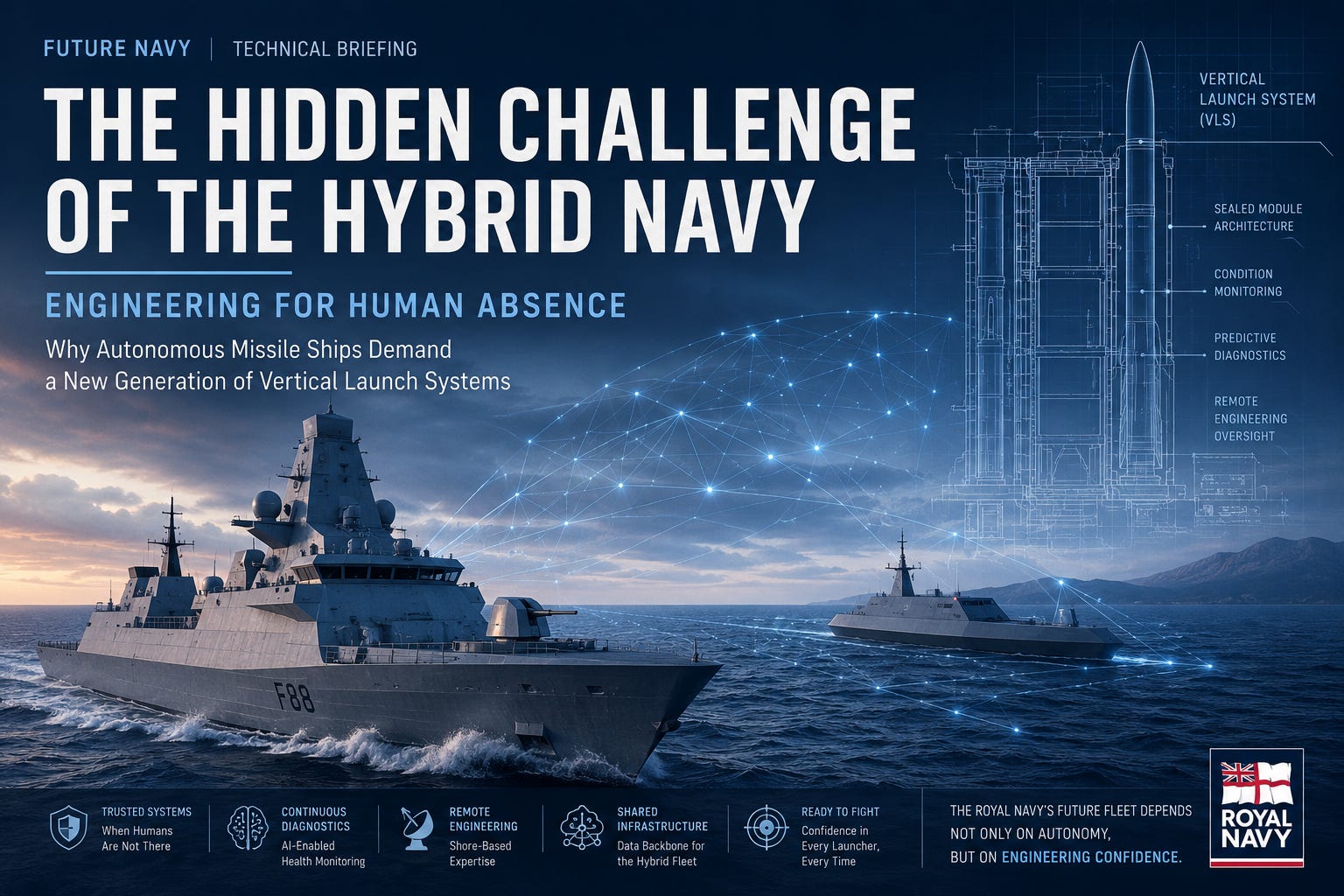
The Hybrid Navy depends on more than autonomous navigation. It depends on trusted combat systems. This engineering challenge matters because:
Firepower depends on reliability. An autonomous missile ship only adds combat power if commanders are confident every launcher will function when required.
Today’s launch systems assume engineers are onboard. Future autonomous vessels remove that assumption, requiring a fundamentally different engineering philosophy.
Software alone cannot solve the problem. Artificial intelligence can monitor system health, but it cannot repair a deteriorating seal, replace a failed component or restore trust in a weapon system that may no longer perform.
This challenge extends across the entire Hybrid Navy. The same principles apply to sensors, propulsion, communications and power systems. Vertical Launch Systems simply provide the clearest example.
Engineering confidence is now a strategic capability. Future combat power will depend not only on autonomous platforms, but on designing systems that remain trusted after weeks of independent operation.
The Assumption Nobody Questioned
When I joined HMS Norfolk in 1989 to help introduce the Royal Navy’s first Vertical Launch Sea Wolf missile system into service, one assumption underpinned every design decision.
There would always be engineers onboard.
If hydraulic pressures drifted, environmental seals deteriorated, electrical connectors suffered corrosion or launcher mechanisms required adjustment, experienced maintainers would detect the problem long before operational capability was affected.
That was simply how warships worked. Maintenance was never viewed as an exceptional activity. It was continuous. Every watch, every day and every deployment.
During my career, much of it spent training sailors in damage control and system resilience, one lesson became obvious. Complex systems rarely fail through a single catastrophic event. They fail quietly, through the gradual accumulation of small defects that experienced engineers identify and correct long before they threaten the mission. The Hybrid Navy quietly removes that assumption.
For the first time in modern naval history, engineers are being asked to design combat systems on the assumption that no engineer will ever touch them during deployment.
That represents far more than a technological challenge.
It requires a fundamental change in naval engineering philosophy.
The Magazine Challenge
The Royal Navy increasingly speaks about a distributed fleet. Whether described as autonomous missile ships, adjunct magazines or uncrewed escorts, the principle is the same. Smaller autonomous vessels carrying significant numbers of Vertical Launch System (VLS) cells could increase the fleet’s magazine depth while allowing high-value crewed warships to concentrate on command, sensing and anti-submarine warfare.
Operationally, the concept is compelling.
Technically, it raises an uncomfortable question.
Who maintains the launcher?
Unlike navigation, communications or autonomous collision avoidance, a missile launcher has one purpose.
It either launches when commanded.
Or it does not.
There is very little middle ground.
That cannot be solved simply through better software. It is fundamentally an engineering problem.
More Than A Missile Tube
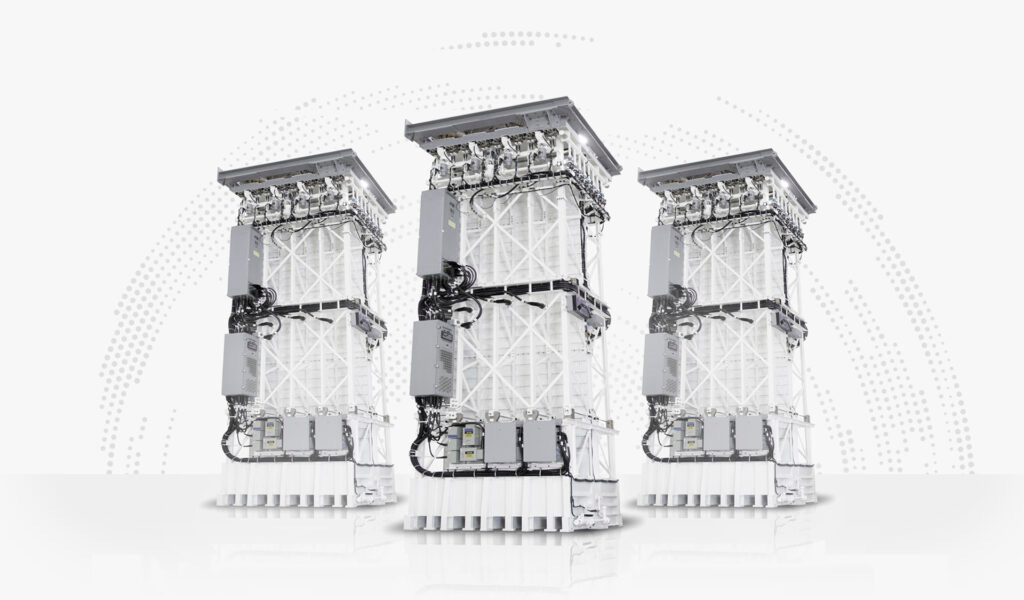
From the outside, a Vertical Launch System appears deceptively simple. A collection of launch cells built into the deck. In reality, it is a tightly integrated combination of mechanical engineering, environmental protection, electrical distribution, diagnostics, safety systems and complex software.
Every launch cell must remain fully operational despite weeks of vibration, shock loading, salt contamination, changing temperatures and heavy seas.
For decades, naval engineers balanced reliability against maintainability.
Small defects were expected.
Routine maintenance prevented those defects becoming operational failures. The system worked because skilled people were always available.
Autonomous vessels fundamentally change that relationship.
Engineering Without Engineers
The challenge facing future missile ships is not simply corrosion. Nor is it mechanical reliability.
It is trust.
Current Vertical Launch Systems assume routine preventative maintenance throughout deployment. Engineers inspect, lubricate, calibrate, test and replace components before failures occur. An autonomous vessel operating independently for weeks cannot do any of those things.
A deteriorating environmental seal may go unnoticed.
A loose electrical connection may slowly worsen.
A sensor fault may progressively reduce confidence in launcher status.
None of these faults is individually catastrophic.
Together they create something far more dangerous.
Uncertainty.
A commander may possess a fully armed vessel yet no longer have complete confidence that every launcher will perform when called upon.
For an autonomous missile ship, uncertainty is operationally unacceptable.
Engineering for Human Absence
This demands a fundamental shift in naval engineering. Historically, systems were designed to be maintained at sea. Tomorrow’s systems must increasingly be designed not to require maintenance at sea.
That may sound like a subtle distinction.
It is anything but.
Emerging research increasingly points towards launcher architectures based upon:
Hermetically sealed modules
Embedded condition monitoring
Predictive diagnostics
Simplified mechanical systems
Modular replacement rather than onboard repair
Continuous engineering oversight from shore
Maintenance does not disappear, it moves. Instead of engineers finding faults onboard, software identifies degrading performance long before the vessel returns to harbour. The launcher becomes another intelligent system, continuously reporting its own health.
The Digital Backbone
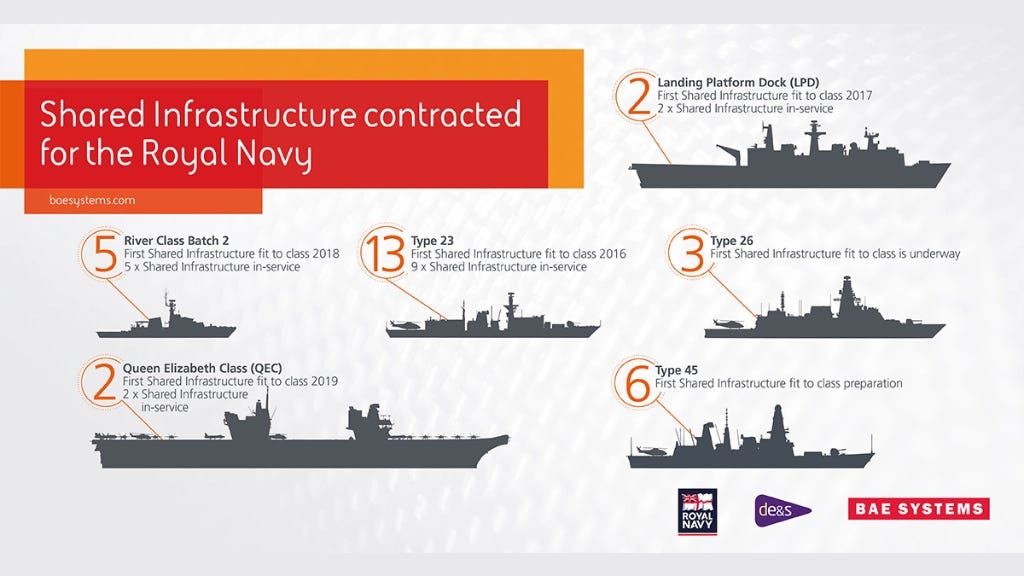
This is where the Royal Navy’s Shared Infrastructure programme becomes strategically significant. Shared Infrastructure is often described as a common computing environment capable of hosting multiple combat systems while presenting operators with integrated information through common consoles. It already supports major combat functions across the Queen Elizabeth class, Type 23 and future Type 26 and Type 45 programmes. Its importance may prove much greater.
Future autonomous vessels will continuously generate engineering data alongside tactical information.
Launcher temperatures.
Electrical loads.
Environmental conditions.
Power consumption.
Component health.
Artificial intelligence may identify subtle trends invisible to human operators. The combat system no longer monitors only the tactical environment.
It monitors itself.
Shared Infrastructure therefore becomes more than a computing architecture. It becomes the mechanism through which autonomous warships continuously assess their own fighting capability.
Software becomes part of the weapon system rather than simply controlling it.
Beyond Vertical Launch Systems
Vertical Launch Systems simply expose the wider challenge. Exactly the same engineering philosophy now applies to every critical capability within the Hybrid Navy.
Radar.
Electro-optics.
Communications.
Navigation.
Power generation.
Propulsion.
Mission systems.
Every component must increasingly be capable of prolonged operation without routine human intervention. This represents one of the largest shifts in naval engineering philosophy for generations. The challenge is no longer designing equipment that works.
It is designing equipment that remains trusted when nobody is there to touch it.
Engineering Confidence
Technology can demonstrate autonomy, only engineering creates confidence. An autonomous missile ship may successfully navigate thousands of miles without human intervention. That achievement alone does not make it a trusted combat system. Trust is earned when commanders believe every launcher, every sensor and every mission system will continue to function after weeks of independent operation.
That confidence cannot simply be programmed into software, it must be engineered into the ship.
Engineering the Hybrid Navy
Recent defence thinking increasingly recognises that future combat capability will evolve through continuous software development as much as hardware acquisition.
Prototype warfare advocates iterative development, operational experimentation and continuous learning rather than waiting decades for fully mature capability. Atlantic Bastion similarly depends upon integrating autonomous systems, distributed sensing and crewed platforms into a single operational architecture.
Shared Infrastructure provides the digital environment that allows these concepts to converge. Yet software alone cannot solve the challenge, the physical engineering must evolve with it.
Perhaps that is the real lesson.
The Hybrid Navy is not simply replacing sailors with software. It is replacing decades of engineering assumptions that quietly depended upon those sailors being there.
Final Thoughts
The Defence Investment Plan presents an ambitious vision for a digitally connected Royal Navy capable of operating across an increasingly distributed battle space. Autonomous platforms promise greater mass, persistence and flexibility while allowing crewed warships to concentrate on the most demanding operational tasks.
That vision is achievable:
But only if the engineering evolves as rapidly as the operational concepts.
Removing sailors from a ship is comparatively straightforward.
Removing every engineering assumption built around those sailors is considerably harder.
The future Hybrid Navy will not be judged simply by whether autonomous vessels can cross oceans without crews. It will be judged by whether commanders trust them enough to fight alongside the fleet.
That confidence will not be earned through artificial intelligence alone.
It will be earned through thousands of engineering decisions, many of them invisible, ensuring every launcher, every sensor and every mission system continues to perform exactly as intended after weeks alone in one of the harshest operating environments on Earth.
The future Hybrid Navy will not be defined by autonomy. It will be defined by confidence. Confidence that every critical system will still fight after weeks without a human hand touching it.
Coming Soon
Future Navy Technical Briefing: Shared Infrastructure: Building the Royal Navy’s Digital Backbone
Further Reading
Readers interested in the wider themes discussed in this briefing may also find the following useful:
Strategic Defence Review 2025. The review introduces the Hybrid Navy concept, Atlantic Bastion and the transition towards a more distributed, software-enabled force.
Emma Salisbury, Atlantic Bastion: The Future of Anti-Submarine Warfare. An excellent overview of the operational concept behind Atlantic Bastion and the technological challenges of persistent undersea surveillance.
The U.S. Navy Fighting Instructions. Admiral Daryl Caudle’s emphasis on the relationship between Sailors, the Foundry, the Fleet and the Fight provides an interesting comparison with the Royal Navy’s evolving digital transformation.
Prototype Warfare in the Maritime Domain. A useful discussion of iterative capability development and software-defined acquisition, themes that underpin engineering for autonomous operations.
Future Navy Posts
The AI Fleet Is Not One Brain
Software-Defined Warship
UK Defence Investment Plan: The Royal Navy’s Digital Future
Atlantic Bastion: Europe’s New Front Line
“ An autonomous missile ship may successfully navigate thousands of miles without human intervention.”
An autonomous ship/sub is useful as a vessel that can adopt an offensive or defensive posture in a higher risk location.
It should be comparably close to disposable and to have a mothership sitting safely out of range. Disperse them.
A patriot battery can carry 6 shots on a mobile land vehicle. We should be talking that size, or a single tomahawk. Fire and withdraw to reload. Separate radars and missile launchers, like on land. Minesweepers. Minelayers.
A smaller destroyer with 40 launch tubes deploying for 6 months is missing the point. We’re already at the point where a shipping container can hold a drone launching platform.
This is a great read... thanks Richard. We touch on some of the same issues at our Naval Damage Control conferences held annually in Southampton. More details here: https://navyleaders.com/naval-damage-control/