

Standfirst
The Royal Navy enters the second half of the 2020s at a moment of profound strain and transition. A new First Sea Lord inherits a Service grappling simultaneously with material exhaustion, personnel pressure and a rapidly shifting strategic environment. These are not abstract challenges but immediate, compounding ones that shape every discussion about the future of the fleet.
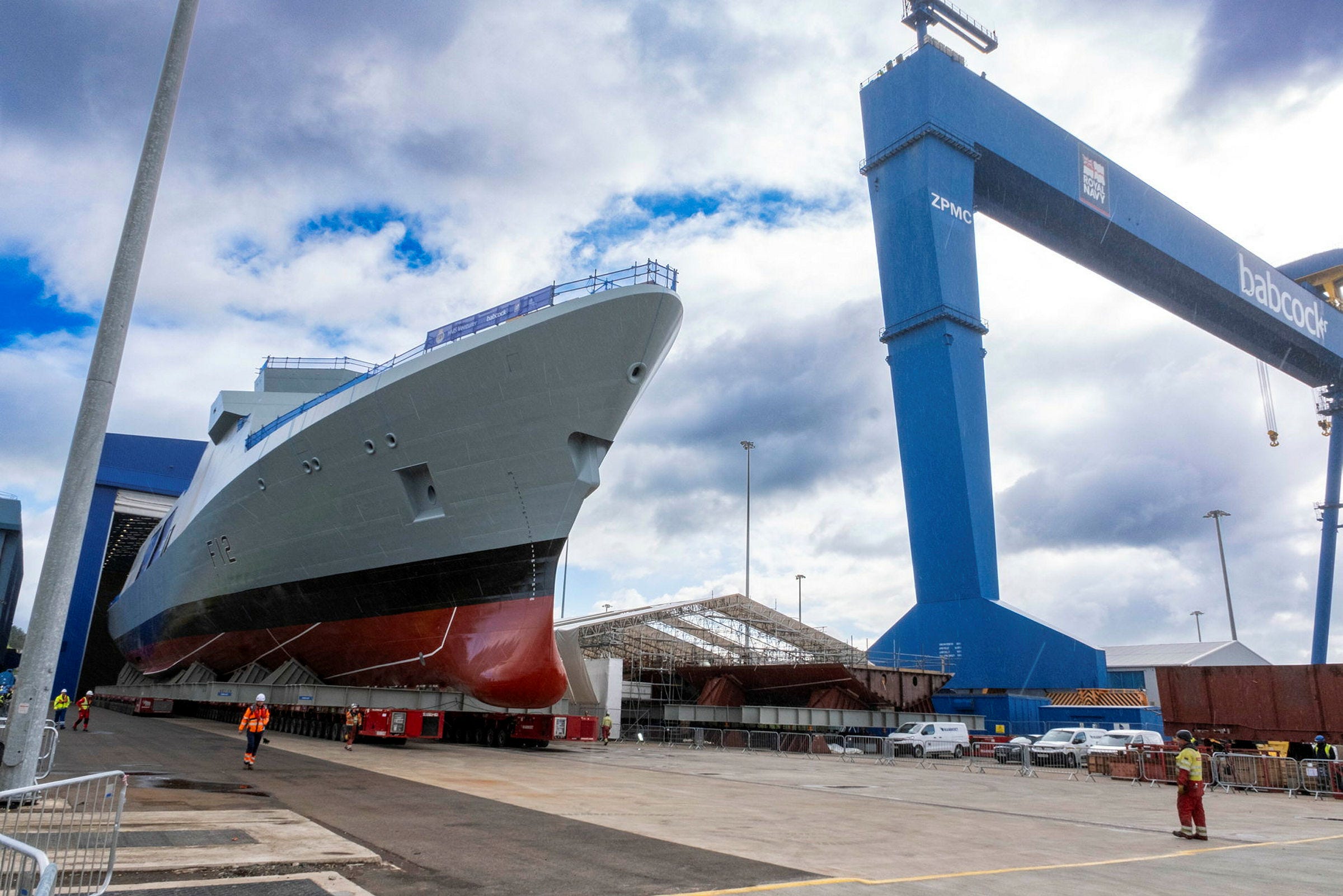
The surface force is under acute stress. The Type 23 frigates are operating well beyond their original design life, and difficult decisions loom over how many hulls can safely remain at sea. The regeneration of the Type 45 destroyers continues. While these ships have now been operationally proven, they are entering early middle age, carrying an ever greater share of the fleet’s air defence burden. Against this backdrop, Type 26 and Type 31 cannot arrive quickly enough. Their delayed entry into service has left capability gaps that are being filled only through increasing risk acceptance and ingenuity at the deckplate level.
The Submarine Service, central to the Royal Navy’s identity and deterrent posture, faces its own pressures. While regeneration is underway after a difficult period, extended six-month or longer patrols place an unsustainable strain on crews. Continuous At-Sea Deterrence remains unbroken after nearly six decades. Still, without urgent action to stabilise personnel tempo and retention, there is a real risk that the human foundations of CASD will erode, even if the platforms themselves endure.

There is also a morale and identity challenge. The Royal Marines, long a defining component of British maritime power, have at times felt marginalised during years when amphibious shipping was drawn down, and the Corps was employed primarily as light infantry ashore. That perception may be unfair, but it reflects a period in which amphibious ambition was sacrificed to preserve other headline capabilities. What is now required is a credible and properly funded vision that places the Corps at the heart of the future Navy. The Future Commando Force offers that vision: a highly skilled maritime raiding force, able to conduct specialist operations, operate in the High North and integrate with allies. Delivering it, however, demands ships, insertion craft and sustained investment, including the proposed Multi Role Strike Ship.
It is against this backdrop of ageing platforms, stretched people and unresolved strategic trade-offs that the UK’s carrier force and wider fleet architecture must be reassessed. The question is not whether the Royal Navy should remain ambitious, but how it can align ambition with sustainability. With a new First Sea Lord facing the Strategic Defence Review, likely fiscal constraint and decisions on the next generation of platforms, including Type 83 and MRSS, the choices made in the coming years will shape the Service for decades.
The carrier bet and the world it assumed
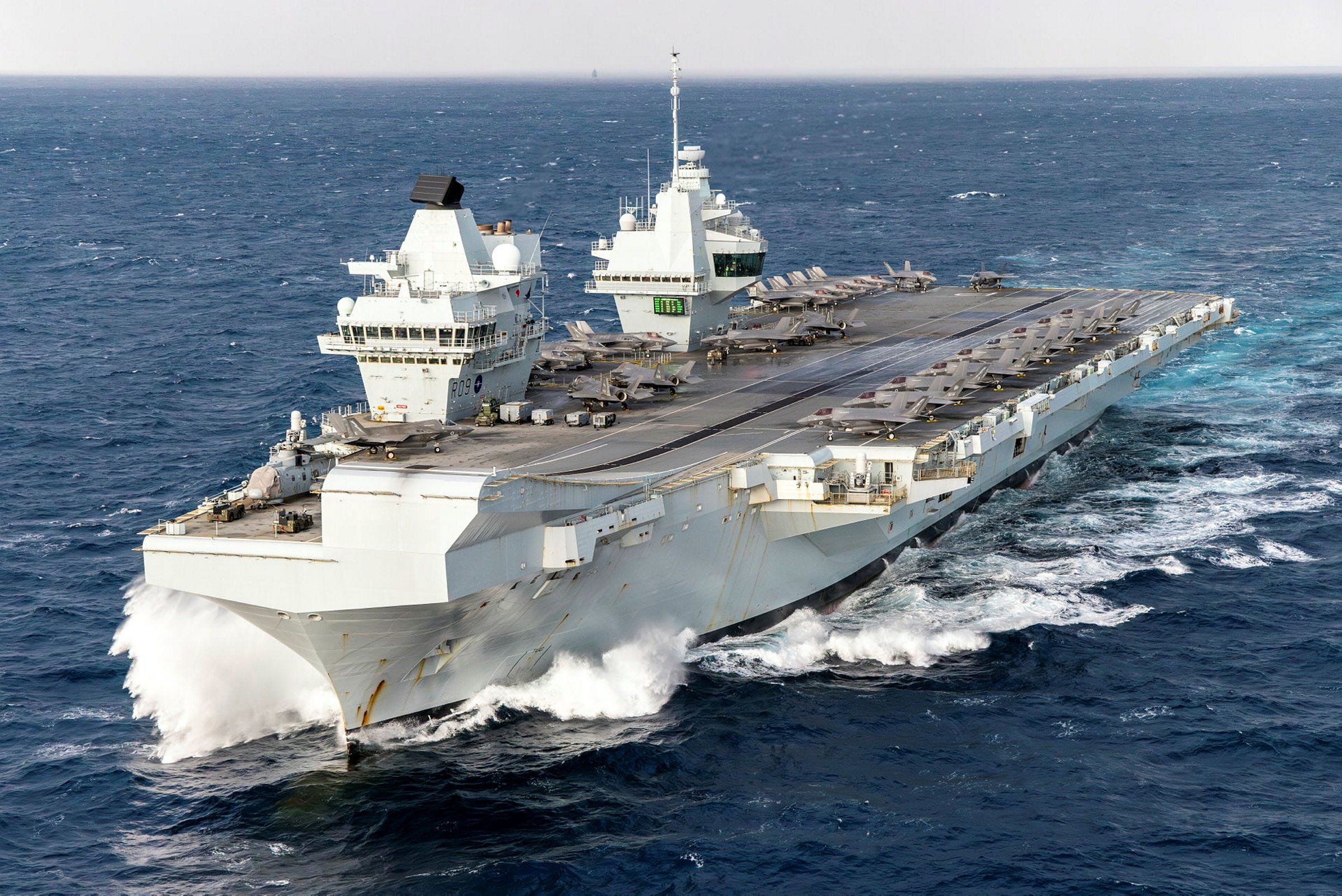
For much of the past 20 years, the Queen Elizabeth-class carriers and the F-35B have been framed as the centrepiece of British maritime power. They signalled global reach, alliance credibility, and continued relevance at the top table of Western defence. In strategic terms, they embodied a bet made in the early 2000s: that the UK would continue to operate primarily as an expeditionary power, projecting air power at distance in permissive or semi-permissive environments, anchored within a stable US-led security architecture. This strategic gamble involved significant investments, with the construction costs for the two carriers alone exceeding £6 billion. Each carrier requires an escort fleet consisting of at least two destroyers, two frigates, and a submarine, depending on mission requirements. Additionally, operational costs have been substantial, with annual expenses running into hundreds of millions to maintain these impressive vessels and support systems. These figures underscore the high stakes involved in the UK’s commitment to this carrier-centric approach.
The strategic weather has changed. The contemporary maritime environment is now shaped by significant technological advancements, most notably the development of long-range precision-strike capabilities, the proliferation of autonomous drones, and the growing importance of undersea infrastructure. These technologies have disrupted traditional power dynamics, reducing the reliance on uncontested deck cycles and increasing the complexity of logistics in contested environments. Carrier aviation remains influential, but these shifts mean it no longer holds the centre of gravity in maritime competition. This is not an argument against carriers. It is an argument against designing the fleet around them.
Carrier air power in a software-defined war
Modern carrier aviation is now as much about code as it is about steel and jet fuel. Fifth-generation aircraft rely on mission data files, software updates, sensor fusion, and networked kill chains. The aircraft itself is a node within a wider digital ecosystem that spans sensors, satellites, networks, and decision-support systems. Imagine a scenario where, during a critical mission, a vital mission-data file is suddenly corrupted. As the aircraft approaches its target, it loses access to real-time sensor updates and accurate threat assessments. The pilot faces a choice between blindly executing the mission or aborting, with no decision-support system to guide action in hostile airspace. This vignette illustrates how the reliability of software profoundly impacts mission success, embedding technical risk in human terms.
This creates three structural tensions for medium naval powers. First, the sovereignty of function becomes blurred. Operational effectiveness increasingly depends on access to software pipelines and data libraries beyond national control. Second, sustainability and mass are constrained. Exquisite platforms concentrate combat power, but in an era of drone swarms and missile salvos, concentration also creates fragility. A meaningful metric for quantifying this fragility is the ‘missiles-per-sortie’ ratio for carriers compared to the endurance and distribution capabilities of autonomous drone systems. This highlights how the concentration of power can lead to vulnerability. Third, people and logistics dominate outcomes. Carrier strike groups are manpower-intensive and escort-hungry, absorbing scarce skills and sustainment capacity in navies already under pressure.
None of this renders carrier aviation obsolete. It does, however, challenge the assumption that carrier strike should remain the organising logic of maritime power.
The strategic mismatch: where the UK is most exposed
The Queen Elizabeth class was conceived in a world shaped by expeditionary operations and coalition air dominance. The emerging reality is one of persistent grey-zone pressure in the North Atlantic and High North, renewed undersea competition, and the re-militarisation of logistics and reinforcement routes. In this environment, the UK’s most consequential maritime vulnerabilities sit closer to home than the Indo-Pacific.
To understand the strategic realignment, one must consider the hierarchy of the UK’s maritime interests. At the top is the defence of the homeland, ensuring the UK’s security and economic stability. Closely following are alliance commitments, particularly within NATO, which underscore the importance of the North Atlantic as a buffer zone and critical reinforcement route. Global presence and engagement, while vital for broader diplomatic and economic interests, have become secondary to these more immediate concerns. This prioritisation explains why the North Atlantic now tops the list of maritime priorities, underscoring the need for an agile and capable force structure to address regional vulnerabilities effectively.
Toward an Atlantic Bastion fleet
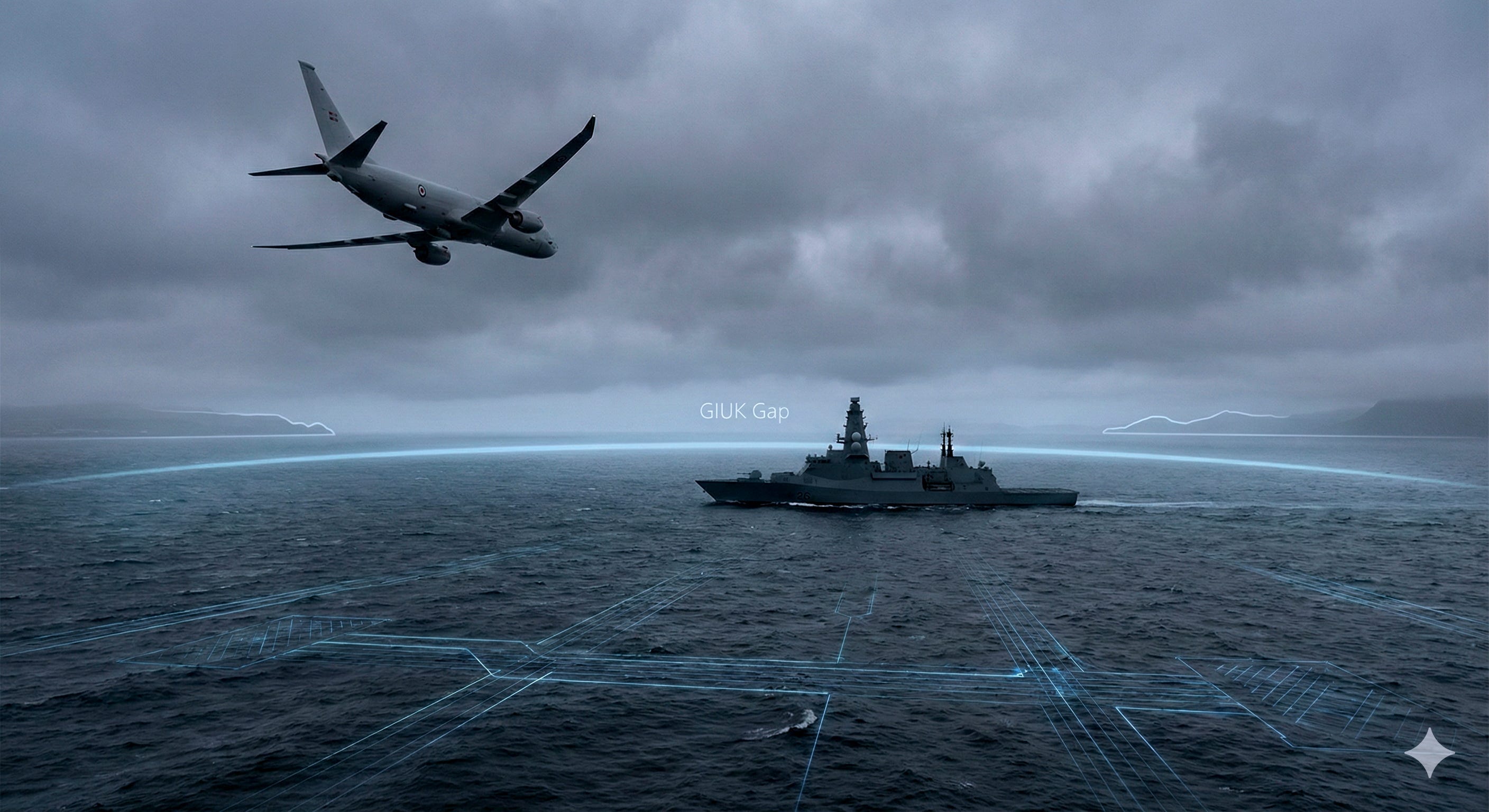
If the organising principle of the fleet shifts from expeditionary prestige to regional maritime resilience, its structure changes accordingly. To guide this transformation, a strategic litmus test could be posed for every fleet decision: “Does this platform increase North Atlantic persistence?” This question ensures that each procurement decision aligns with the overarching aim of enhancing the regional resilience and operational sustainability of the fleet.
A home-first, Atlantic Bastion fleet would be built around a dense ASW spine centred on the Royal Navy’s Type 26 frigates, operating alongside maritime patrol aircraft and embarked helicopters, and integrated with allied forces in the High North. This includes the developing UK–Norway ASW partnership, in which Type 26-class ships form a core element of a joint undersea deterrence posture in the North Atlantic and Norwegian Sea. A key aspect of this partnership is the establishment of coordinated patrol patterns, allowing for seamless shifts between UK and Norwegian assets to ensure continuous surveillance and rapid response capabilities. Shared data pipelines are utilised for real-time threat assessments, demonstrating the operational benefits of integrated intelligence efforts. This ASW layer is complemented by the attack submarine force, which provides the decisive subsurface element of deterrence, persistent intelligence collection and the ability to hold adversary undersea forces at risk.
Protecting this manoeuvre space requires a credible air and missile defence shield, anchored today by the Type 45 destroyers and, over time, by their successor class. In an Atlantic Bastion construct, air defence ships are no longer defined primarily as carrier escorts. They become guardians of logistics, reinforcement routes, seabed warfare units and critical maritime nodes in the UK approaches and wider North Atlantic, reflecting the growing importance of defending sustainment networks against missiles and drones.
Alongside ASW and air defence, there is a standing requirement for dedicated forces for seabed warfare and infrastructure protection. Undersea cables, pipelines and offshore energy assets are strategic targets in their own right. Persistent monitoring, inspection, repair support and counter-sabotage capability therefore become core maritime missions, supported by unmanned underwater systems and specialist platforms operating under the protective umbrella of the wider Bastion force.
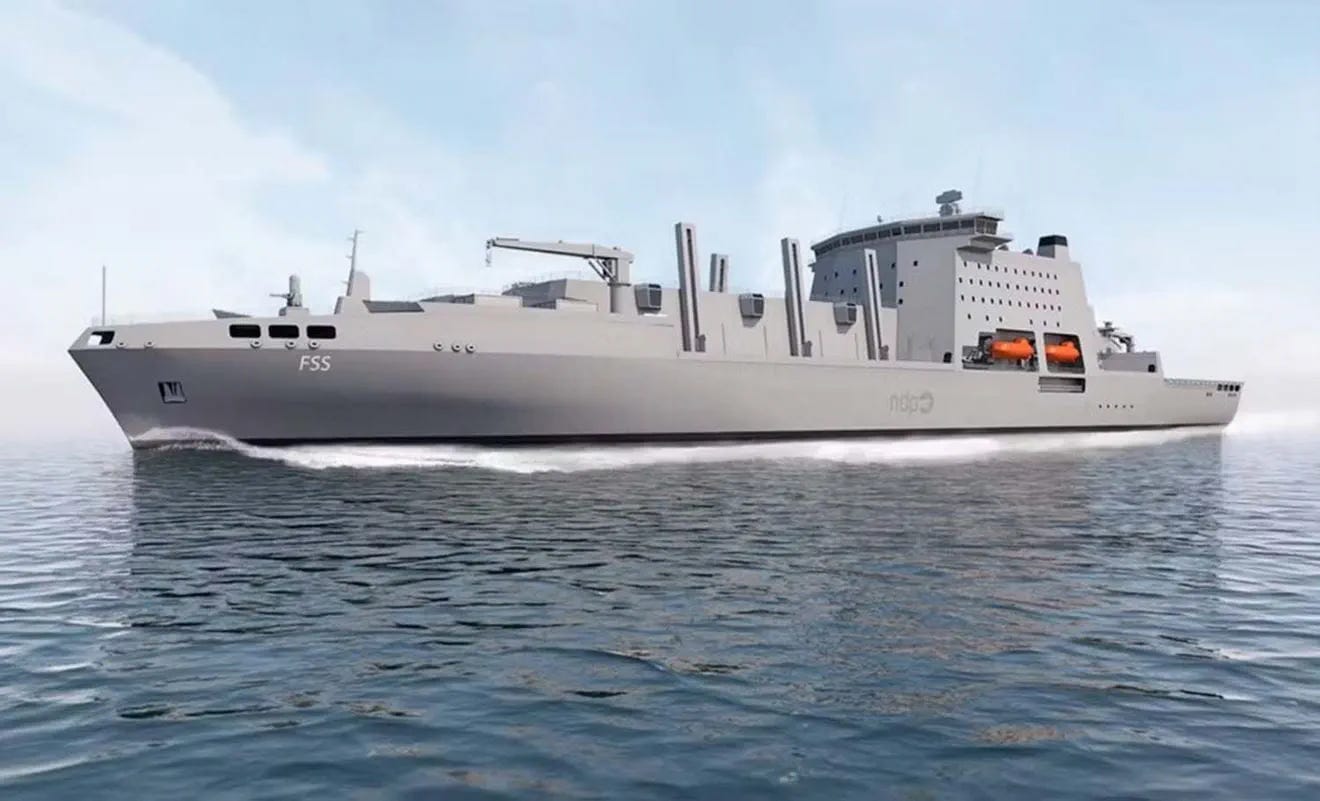
Sustaining this posture elevates the Royal Fleet Auxiliary (RFA) from a background enabler to a central component of maritime deterrence. Fuel, ammunition, spares and forward repair capacity become contested assets in their own right. In an Atlantic Bastion construct, RFA vessels are treated as protected high-value units, integrated into air and missile defence planning and escorted as part of the deterrence architecture. By conceptualising RFA ships as ‘moving nodes’ within the Bastion’s kill chain, their deterrent value is augmented. Visualising these auxiliaries not merely as support but as vital targets that require defence fundamentally reframes their role. Without resilient logistics, the Bastion concept collapses into rhetoric.
Differentiated surface combatants and a realistic transition
Within this architecture, surface combatants are no longer treated as interchangeable “general purpose” hulls. They are differentiated by role into a broader system of systems.
The first tranche of Type 31 frigates provides a bridge into this model. In the near term, Batch 1 Type 31s are well suited to overseas presence and maritime security tasks, sustaining UK commitments in the Caribbean, the Gulf of Guinea, and the Indo-Pacific. At the same time, higher-end escorts tend to operate closer to home. As the fleet evolves, these hulls need not be discarded. They can be re-roled into Atlantic Bastion enabler functions, with the transition expected to commence in 2030. This timeline aligns with strategic reprioritisation efforts.
Future Navy proposes introducing new Batch 2 Type 31s by 2030, redesigned around lean crewing, high automation, and modular mission payloads, drawing on the Japan Maritime Self-Defence Force’s Mogami-class approach. This batch will provide a more sustainable answer, optimised for endurance, aviation operations, boat handling, disaster response, and partnership missions. It will effectively replace OPVs for overseas presence while consuming far less high-end workforce than a traditional frigate.
In this role, Type 31 Batch 1 acts as a mothership for unmanned systems, extending ISR coverage through embarked UAVs and USVs, providing communications relay, supporting seabed warfare and mine countermeasures units, and responding to grey-zone activity in the North Atlantic and UK approaches. This exploits their mission bay, aviation facilities and growth margin without attempting to turn them into surrogate ASW or air defence specialists.
Crucially, the overseas presence burden should not remain permanently tied to these hulls. A reworked Type 31 Batch 2, redesigned around lean crewing, high automation and modular mission payloads, drawing on the Japan Maritime Self-Defence Force’s Mogami-class approach, would provide a more sustainable answer. Optimised for endurance, aviation operations, boat handling, disaster response and partnership missions, this Batch 2 variant would effectively replace OPVs for overseas presence while consuming far less high-end workforce than a traditional frigate.
People, skills and the digital backbone
This fleet architecture is only viable if matched by parallel investment in crews, skills and digital infrastructure. Crewing and specialist skill gaps already constrain surface fleet availability. Autonomous systems, seabed warfare and networked air and missile defence are software-intensive capabilities that demand digital fluency as much as traditional seamanship.
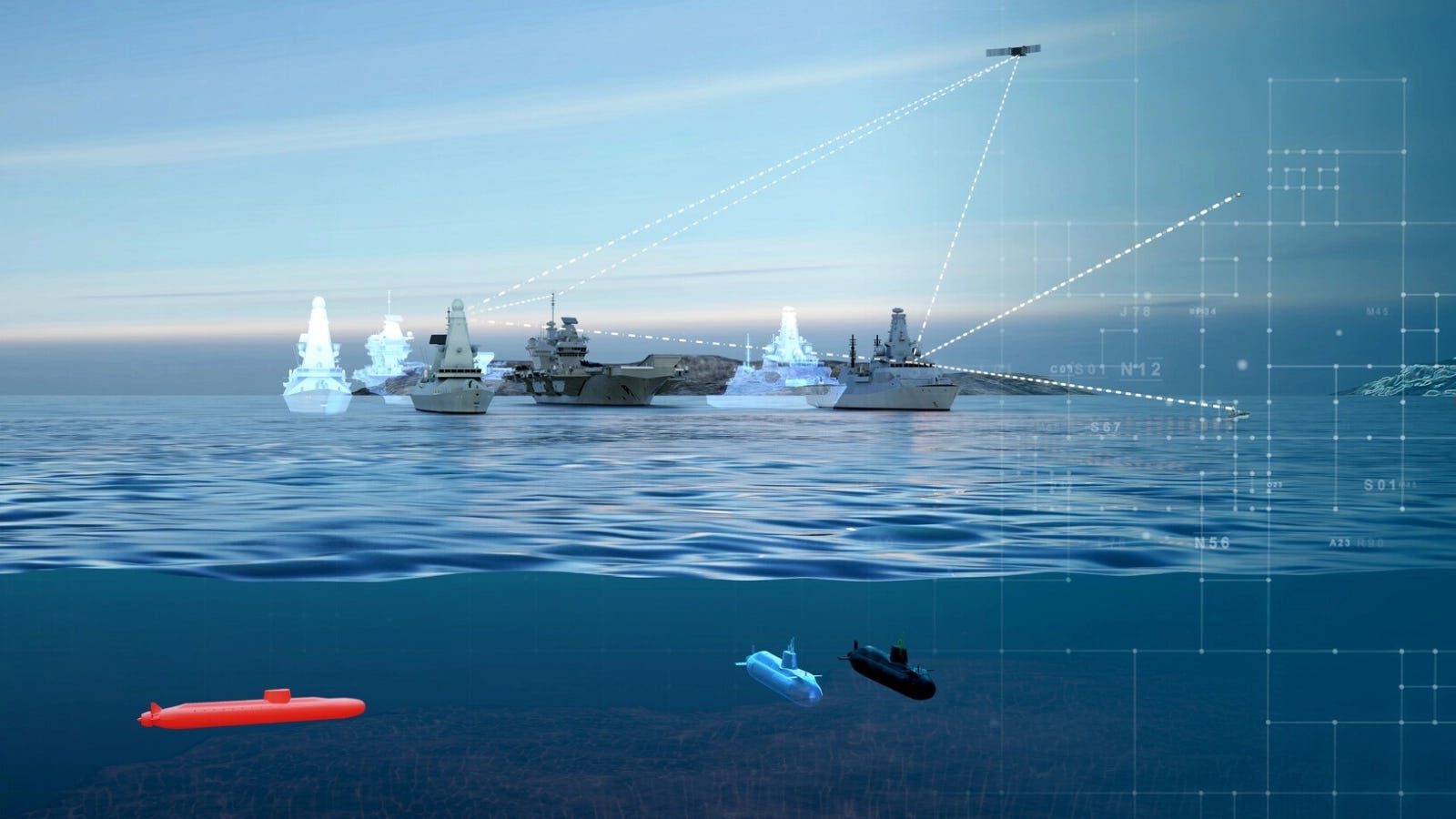
Here, digital twins and AI-enabled decision support, including the emerging concept of an “AI shipmate”, become enabling infrastructure rather than optional innovation. Digital twins can support predictive maintenance, remote diagnostics and training at scale, reducing the operational burden on crews and increasing platform availability. AI-assisted advisory tools can augment watchkeepers and command teams under cognitive load, improving decision quality while preserving human authority.
In a leaner-manned future fleet, these tools are about enabling fewer people to operate more complex systems safely and sustainably, not replacing them. However, before deploying an “AI shipmate”, commanders must critically consider the ethical implications of AI decisions. A key question is: how can command structures ensure accountability for actions taken by AI systems within the chain of command?
Addressing such governance challenges now is crucial to pre-empt future resistance and uphold operational integrity.
Closing thought: from prestige to persistence
Ultimately, this is a question of prioritisation, not aspiration. The fleet architecture outlined here is not cost-neutral, but it is more strategically coherent with the threats the UK now faces. Moving to a single operational carrier, with the second hull held in extended readiness for training, trials and contingency, would free substantial resources across crews, escorts, sustainment, munitions and refit budgets. Those resources could be reinvested into the unglamorous but decisive enablers of maritime power: ASW mass, air and missile defence capacity, seabed warfare and infrastructure protection forces, autonomous mine countermeasures, resilient logistics through the RFA, and the digital backbone needed to make a leaner fleet viable.
Over the past two decades, smartphones have evolved from simple communications devices into software-defined platforms that now shape how business, media and everyday life function. Warships, by contrast, have remained structurally similar floating airfields and escorts, even as the battlespace around them has been transformed by autonomy, software and contested networks. The strategic choice for the UK is not whether it can still project power episodically at a distance, but whether it can adapt its maritime force design to the same pace of change. In an era of contested home waters, undersea vulnerability and logistics warfare, the scarcest commodity is not prestige, but persistence.
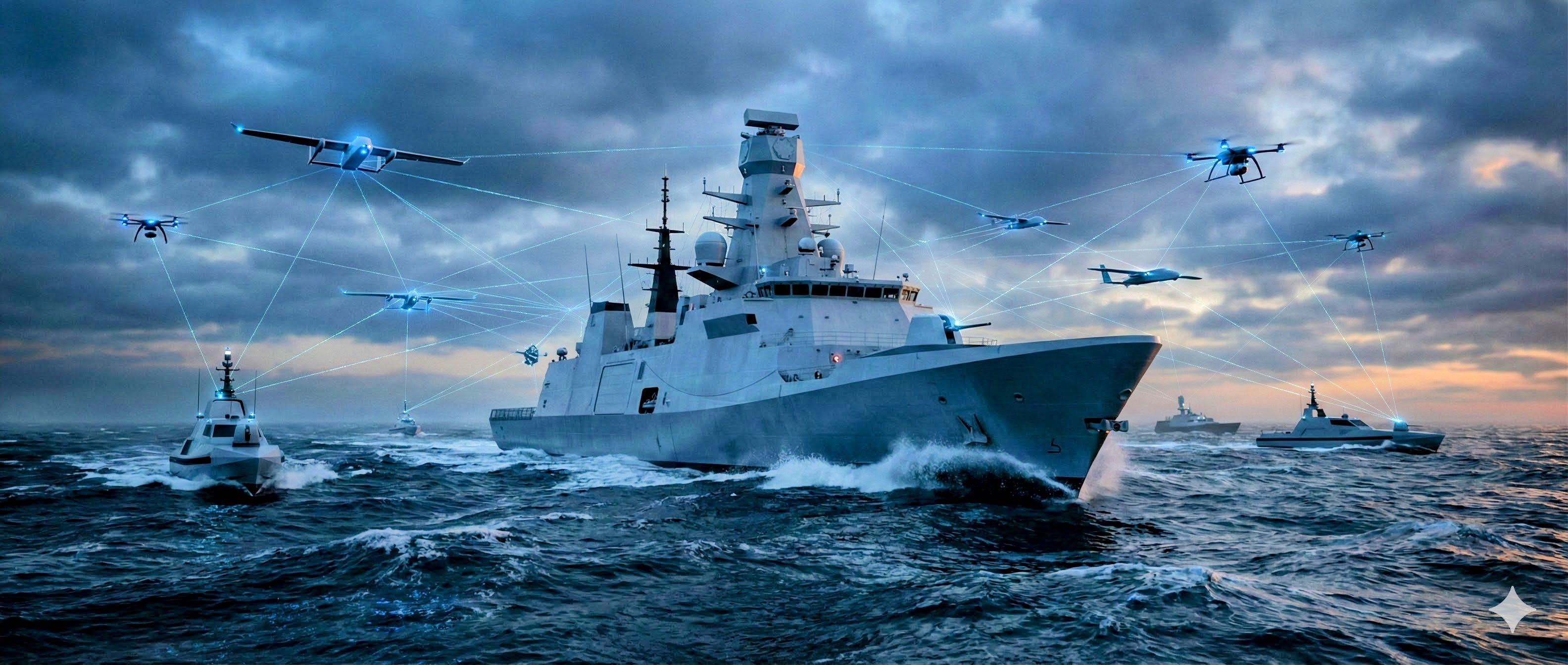
Imagine a typical day at sea in 2030 under the ‘persistence over prestige’ paradigm. The Royal Navy’s ships move silently through the North Atlantic, their sleek hulls equipped with advanced autonomous systems that scan the depths for undersea threats and potential hazards. A Type 26 frigate, leading a coordinated patrol mission, works seamlessly with the UK–Norway ASW partnership, sharing real-time data through a secure digital backbone.
Overhead, drones patrol the skies, communicating with a Type 31 frigate acting as a mothership to enhance surveillance and logistical support. Meanwhile, the crew aboard monitors massive data streams, supported by AI-enabled advisory systems, ensuring optimal decision-making. Across the fleet, every ship functions as a critical node in a vast, responsive security network, painting a vivid picture of a maritime force focused on resilience and adaptability.
That is a Future Navy at work!
If you found this useful, consider subscribing. This is where I work through longer-form thinking on the future of maritime power.
Since I’m an American I’ll put my American glasses on and look at your work through those lenses. Like the RN, the U.S. Navy enters the late 2020s at a structural inflection point. Carrier Strike Groups remain the most visible symbol of American maritime power, but they are operating in an environment defined by precision-strike saturation, proliferating drones, contested logistics, and software-defined warfare. The debate is no longer about whether carriers matter. It is whether carrier-centric force design should remain the organizing logic of the fleet.
Distributed Maritime Operations (DMO) promised a shift toward dispersion, resilience, and tailored force packages. Yet in practice, the Navy continues to default to exquisite platforms that concentrate combat power—and risk—into a small number of high-value units. Meanwhile, the true center of gravity in a potential Pacific conflict is increasingly clear: undersea advantage, survivable networks, munitions depth, and the ability to sustain forces across contested sea lines of communication.
Autonomy and unmanned systems offer mass and sensing density, but they are not a manpower panacea. Digital kill chains, mission data files, and software pipelines now shape operational sovereignty as much as hull count. The Navy’s problem is therefore not simply fleet size—it is strategic coherence. Does each platform decision increase distributed persistence under fire? Does it harden logistics, extend undersea reach, and thicken air and missile defense around the sustainment network?
The force-design choice is stark: preserve carrier primacy as default response, or deliberately rebalance toward a more distributed, logistics-protected, undersea-focused fleet. In an era of contested home waters in the Pacific, the scarce commodity is not prestige—it is persistence.
The RN has always lead the way, by a couple of decades, for us. It is good to see that we’re catching up!
Interesting article - thanks for sharing it, although I think you’re talking a very optimistic view indeed of the RN’s potential capabilities.
I see the two carriers as liabilities rather than assets, and I don’t understand their purpose. Beyond their last resort CIWS they entirely lack the ability to defend themselves (Ignoring the helos and the handful of F35Bs - the least capable version of a problematic aircraft). The glass bridge looks incredibly vulnerable - I hope there’s a Plan B for when that’s knocked out.
Their Type 45s escorts are similarly the least capable ‘destroyers’ in service with any western navy, even when they’re not waiting in a long queue for essential repairs and maintenance. They have zero strike capability and their short range Sea Ceptor AAMs are wholly inadequate to the task of defending themselves or the carriers against a determined attack by land based aircraft. Against an attack by surface warships they have absolutely no capacity whatsoever beyond a single 4.5” gun. No torpedo tubes and no ASMs. Against a ballistic missile strike, also nothing.
The Type 26s seem to have some potential, but they are far too few and far too expensive to risk playing hide and seek with enemy submarines (a very dangerous game).
The Type 31s are basically upscaled OPVs seemingly designed for export to third world navies (eg Indonesia), and won’t be much use in a conflict.
It’s a sad state of affairs altogether.