

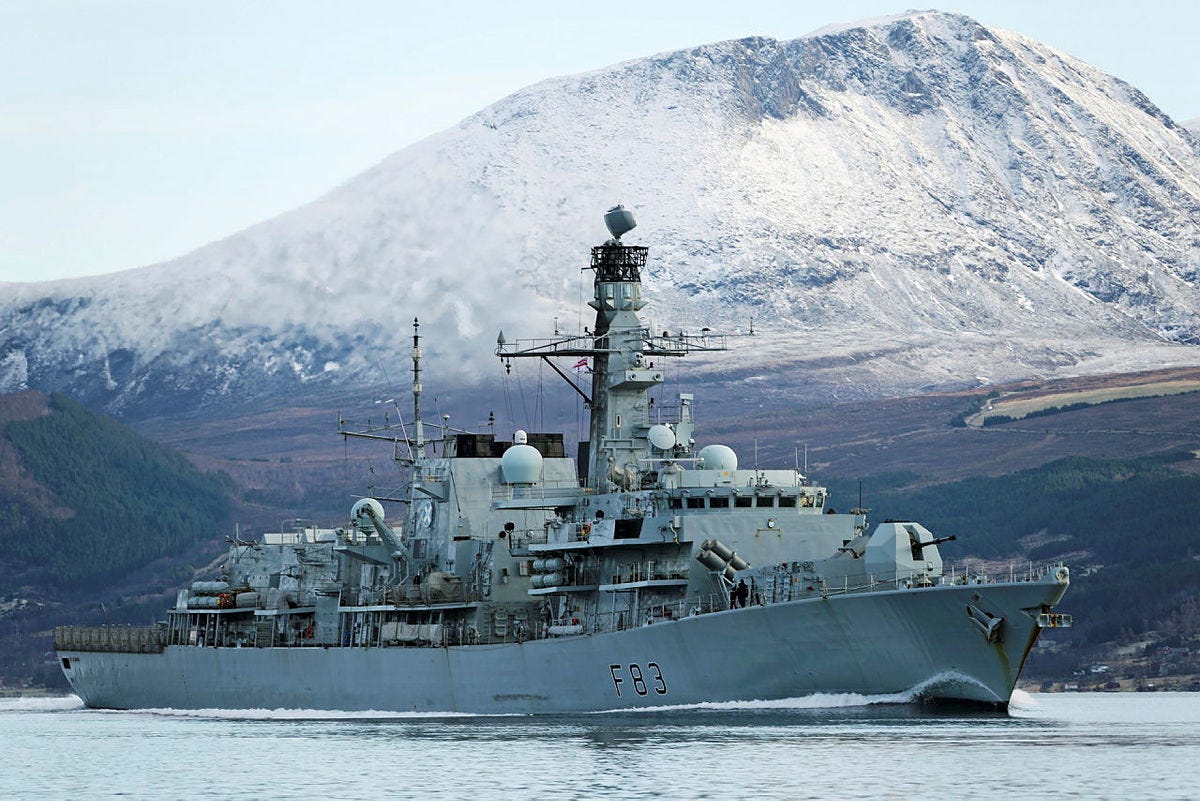
I have served on two first-of-class Royal Navy warships. HMS Boxer introduced the Computer Assisted Action Information System to the fleet. Later, HMS Norfolk became the first Type 23 frigate and the first Royal Navy ship to fire the vertical-launch Sea Wolf missile system. Both represented major steps forward for the Royal Navy.
Neither became fully operational overnight.
Trials took years. Defects were discovered and corrected. Systems evolved. Crews learned what worked and what did not. Tactics were refined. Confidence was earned. The journey from launch to operational capability took years, not months. That experience has been on my mind recently as I watch the debate surrounding the Royal Navy’s future.
We hear a great deal about Atlantic Bastion, autonomous systems, artificial intelligence, distributed sensing and the Hybrid Navy. We hear about Type 26, Type 31 and a future fleet that will combine crewed warships with large numbers of uncrewed systems.
It is an ambitious vision.
Indeed, it may be the only realistic vision available to a country that cannot simply rebuild its Cold War fleet numbers. The question is not whether the vision is compelling. The question is whether the Royal Navy can successfully navigate the transition period required to get there.
The Difference Between Transformation and Recovery
Recent weeks have not been kind to the Royal Navy’s public narrative. Reports of further issues affecting HMS Prince of Wales. Ongoing uncertainty over defence spending. Delays to major shipbuilding programmes. All of the Royal Navy’s five operational Astute-class nuclear attack submarines are currently docked for repairs or maintenance, leaving the UK with no available "hunter-killer" submarines at sea. Questions over manpower, retention and readiness. Taken individually, none of these developments represents a crisis. Taken together, however, they reveal an important truth.
The Royal Navy is attempting to transform itself while simultaneously recovering from decades of contraction. Those are not the same thing. Transformation is about introducing new technologies, concepts, and ways of operating.
Recovery is about generating deployable ships, trained crews, available weapons and sustainable readiness. Both are essential. The challenge is that the Navy must now achieve both simultaneously.
The Type 23 Problem
The future escort fleet is often discussed as though it is already arriving. In reality, the burden still rests firmly on the shoulders of the Type 23 frigate force.
That should not be viewed as a criticism.
The remaining Type 23s are still highly capable warships. Their combat systems have been modernised. Sea Ceptor has given them a credible and effective air defence capability. Sonar 2087 remains one of the most respected anti-submarine systems in NATO service. Combined with Merlin and Wildcat helicopters, they continue to provide a formidable contribution to North Atlantic operations. The issue is not capability.
The issue is time.
Each additional year of service increases maintenance demands. Spare parts become harder to source. Refit periods grow more complex. Unexpected defects become more likely. The steel may endure; availability becomes the challenge.
And despite the understandable excitement surrounding Type 26 and Type 31, history suggests caution.
Operators understand something often lost in public discussion.
A ship launched is not a ship deployed.
A commissioned ship is not an available ship.
The concept demonstrated is not a capability that has been fielded.
The first Type 26 and Type 31 frigates will represent significant advances. However, anyone who has experienced the introduction of a first-of-class warship knows that operational maturity takes time. Lessons from the first ship influence the second. The second influences the third.
This process cannot be rushed.
The result is an uncomfortable reality.
The Royal Navy remains dependent upon the successful sustainment of today’s fleet while waiting for tomorrow’s fleet to arrive.
The Human Challenge
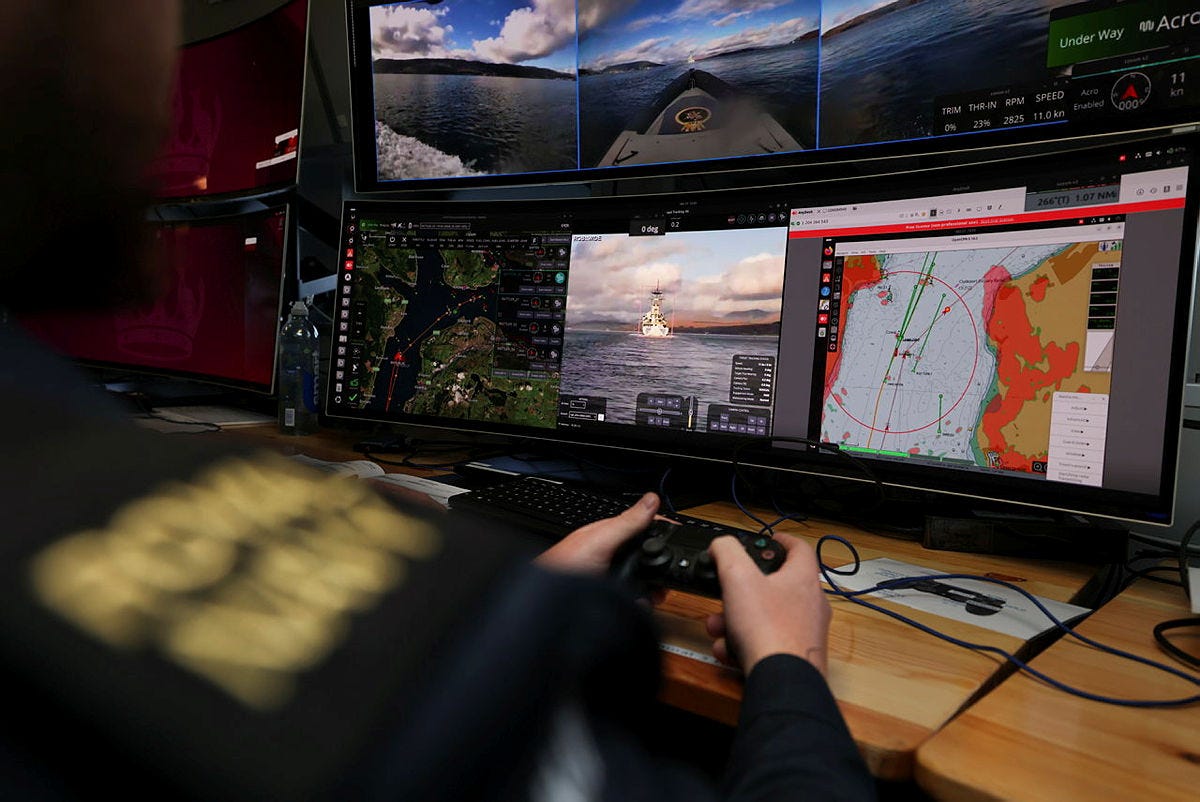
Yet I increasingly believe that the greatest challenge is not technical. It is human. Much of the discussion surrounding future naval power focuses on ships, drones, artificial intelligence, and sensors. Navies, however, are built from people.
Throughout my career, I learned that warships are not defined by their combat systems alone. They are defined by the teams that operate them.
A ship can survive defects.
A ship can survive bad weather.
A ship can survive lengthy deployments.
Sustaining performance becomes harder when uncertainty is constant.
Will the deployment be extended?
Will there be enough people?
Will promised improvements arrive?
Will the future ever seem closer than the next maintenance period?
These are not technology questions. They are questions of confidence. And confidence is every bit as important as capability. The current generation of sailors carries a significant burden. They maintain an ageing fleet while preparing to operate a fundamentally different one. They must sustain today’s commitments while embracing tomorrow’s concepts.
That is no small task.
Holding the Line
I support the Royal Navy’s direction of travel. I believe autonomous systems will play an increasing role in maritime operations. Artificial intelligence will become an important enabler of command and decision-making. Atlantic Bastion addresses a genuine strategic challenge. Type 26 and Type 31 will ultimately become highly capable warships.
The danger is not that the vision is wrong.
The danger lies in assuming that announcing a future capability is the same as possessing one. The next five years may prove more difficult than the decade that follows.
The Royal Navy must maintain credible global operations, sustain ageing but capable ships, introduce new warship classes, integrate autonomous systems, adapt its training model, and retain enough experienced sailors to bridge the gap between today’s fleet and tomorrow’s. That is a formidable undertaking for any navy.
Success is possible. But before the Royal Navy can fight the future fleet, it must sustain the current one. That means keeping the Type 23 force operationally credible. It means delivering Type 26 and Type 31 into meaningful service. It means retaining experienced sailors and developing the next generation. Above all, it means recognising that transformation and recovery are not the same thing.
The Royal Navy is attempting both at once.
History may judge that achievement more difficult than any individual technology programme.
Technology can be accelerated. Professional judgement still takes time.
Further Reading
The Strategic Defence Review 2025
The foundation document for Atlantic Bastion, the Hybrid Navy and the Royal Navy’s future operating model.
Emma Salisbury, Atlantic Bastion: The Future of Anti-Submarine Warfare
An excellent exploration of the concept that sits at the centre of the Royal Navy’s future North Atlantic strategy. It highlights both the opportunities and the unanswered questions surrounding persistent undersea surveillance.
Sidharth Kaushal and John Louth, Prototype Warfare in the Maritime Domain
A thought-provoking RUSI paper examining how navies can adapt more rapidly through experimentation and iterative development rather than waiting for perfect solutions.
U.S. Navy Fighting Instructions (2026)
Admiral Daryl Caudle’s framework places Sailors, Fleet and Readiness at the centre of naval transformation. A useful reminder that future capability depends upon people as much as technology.
The Human Edge of the AI Fleet (Future Navy)
My earlier exploration of how leadership, trust and professional judgement remain critical as AI systems become increasingly embedded in naval operations.

I think the true situation is far worse than your summary.
The Royal Navy has a single operational destroyer (if you can call the Type 45s destroyers; a single 4.5” deck gun; short range Asters for air defence and no VLS Cells). It took two weeks to get it ready for a Mediterranean deployment, and as soon as it got there it broke down.
As you relate, the availability of the Astute Class SSNs is currently zero. Possibly there is a single at sea SSBN but possibly not.
The QE Class similarly have zero availability, but even when they are operational they are essentially useless except as - possibly - part of a USMC MEF. Consider; the ships have no ability to defend themselves except their own F35Bs - the least capable variant of the troubled F35 program, and a few last resort cannon and machine guns. And of course there are no escort vessels to protect them.
The Type 23s are worn out rust buckets and would have all been scrapped if there had been anything to replace them with.
The Type 26s are lightly armed (36 VLS cells) compared to their competitors, and carry only the short range Sea Ceptors for air defence.
And seriously, does the Navy really intend use a $2 billion Type 26 frigate to play tag with a Russian submarine carrying Mach 3 Oniks and Kalibr anti ship missiles?
And yet, using NATO flag rank equivalent ranks, the Royal Navy has 110 admirals!