

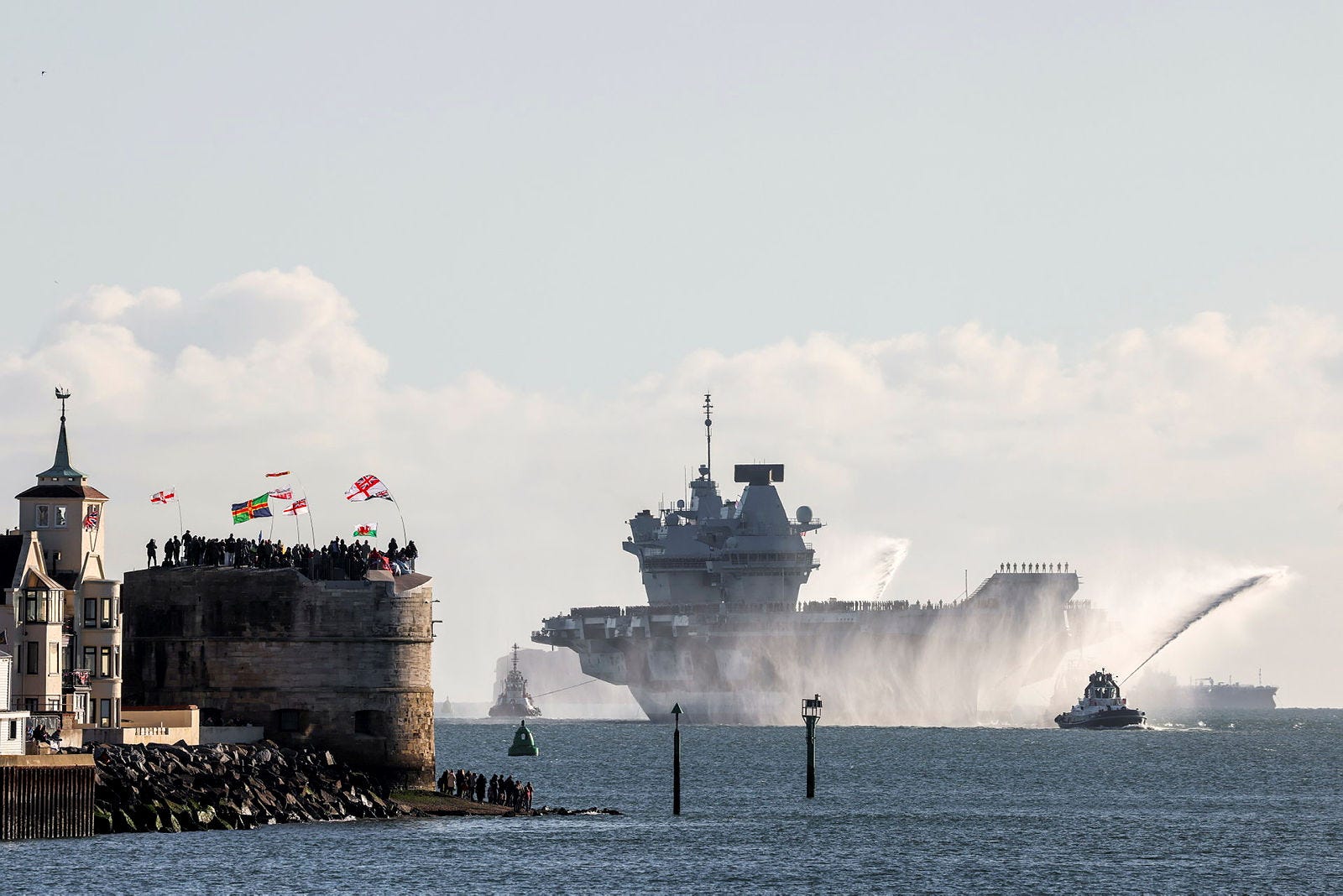
The return of the UK Carrier Strike Group this weekend marks more than the end of a long deployment. It marks the moment the Royal Navy crossed a threshold it has been approaching for years. The technologies we’ve discussed across Future Navy — autonomy, AI-enabled sensing, distributed mass, hybrid air wings — were not concepts on paper or prototypes on the hardstand. They were at sea, working alongside sailors, shaping decisions and expanding the task group’s operational envelope.
This deployment quietly demonstrated that the Royal Navy is no longer preparing for a future force. It is already operating as one.
Hybrid Air Power Arrives at Sea
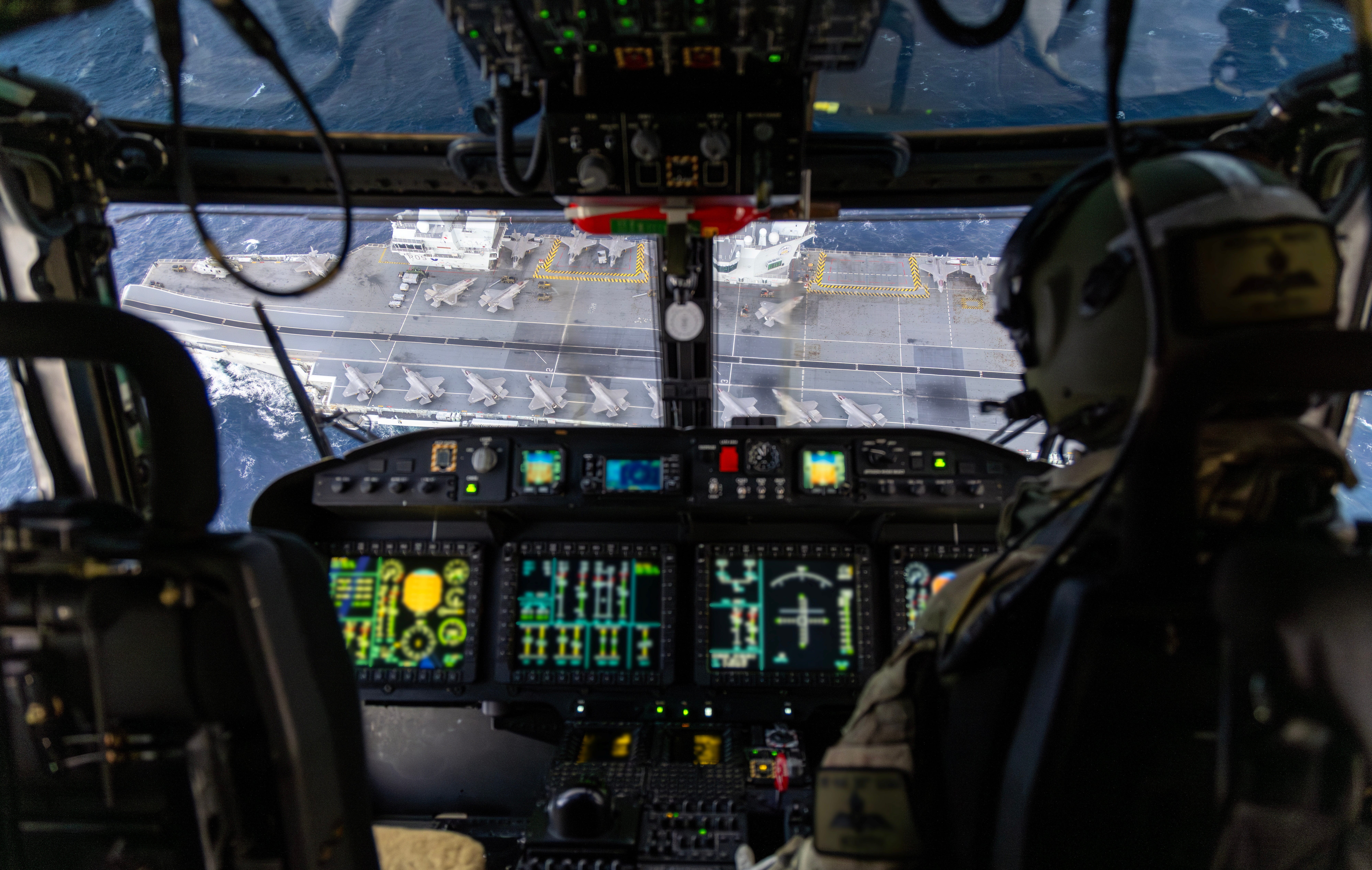
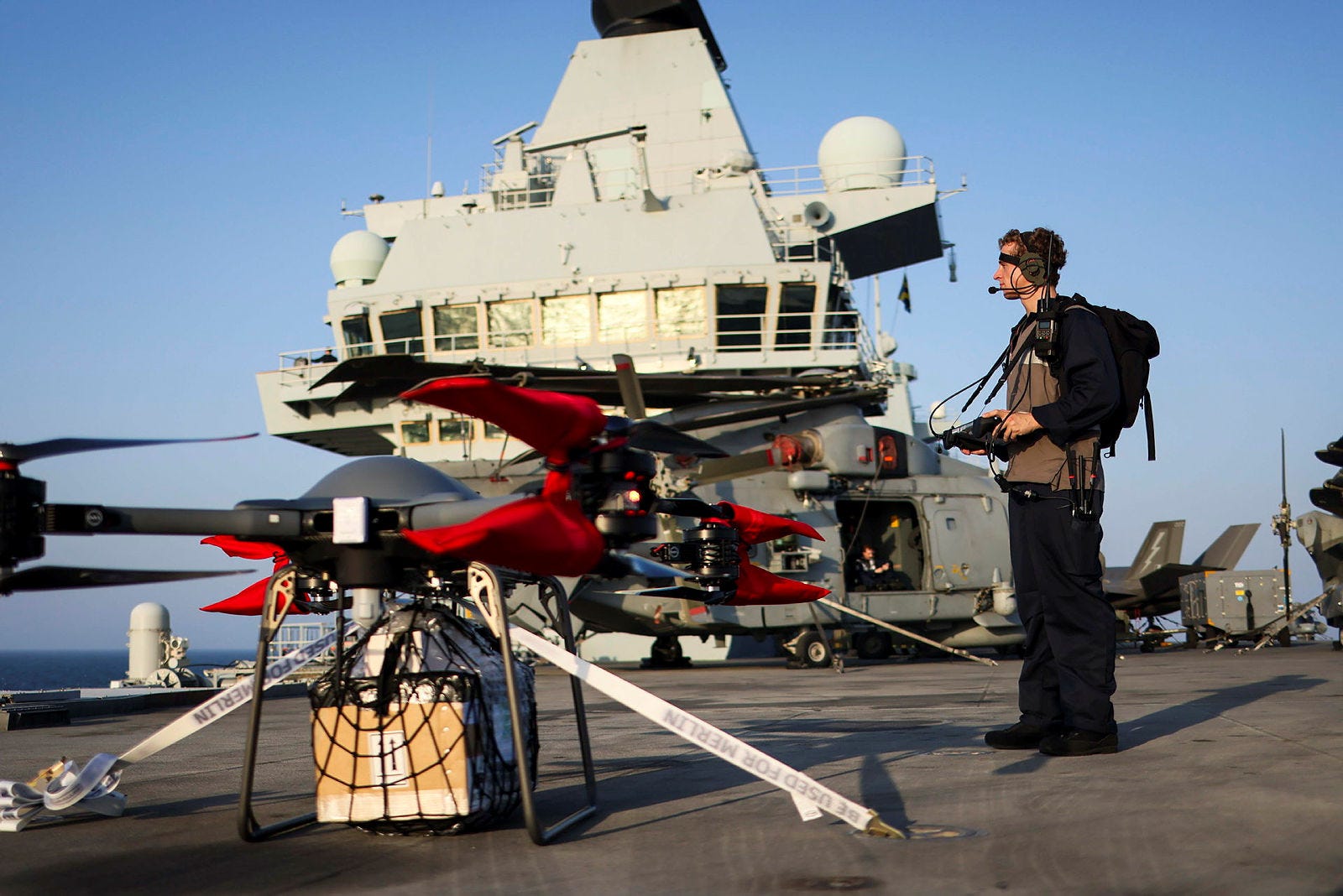
One of the most visible steps forward was the emergence of a hybrid air wing. Heavy-lift drones carried out repeated ship-to-ship delivery tasks between HMS Prince of Wales and her escorts, performing the small but essential logistics movements that usually consume helicopter hours.
Alongside these trials, the new Peregrine rotary-wing drone provided extended surveillance from the deck of a surface combatant — a small, precise system that delivers persistent sensing and frees up Merlin and Wildcat crews for the high-end missions only they can perform.
Taken together, these developments show what a hybrid air wing looks like in its early stages: crewed jets and helicopters augmented by agile autonomous systems that expand the carrier’s reach without expanding its crew.
This will only accelerate. Heavier drones, faster drones, and eventually jet-powered uncrewed air systems will follow. The Strike Group demonstrated the first building blocks of that shift.
The First Steps Toward Uncrewed Escorts
While the Strike Group was busy across the Indo-Pacific, experimentation closer to home took a significant leap. The Rattler uncrewed surface vessels conducted coordinated manoeuvres with HMS Tyne, holding formation, streaming sensor data in real time, and demonstrating how distributed mass could be added to a task group without adding another manned hull.
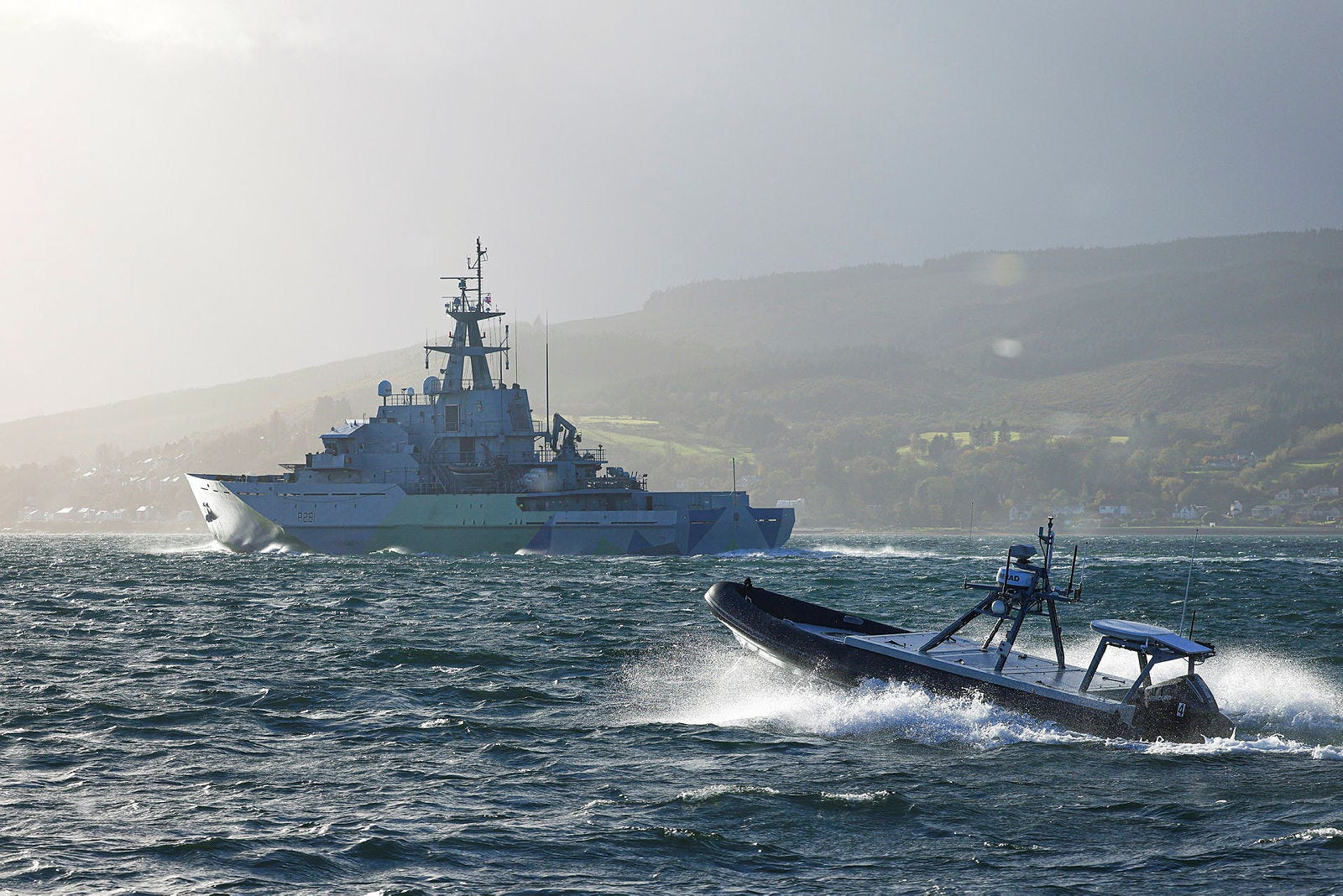
This wasn’t a slow, multi-year development cycle. It was an example of the Navy’s new test–iterate–deploy tempo. And I had the chance to see that tempo up close during my visit to XV Patrick Blackett, the Navy’s experimental ship. Standing on her deck, talking with the sailors and engineers who are driving the Rattler programme forward, it was clear how quickly this culture is changing. The Blackett operates as a genuine experimentation engine: trying new systems at sea, breaking them, fixing them, and pushing them back into trials within days rather than months.
The connection between that culture and the progress of the Rattler programme is direct. When small, fast-moving uncrewed vessels can be controlled from hundreds of miles away, behave predictably around a crewed ship, and pass data cleanly into a task group’s picture, you are no longer in the realm of theory. You have the foundations of future uncrewed escorts — platforms that extend reach, absorb risk, create deception options, and increase mass without increasing the workforce.
The Strike Group returned home at precisely the moment the Royal Navy showed it could genuinely operate in this way. It marks the beginning of a profound shift in the Fleet’s structure.
AI and the Underwater Battlespace
Under the surface, the transformation is equally significant. The UK’s Atlantic Bastion programme, its investment in AI-enhanced sonar processing, and its development of autonomous underwater platforms all matured during the deployment window.
New autonomous systems — from extra-large uncrewed submarines to unmanned rotary aircraft and torpedo-tube-launched vehicles — are now entering trials with a level of ambition and urgency that signals a fundamental rethinking of underwater operations. Algorithms designed to accelerate contact classification and cross-platform targeting are already being developed in cooperation with allies. The Strike Group’s multinational anti-submarine exercises provided valuable data on how these tools will be integrated in practice.
The underwater battlespace is no longer solely the domain of large crewed submarines. It is becoming a layered network of sensors, machines and crewed platforms working together at machine speed.
Technology Diplomacy Across the Indo-Pacific
During the deployment, the Strike Group functioned not only as a carrier force but also as a diplomatic and technological anchor. It showcased British innovation at major events, participated in regional exercises emphasizing robotics and autonomy, and strengthened partnerships with countries that share the UK’s maritime perspective.
The collaboration with Japan, integration into FPDA exercises, and engagement with industry at technology forums all highlighted a crucial point: the UK is not merely deploying military hardware. It is also promoting ideas, capabilities, and collaborative frameworks that will shape the next decade of naval power in the region.
A Fleet That Returned Stronger Than It Sailed
The return of the Carrier Strike Group signifies the conclusion of a successful deployment, but more importantly, it marks the beginning of a new chapter.
The Navy has effectively operated with multiple autonomous air systems at scale. It has shown credible progress toward the use of uncrewed escorts, advanced AI-enabled sensing, and underwater autonomy. Additionally, it has validated the mindset shift necessary for innovation at speed. In light of the pressures facing the Fleet, this deployment should be viewed as a reassuring milestone. The future Royal Navy—hybrid, distributed, data-driven, and persistent—is already emerging. Sailors and aviators have experienced, tested, and proven these advancements.
The next Strike Group to deploy will go even further, and the one after that will be unrecognizable to those of us who served in a purely analog age.
Overall, the Fleet returned home stronger than when it set out, which is the definitive measure of progress.
Further Reading
For deeper exploration of the themes and developments referenced above:
Royal Navy drone logistics and hybrid air trials
Peregrine rotary-wing UAV operational deployment
RN experimentation on XV Patrick Blackett
Rattler uncrewed surface vessel programme
ASW Spearhead: CETUS, PROTEUS, SCYLLA
Atlantic Bastion and AI-enhanced ASW analytics
AUKUS Pillar 2 developments in maritime autonomy
UK–Japan carrier cooperation
FPDA Exercise Bersama Lima
Carrier Strike Group post-deployment summaries