

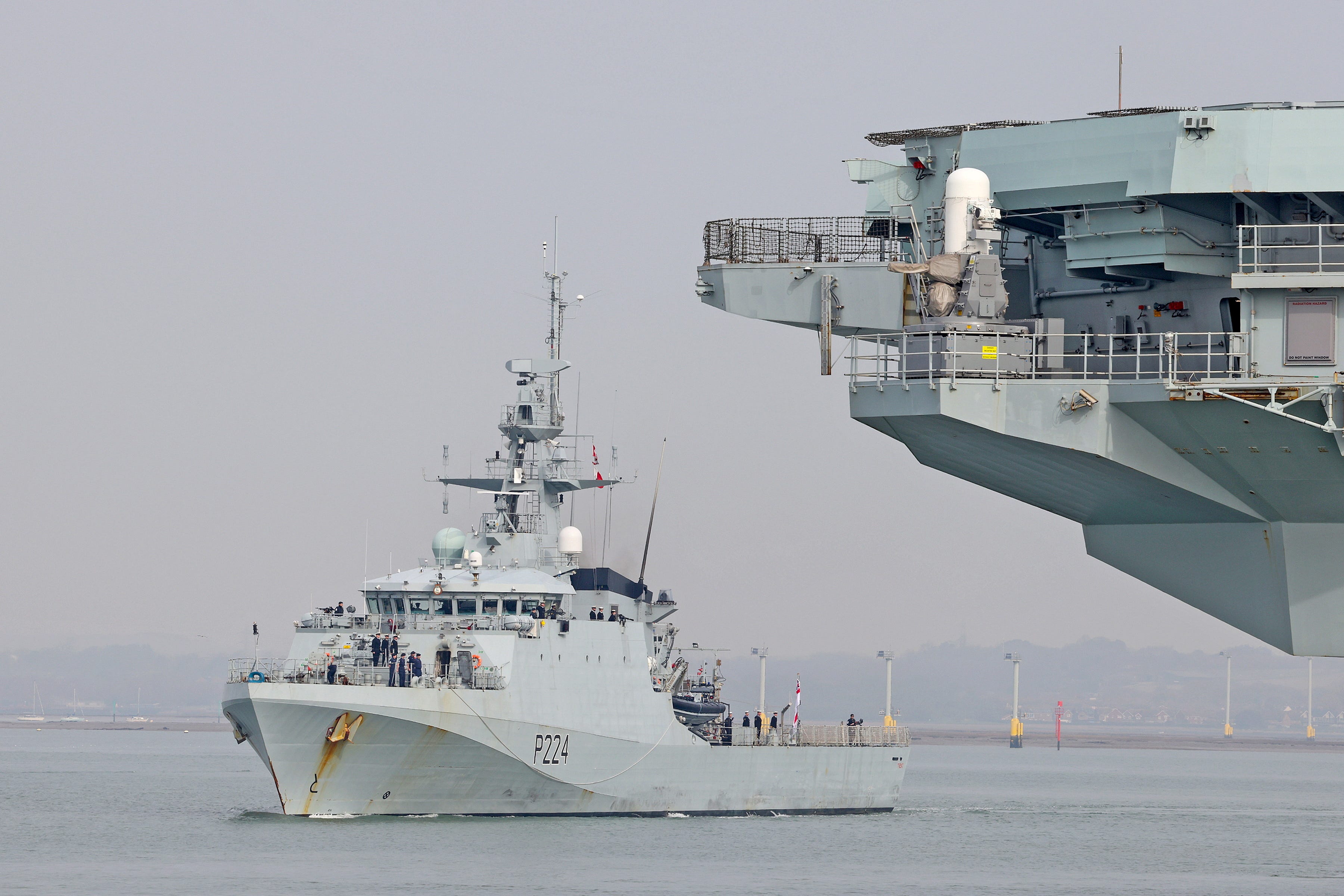
In 2026, the Royal Navy faces a period of strategic compression. Persistent challenges related to personnel, submarine availability, and surface escort numbers have shifted from abstract trends to immediate operational constraints. Simultaneously, the North Atlantic has transitioned from a stable rear area to an active strategic environment, influenced by Russian naval resurgence, vulnerabilities in undersea infrastructure, and increased volatility within the alliance.
The distinctiveness of the current moment arises not solely from Russian actions but from the erosion of foundational assumptions that have guided British and NATO maritime planning for decades. Recent United States rhetoric and policy signaling regarding Greenland and the Arctic have introduced significant strategic uncertainty within the alliance. This uncertainty now directly affects British maritime capabilities.
This analysis argues that the Royal Navy is facing a convergence of crises rather than a single challenge. Internal overstretch, limited submarine availability, and alliance volatility now interact in ways that reduce decision time and eliminate operational margins for error. The North Atlantic has shifted from a managed environment to a comprehensive stress test. The manner in which Britain responds in the next two to three years will determine its maritime relevance for decades.
The human constraint
In 2026, the primary constraint on British maritime power is not the quantity of vessels, but the availability of adequately trained personnel to operate them.

Recruitment levels remain structurally low. Recent data indicate that the Royal Navy is significantly underperforming its intake targets, with delays between application and basic training approaching 10 months. In a labor market that prioritizes speed and flexibility, such delays often prompt technically skilled candidates to leave the service for the private sector before they join.
While retention rates have shown modest improvement, supported by targeted financial incentives, these gains obscure underlying challenges. Specializations such as marine engineering, cyber, digital, and medical fields continue to experience significant strain as they compete with civilian industries that offer higher compensation, greater stability, and more predictable family life. Retention bonuses and pay supplements have provided temporary relief but have not addressed the root causes.
Consequently, the Royal Navy remains capable of deployment, but only by placing increasing demands on a diminishing pool of specialists. This situation is unsustainable. While ships and maintenance cycles can be extended, personnel cannot be stretched indefinitely.
In 2026, the central challenge for the Royal Navy is not the number of ships in its inventory, but the limited number of reliable crews it can generate.
The submarine competency cliff
This issue is most pronounced within the submarine service.
Maintaining continuous at-sea deterrence with an aging ballistic missile submarine fleet has enabled record-length patrols. While extended deployments have maintained deterrence, they have introduced high costs. Mental strain, family separation, and exhaustion have become structural features of the operational model rather than incidental side effects.

A further, more serious consequence is that extended maintenance periods and platform unavailability reduce operational time at sea for the broader submarine workforce. As a result, junior officers and engineers accumulate fewer operational hours, thereby eroding tacit knowledge. The instinctive judgment developed through repeated exposure becomes increasingly difficult to transmit.
An effective deterrent force relies not only on platforms but also on depth of experience. As this depth diminishes, the risk associated with succession increases. The primary danger is not immediate failure, but the gradual development of fragility—a force that appears operationally intact while its underlying resilience quietly erodes.
Simultaneously, attack submarine availability has declined to critically low levels. Although the existing submarines are highly capable, capability without availability does not constitute effective deterrence. With only a limited number of deployable submarines at any time, operational priorities such as protecting the deterrent, monitoring Russian activity, and securing undersea infrastructure increasingly compete rather than complement each other.
While the future deterrent is under development, the current deterrent is maintained primarily through endurance and professionalism. However, this approach does not equate to genuine resilience.
Surface fleet reality and the frigate gap
In 2026, the surface escort force is undergoing a period of fragile transition.
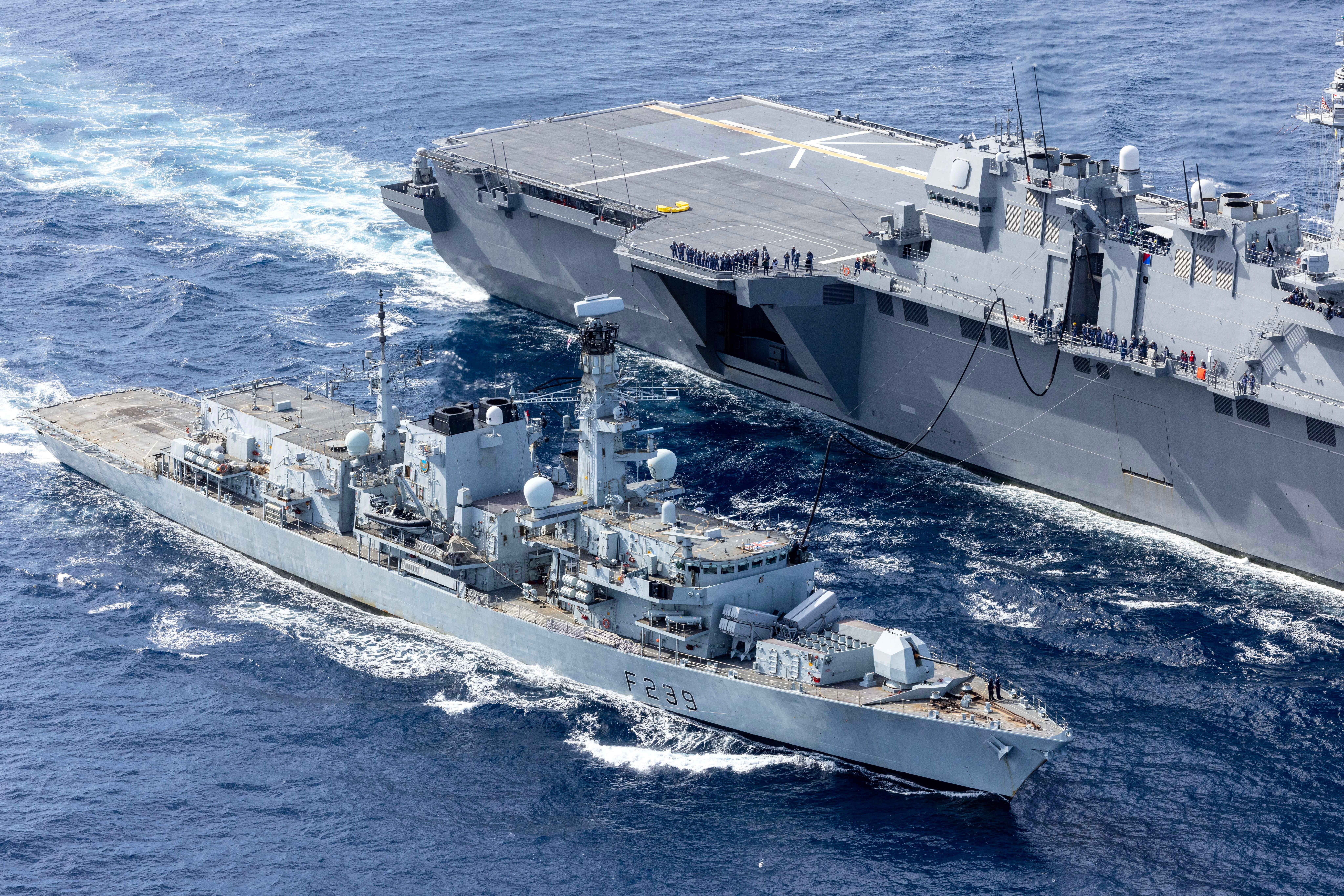
With older frigates retiring more rapidly than replacements are commissioned, fleet numbers have fallen below levels necessary to comfortably meet standing commitments. Maintenance cycles are extended, and availability has become unpredictable. Although official fleet totals remain unchanged, the actual deployable force is significantly reduced.
These developments have already altered British deployment patterns. Carrier strike groups continue to operate, but increasingly rely on multinational escort screens. While allied support is a core strength of NATO, dependence becomes a vulnerability when it transitions from reinforcement to substitution.
The central concern is not one of embarrassment or prestige, but rather the sovereignty of action. A navy unable to reliably protect its most valuable assets without external support must accept limitations on the timing, location, and manner of their deployment.
Britain retains the capacity for global operations, but increasingly faces challenges in doing so independently.
Type 31 and the limits of mass
The Type 31 frigate plays a central role in restoring the mass of the surface fleet. Its accelerated construction schedule will enable it to enter service more quickly than previous classes, a significant development.
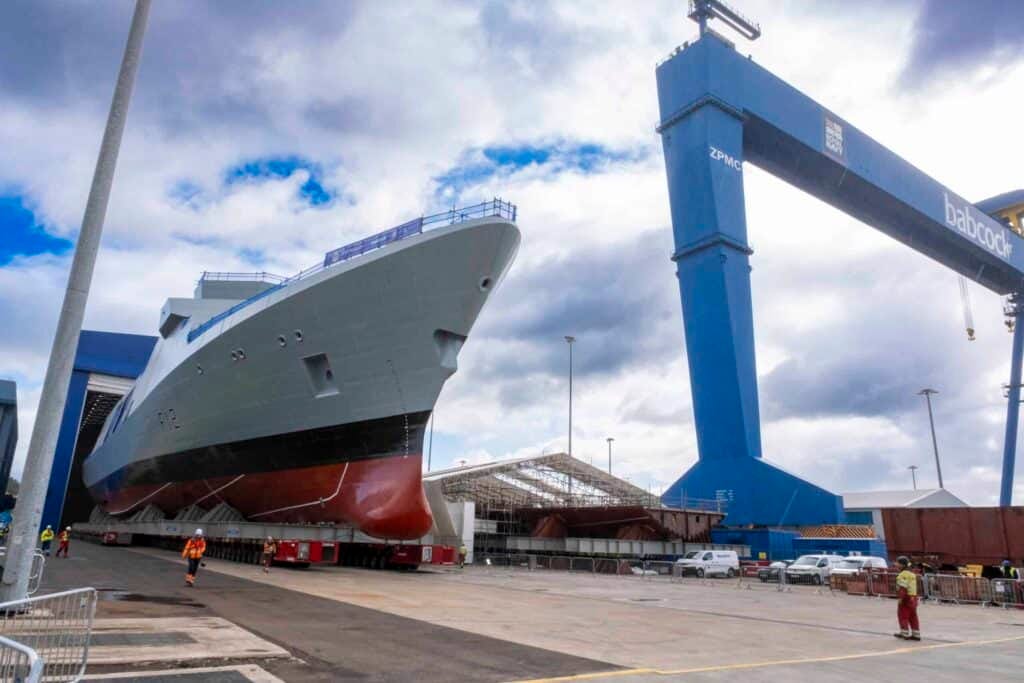
However, the Type 31 is not a direct replacement for its predecessors. Its initial configuration emphasizes presence, partnership, and flexibility rather than high-end warfare. This design choice is legitimate, provided its limitations are clearly understood.
The Type 31 provides strategic value primarily when integrated into a broader network of sensors, allied forces, and decision-making systems. It enables more capable assets to focus on demanding tasks, reassures partners, and maintains presence. However, it does not serve as a substitute for anti-submarine warfare dominance.
The primary risk is not that the Type 31 is under-armed, but that its role may be misunderstood. Mischaracterizing such platforms as comprehensive war-fighting solutions can foster false confidence and lead to fragile operational plans.
Greenland and the alliance fracture
In 2026, the most destabilizing factor in the North Atlantic arises not from Moscow, but from alliance politics.

The United States’ emphasis on Greenland as a strategic asset reflects genuine concerns, including missile defense geometry, space surveillance, Arctic access, and undersea infrastructure. However, rhetoric and signaling are as consequential as intent. Publicly questioning sovereignty establishes significant precedents.
For NATO, these developments have profound implications. The alliance is predicated on the assumption that threats originate externally. When internal pressures arise, the foundational logic of collective defense is challenged.
For the United Kingdom, this dilemma is particularly acute. The UK is deeply integrated with American nuclear, naval, and technological systems, while also bound by treaty obligations and trust to European allies, including Denmark. A dispute over Greenland is not a hypothetical issue; it is situated directly across the GIUK gap, the principal maritime corridor of the North Atlantic.
For the first time since NATO’s establishment, British defense planners must consider partial strategic divergence within the alliance as a credible planning assumption rather than an improbable anomaly.
This situation does not necessarily indicate an alliance rupture, but it does introduce significant uncertainty. Such uncertainty fundamentally alters risk management requirements.
The GIUK gap and the undersea domain
The Greenland-Iceland-UK (GIUK) gap has regained strategic relevance, not as a Cold War relic, but as a contemporary challenge involving sensors, infrastructure, and decision-making processes.
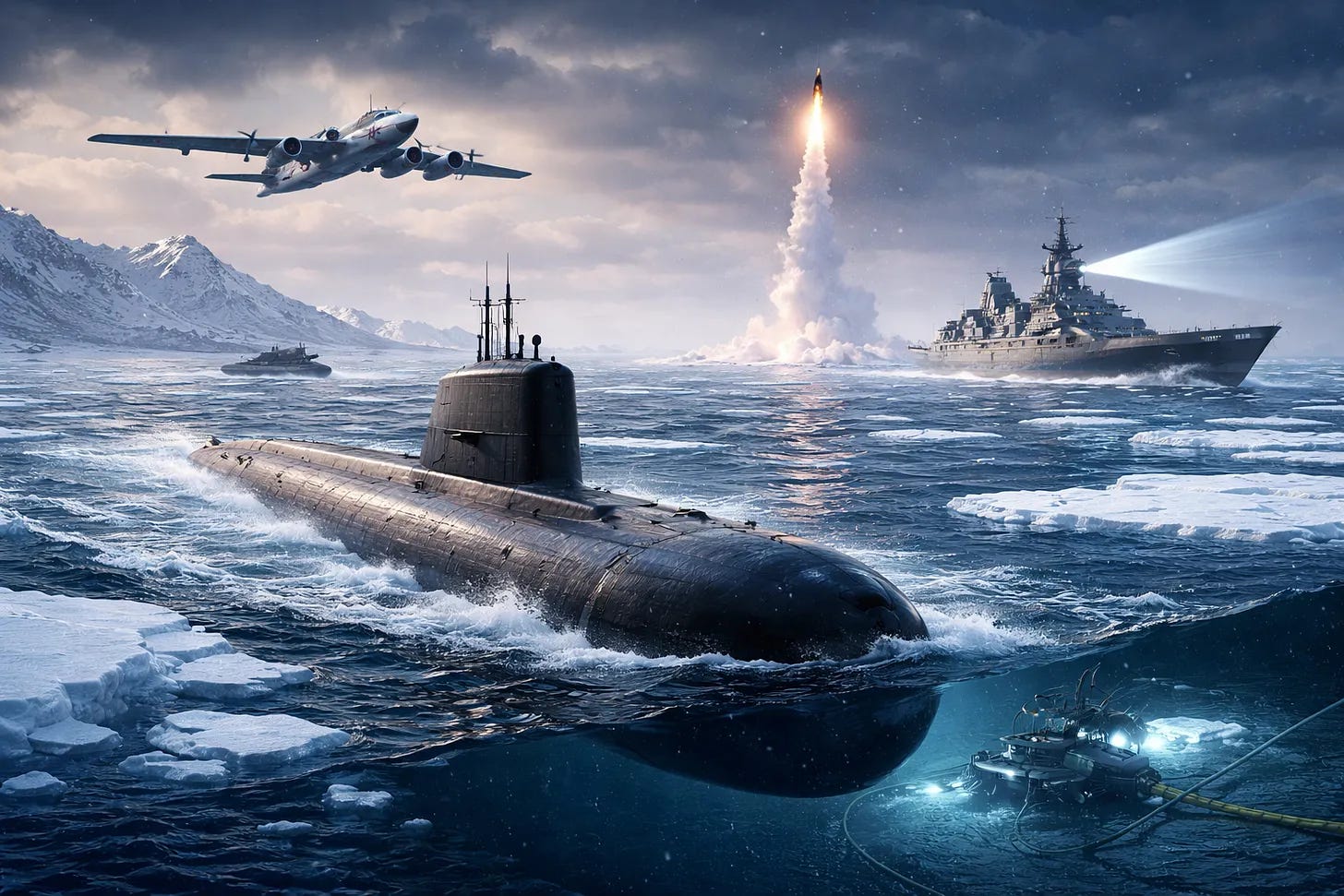
Russian submarines persistently test NATO’s capacity to detect, track, and respond. The presence of undersea data cables further increases the stakes. Disruptions below the threshold of armed conflict can impose substantial economic and political costs without provoking an immediate military response.
Detection, in isolation, does not constitute deterrence. A sensor barrier without the capacity for follow-on action only enhances situational awareness, not adversary behavior. Effective deterrence requires operational depth, persistence, and the demonstrated ability to impose costs when necessary.
Consequently, the North Atlantic should be viewed not as a single chokepoint, but as a layered battlespace. Surveillance, decision-making advantage, allied integration, and resilience have become more critical than the capabilities of any individual platform.
Northern integration as strategic adaptation
In response to limited force mass and increasing uncertainty, the Royal Navy has pursued deeper integration, and its partnership with Norway exemplifies this approach. Shared platforms, coordinated training, personnel exchanges, and common logistics generate operational depth unattainable by either navy independently. Interchangeability functions as a genuine force multiplier. It is a force multiplier.
A similar approach is evident in the air domain, where maritime patrol aircraft networks now function as collective systems rather than isolated national assets. This integration accelerates information flow, extends coverage, and reduces operational gaps.
This strategy does not replace sovereign capability, but compensates for its limitations. In an era of constrained resources and volatile alliances, achieving operational depth through integration is essential for survival.
Money, mass, and relative power
Although Britain’s defense spending is increasing in absolute terms, it is being surpassed in relative terms by other states.
Frontline NATO states are increasing their defense expenditures more rapidly, driven by geographic proximity and heightened threat perceptions. This dynamic has shifted the balance of relative influence. While Britain remains a leading contributor, it no longer sets the pace within the alliance.
Relative power is significant, as influence within alliances derives from tangible contributions as well as strategic intent. A navy that diminishes in comparison to its peers risks becoming a specialist adjunct rather than a central actor.
Ambition that is not matched by sufficient force mass ultimately results in rhetorical gaps, which have now become apparent.
Conclusion: a narrowing margin

In 2026, the Royal Navy remains professional, adaptable, and globally engaged. Personnel continue to perform under significant strain, future platforms are in development, and alliances remain robust.
However, the operational margin has significantly narrowed.
Personnel fragility, submarine overstretch, surface fleet transition, and alliance uncertainty are no longer isolated issues. They reinforce each other. Together, they compress time and remove slack from the system.
Professionalism cannot serve as a long-term substitute for adequate capacity. Endurance is not a replacement for resilience, and alliance cohesion can no longer be taken for granted.
The security of the North Atlantic can no longer be assumed; it is currently undergoing significant testing.
How Britain chooses to manage people, integrate allies, and confront uncomfortable assumptions in the next few years will determine whether the Royal Navy remains a central guarantor of Atlantic security, or a highly professional force operating permanently at the edge of its limits.
A sharp and timely piece.
Yes, margins are tight. But this is also a moment of clarity. It’s a chance to refocus on what navies are for, how alliances really work, and how capability isn’t just about what a ship carries—it’s about the trust, timing, and teamwork behind it.
Britain still has both the voice and the experience to lead by example, especially in the G-I-UK gap area.