

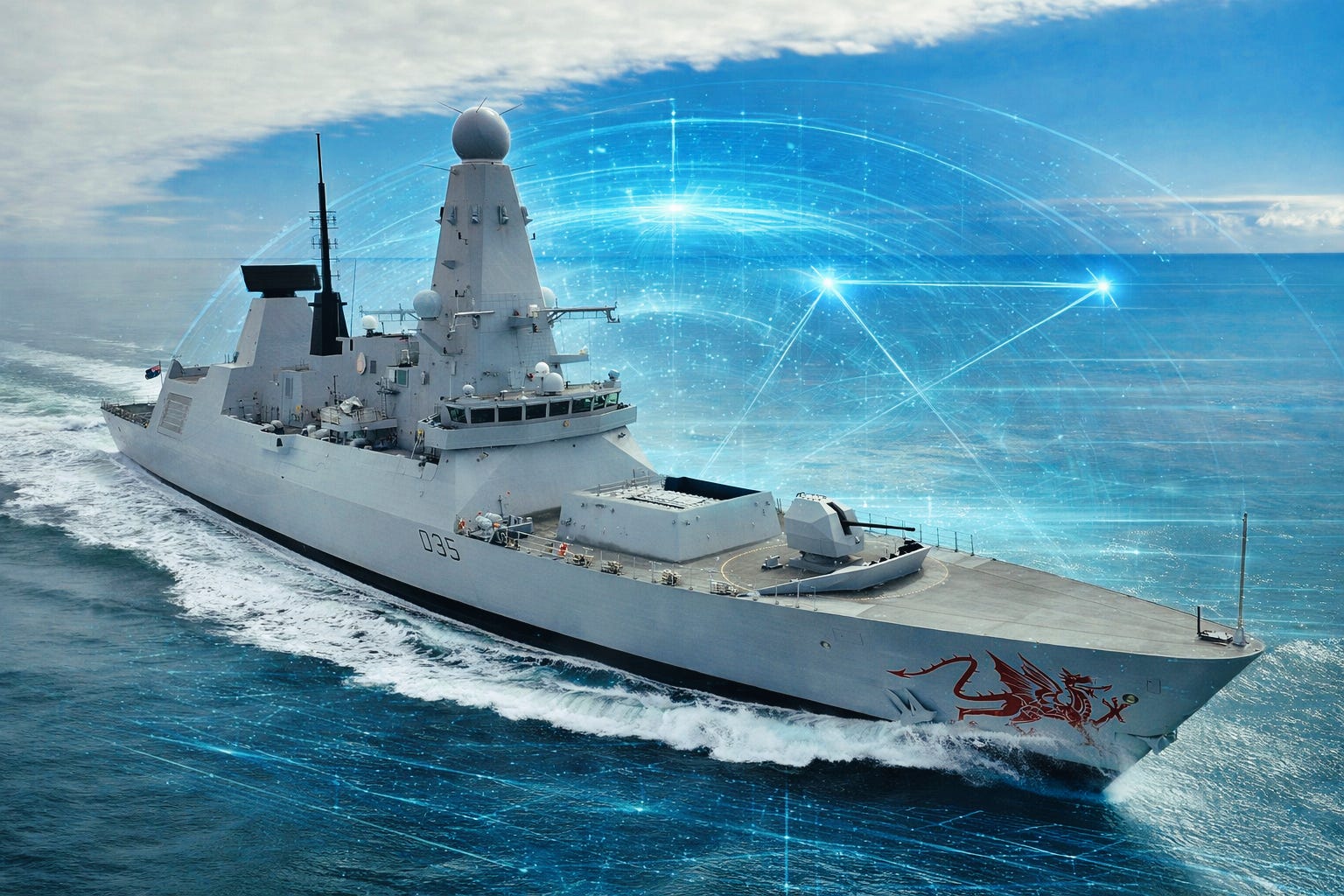
When HMS Dragon was rapidly deployed to the Eastern Mediterranean in March 2026 after drone strikes near RAF Akrotiri, debate focused on Royal Navy readiness. Yet, this event illustrates a fundamental shift in what readiness means for a modern navy.
Why did it take several days for a frontline destroyer to sail?
Commentators cited causes from dockyard contracts to industrial decline. However, these miss the deeper point: HMS Dragon is a highly integrated combat system. Preparing her is not just about mechanics, but increasingly about digital reconfiguration.
The episode illustrates a broader reality that defence planners are still coming to terms with: modern warships are increasingly software-defined platforms.
This evolution sets the stage for understanding changes in how navies prepare and deploy their ships.
A Ship Being Re-Rolled for War
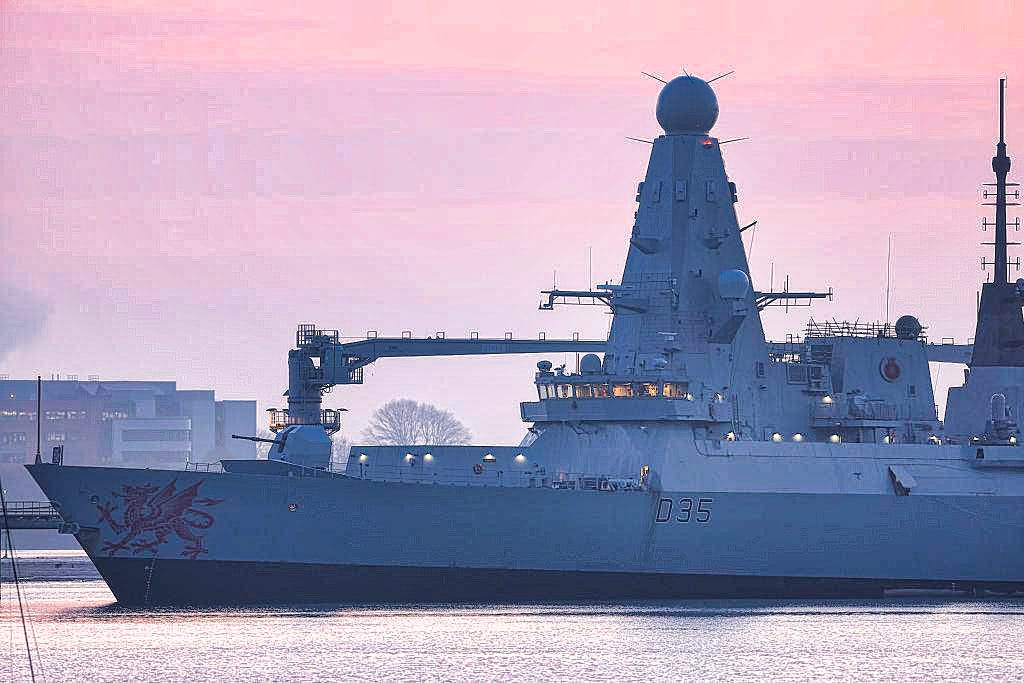
Public reporting suggested that the work carried out on Dragon compressed weeks of preparation into a matter of days. Crews reportedly worked extended shifts while dockyard teams carried out welding, certification checks, ammunitioning and system preparation.
From the outside, this looked like a delay.
Inside the naval system, it looked more like re-rolling a destroyer for a different fight.
A Type 45 deployed on routine NATO duties is configured differently from one sent into a high-threat air defence environment in the Eastern Mediterranean. Mission profiles drive everything from weapons state and sensor configuration to operational certification and command-and-control integration.
That work still includes traditional tasks: refloating, ammunition loading, structural work and safety certification.
But it increasingly includes something else.
Digital reconfiguration.
Modern combat systems depend on software updates, sensor configurations, and integration. Adapting to evolving threats now requires both physical and digital readiness—especially the time to update and assure complex combat software.
From the Type 42 to the Type 45
The contrast between the Royal Navy’s old Type 42 destroyers and the Type 45 class illustrates how profound this shift has been.
The Type 42 belonged to a largely mechanical era of naval combat systems. Its Action Data Automation Weapons System (ADAWS) integrated sensors and weapons through a centralised architecture built around the Sea Dart missile system. Engagement capacity was constrained by physical factors, including radar trackers and missile illumination requirements.
In other words, the ship’s limits were largely mechanical and architectural.
The Type 45 represents a different philosophy entirely.
At the heart of the ship sits the Sea Viper air defence system, built around the Sampson active electronically scanned radar and the Aster missile family. Instead of a handful of simultaneous engagements, the system can track and engage dozens of targets across a wide battlespace.
Equally important is the digital backbone that supports it.
The combat system runs through the Royal Navy’s Shared Infrastructure architecture, which consolidates numerous combat and platform functions across common consoles and computing environments. This architecture allows spiral software development and capability upgrades without wholesale hardware replacement.
In effect, the Type 45 is not just a ship carrying weapons.
It is a floating, combat-computing environment.
Powering the Digital Destroyer
The Power Improvement Project (PIP) completed across the class illustrates another important aspect of the software-defined warship.
The original Type 45 power system struggled to deliver reliable electrical power to the ship’s demanding sensors and combat systems. The PIP upgrade introduced additional high-capacity generators to ensure the destroyers could sustain their electrical load without risking system shutdowns.
This was not simply an engineering upgrade.
This reflects how modern warships rely on digital infrastructure and electrical power as crucially as they do on traditional propulsion and weapons. These elements define operational capability and readiness.
Without stable power, the combat system itself cannot function.
The Allied Comparison
The British response drew comparisons with France.
France surged a significant portion of its surface fleet—sending the aircraft carrier Charles de Gaulle and several frigates to sea—while the Royal Navy prepared HMS Dragon.
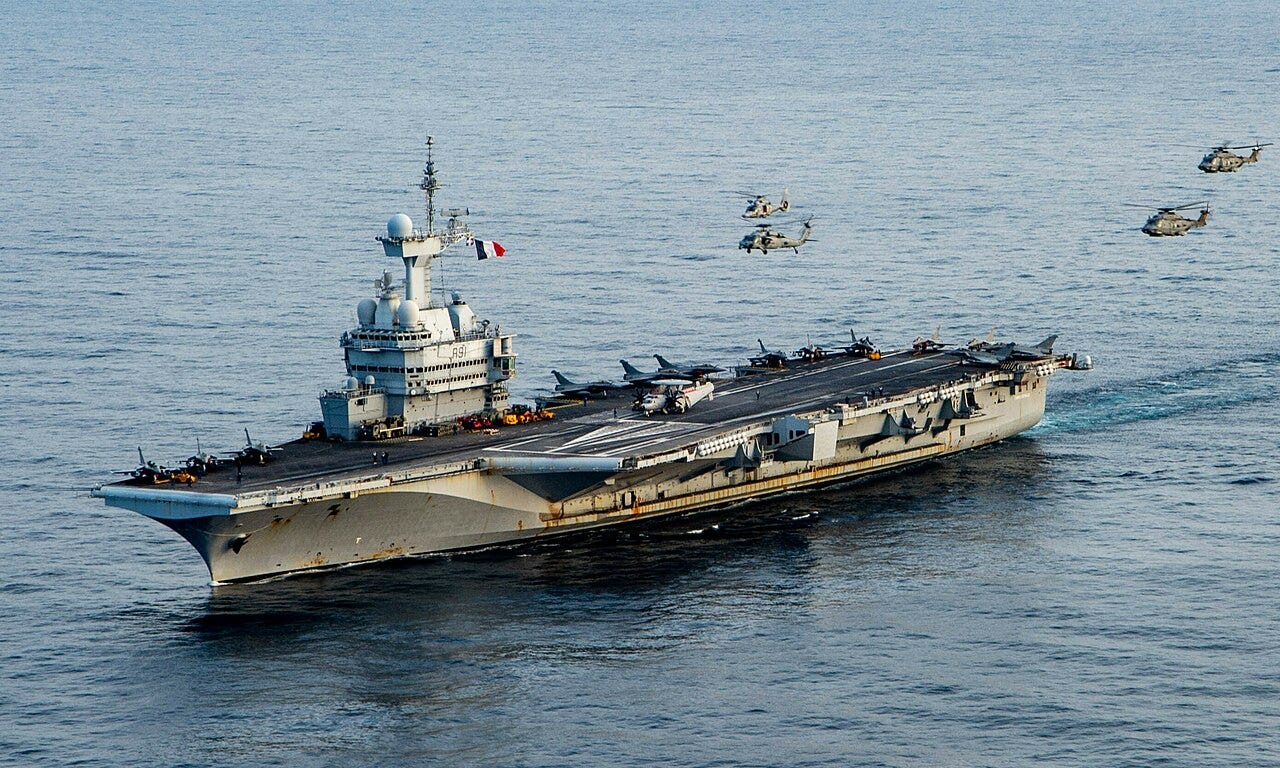
France has taken an aggressive posture toward emerging threats such as unmanned aerial vehicles. One example is the rapid deployment of new electro-optical systems such as the Paseo XLR across major French warships to improve the detection of small aerial and surface threats.
Both navies operate sophisticated systems and face similar pressures, so this contrast is not due to a technological gap.
But it does highlight something important.
Naval readiness today hinges on industrial and digital agility as much as—and sometimes more than—fleet size.
The Drone Problem
The wider strategic environment also explains why the rapid deployment of ships like HMS Dragon matters.
Modern naval air defence now faces a brutal economic equation.
Adversaries can deploy large numbers of low-cost one-way attack drones and cruise missiles. Defending forces often rely on high-end interceptors costing orders of magnitude more.
Even the most advanced missile defence system cannot ignore the mathematics of magazine depth.
A navy that can intercept every threat may still struggle to sustain that defence if attacks are frequent and inexpensive.
This reality is already pushing navies toward new defensive approaches, including electronic warfare, directed-energy weapons, and layered air defence systems designed to reduce reliance on expensive interceptors.
The Real Lesson
The debate around HMS Dragon should not be framed as evidence of a broken navy or a failed ship design.
The Type 45 remains one of the most capable air defence destroyers in the world.
Instead, this episode illustrates evolving naval readiness—defined by the speed and efficiency of digital and operational reconfiguration.
In the twentieth century, readiness was primarily about hulls, engines and crews.
In the twenty-first century, it increasingly includes:
combat-system software
sensor integration
digital threat libraries
weapons certification
dockyard surge capacity
The warship has become a software-defined combat platform.
And readiness now depends on how quickly navies can configure, update and deploy those systems in response to emerging threats.
Conclusion
The rushed preparation of HMS Dragon revealed an uncomfortable truth. Naval strength is no longer measured solely by the number of ships in the fleet. It also depends on the speed at which those ships can be reconfigured for new missions. Dockyard agility, industrial support and digital combat-system flexibility are now central components of maritime power.
In the era of drone warfare and rapid technological change, a navy’s true readiness may depend less on the tonnage of its hulls than on the responsiveness of the systems that sit inside them.
The argument for the software-defined warship is an important one, and this piece captures a key shift underway in naval warfare. What we are really seeing is not simply a technology update but a transition between industrial eras.
For the past 70 years, the Third Industrial Revolution (3IR) phase of naval power, combat capability lived primarily in hardware platforms. Ships were designed around tightly integrated combat systems that changed slowly, often only through major modernization cycles. Sensors, weapons, and networks were built into the ship itself, and capability growth largely followed the pace of shipbuilding and refit.
Today we are entering something different. The Fourth Industrial Revolution (4IR) is pushing naval capability toward software, networks, data, and modular mission systems. Increasingly, the decisive elements of combat power are not the hull or even the primary weapon system, but the digital architecture that connects sensors, shooters, and decision systems. Ships become nodes in a larger operational network rather than self-contained combat systems.
The Royal Navy’s Type 45 destroyer demonstrates both the promise and the challenge of this transition. Technologically, Type 45 fielded one of the most advanced integrated air-defense systems ever deployed, built around sophisticated radar, combat-system software, and missile integration. The program also revealed how difficult it can be for traditional 3IR naval acquisition structures to manage 4IR highly integrated, software-dependent systems. Integration authority, upgrade pathways, and sustainment models all become more complicated when the capability depends as much on digital architecture as on hardware design.
That experience points to a broader lesson: technological change alone does not determine success. What matters is whether institutions adapt their resourcing, testing, and integration models to match the new architecture of capability.
In the 3IR era, the platform was the organizing concept. In the emerging 4IR environment, the organizing concept is increasingly the mission architecture. Ships still matter enormously, but they function more as hosts and connectors within that architecture.
The real challenge for navies today is therefore institutional rather than technological. Acquisition systems, testing regimes, and budgeting processes built around hardware programs must evolve to support capabilities that evolve continuously through software updates, modular payloads, and network integration.
Posts like this are valuable because they highlight that shift. The future fleet will almost certainly be software-defined, networked, and modular. Ensuring that our institutions evolve as quickly as the technologies themselves may ultimately determine whether that future fleet delivers the operational advantage it promises.