

Two signals, days apart.
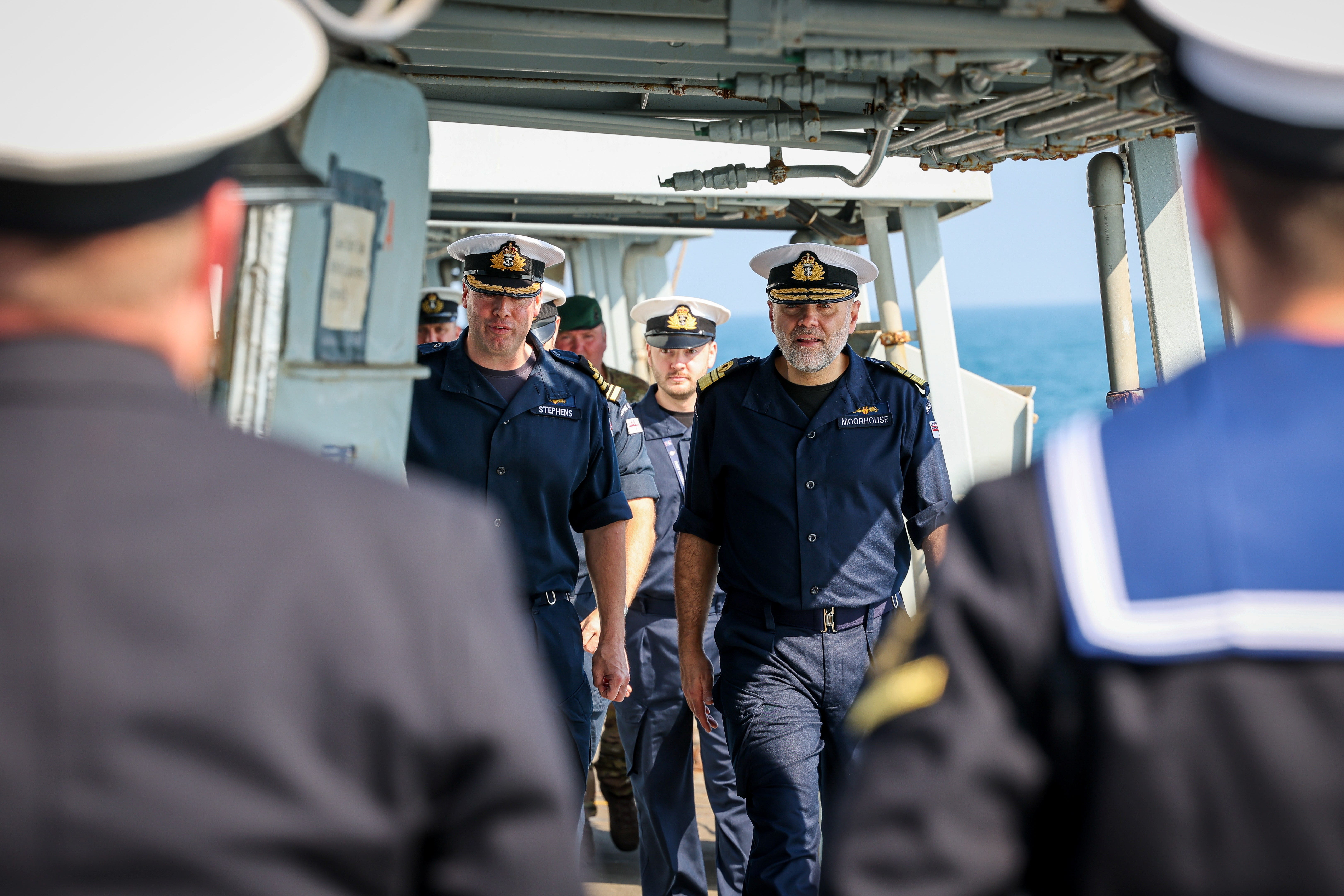
The Fleet Commander, Vice Admiral Moorhouse, defends the prospect of no permanent Royal Navy warships in the Middle East, arguing that what the UK is offering is “a more modern offer” aligned with what allies want.
At the same time, a RUSI Journal paper argues that the 2025 Strategic Defence Review missed an opportunity to rethink the role of universities in military education and societal preparedness, treating them largely as STEM pipelines rather than engines of strategic literacy. On the surface, these are separate conversations.
They are not.
Taken together, they reveal a deeper shift: the Royal Navy is moving from visible global dispersion to concentrated alliance warfighting — and Britain’s intellectual infrastructure may not yet be aligned with that reality.
The Gulf Is a Symptom
The article notes that the departure of HMS Lancaster and the likely withdrawal of the remaining Hunt-class mine countermeasures vessel could leave the UK without a naval presence in the Gulf for the first time since 1980.
For four decades, that presence carried symbolic weight. It reassured partners. It signalled continuity. It reinforced Britain’s identity as a globally deployed maritime power. Now that posture is being reconsidered. The Fleet Commander’s phrase, “a more modern offer” is deliberate. It implies:
Fewer permanent warships on station
More training and integration
More networked relevance
A shift from geographic symbolism to capability partnership
This is not a retreat, it is reprioritisation. And reprioritisation always reveals what matters most.
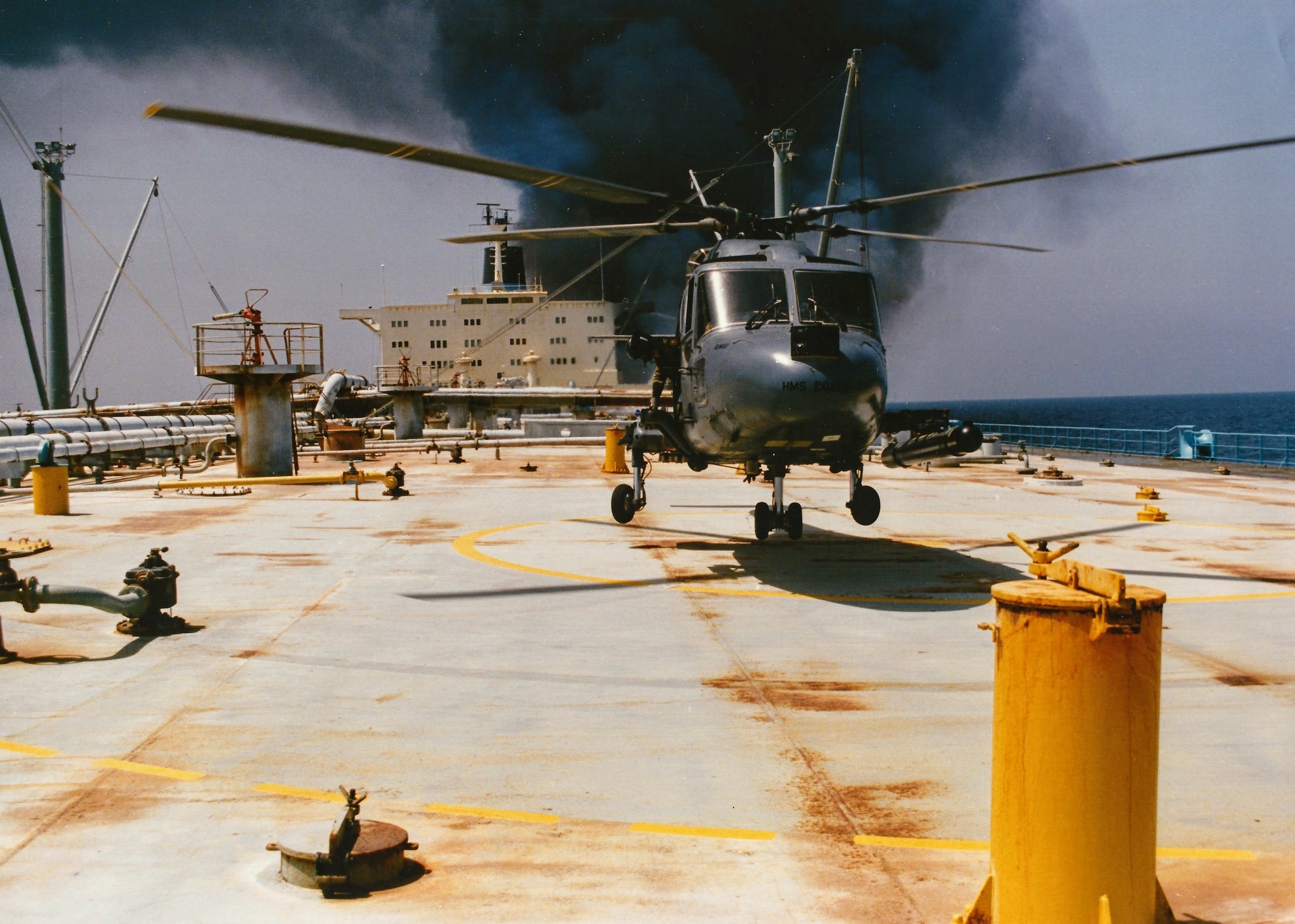
Listen to Tanker Wars, behind the scenes of HMS Boxer’s deployment to the Gulf in 1988 and how it impacted Gulf operations:
NATO First Becomes Operational Reality
The Strategic Defence Review made NATO-first language explicit. But strategy only becomes real when trade-offs appear. You cannot simultaneously:
Rebuild high-end ASW credibility.
Harden the undersea infrastructure.
Invest in hybrid fleets.
Prepare for peer confrontation in the Euro-Atlantic.
And maintain legacy patterns of global constabulary dispersion.
Something had to give.
The Atlantic Bastion concept illustrates the direction of travel: a layered network of crewed and uncrewed systems, integrated with sensors, to deny adversary submarines freedom of movement across the Norwegian Sea and the GIUK approaches.
That model rewards endurance, integration and alliance depth. It does not reward symbolic hull scattering.
The Gulf decision only makes strategic sense if Atlantic concentration is becoming structural rather than rhetorical.
The Future Fleet Is Hybrid by Necessity
If this trajectory holds, by 2040, the Royal Navy will no longer be defined by how many ships it can deploy globally.
It will be defined by whether it can integrate:
Type 26 high-end ASW platforms
Type 31 general-purpose frigates
XLUUV and large USV layers
Seabed sensor arrays
Allied data networks
Space-based ISR
AI-assisted command support
The modern offer is no longer a frigate alongside. It is:
A data node inside a coalition kill web
A training and integration backbone
A force multiplier within NATO
A persistent undersea denial architecture
In a future North Atlantic crisis, deterrence will not hinge on a single visible hull. It will hinge on whether the UK can:
Detect early
Fuse allied intelligence in near real time.
Protect undersea cables
Sustain operations over months.
Operate seamlessly inside NATO command structures.
That is hybrid warfighting — crewed and uncrewed, physical and digital, national and allied. And it cannot coexist with a fleet optimised for permanent global presence. Future Navy has discussed this in our Atlantic Bastian item:
Atlantic Bastion: Europe’s New Front Line

Most people probably missed it. Buried under election noise, competing global crises, and the usual transatlantic commentary, the United States published its new National Security Strategy (NSS), which marks the most consequential shift in American defence posture in over a decade.
The Political Risk
Concentration carries perception risk. Presence is legible. A ship in harbour reassures instantly.
Architecture is invisible. Integration does not photograph well.
A navy can become strategically stronger while appearing geographically thinner.
Without a clear explanation, the shift from presence to architecture risks being interpreted as decline rather than discipline. This is where the RUSI paper becomes strategically important.
The Missing Piece: Cognitive Mass
Dunn’s argument is straightforward: the SDR under-imagined the role of universities in military education and societal preparedness.
That omission becomes critical when the Navy itself is evolving. A hybrid Atlantic-focused fleet demands more than ships. It demands cognitive mass:
Engineers who understand operational context
Lawyers who understand maritime grey-zone escalation
Policymakers fluent in deterrence dynamics
Economists who grasp energy and cable vulnerability
Journalists who understand sea control
Citizens who recognise why the Atlantic matters
If Britain concentrates naval capability but fails to cultivate strategic literacy, every necessary trade-off will be misread. The fleet will modernise faster than the national conversation. That is not sustainable in a democracy.
From Global Display to Alliance Discipline
For decades, British naval identity was partly anchored in global visibility. But the 2030s will not reward nostalgia. They will reward:
Alliance depth
Endurance
Network resilience
Industrial capacity
Undersea dominance
AI-enabled integration
The Royal Navy appears to be accepting that it cannot be everywhere. Instead, it is choosing to become indispensable somewhere. That is maturity — if followed through coherently.
The Strategic Threshold
There are moments when posture shifts quietly. No grand speech. No doctrinal manifesto. Just a redistribution of risk. The Gulf signal suggests the Royal Navy is moving from:
Geographic reassurance to Operational architecture
Presence as influence to Integration as deterrence
Solo display to Alliance discipline
This is not a dramatic revolution; it is a structural adaptation.
The 2030s Test
By the 2030s, the UK maritime environment will be shaped by:
Undersea infrastructure coercion
Arctic and High North competition
AI-accelerated targeting cycles
Alliance burden-sharing pressures
Prolonged maritime competition below declared war
In that environment, dispersion offers diminishing returns. Concentration — if backed by industrial resilience and societal understanding — offers greater deterrent credibility.
The Fleet Commander’s “modern offer” and the RUSI warning about neglected military education are not disconnected developments. They are two halves of the same adjustment. The Royal Navy is redesigning itself for a harder era.
Britain now has to decide whether it will redesign its intellectual and political foundations alongside it, because the next maritime confrontation will not be won by the ship most visibly forward. It will be shaped by the network most deeply integrated — and the society most prepared to sustain it.