

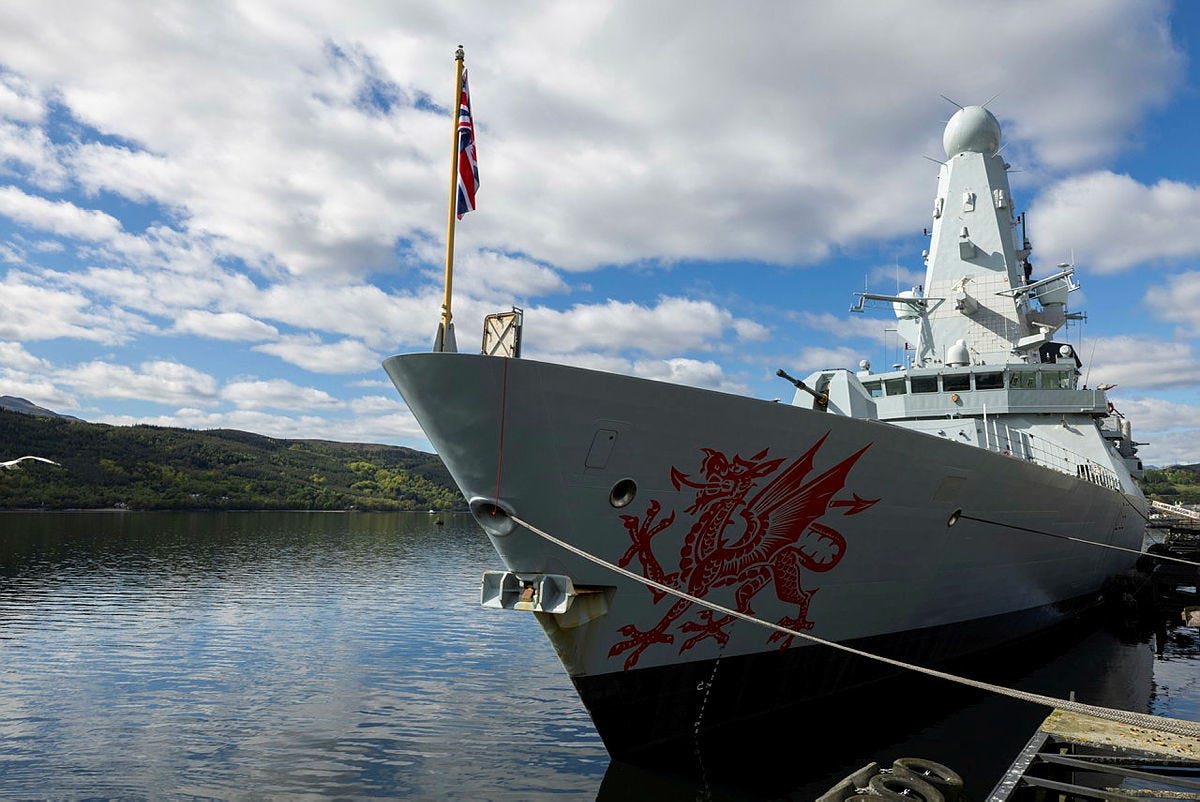
The current debate around the Royal Navy centres on a small surface fleet and growing commitments, raising questions about the sustainability of balancing ambition with available capacity.
The discussion has sharpened in recent months. Operations in the Middle East have placed sustained pressure on a limited number of destroyers and frigates. At the same time, the protection of undersea infrastructure in the North Atlantic and growing NATO commitments continue to demand a persistent maritime presence. Tom Sharpe, a retired Royal Navy commander who served for over 25 years in the Royal Navy, recently told the FT: “The navy is threadbare. This has been 30 years in the making and does not reflect the excellence of our current sailors. It is, nevertheless, true. Huge investment and a cultural clear-out are both required to reverse this decline. I’m not seeing signs of either.”
With around 19 destroyers and frigates in service, but not necessarily operational, the Royal Navy is being asked to operate across multiple theatres simultaneously. These concerns are real. Yet focusing only on ship numbers risks missing a deeper shift: the Royal Navy’s emphasis is moving toward integrating ships into a wider combat system, not just increasing hulls.
The future of naval power may depend less on how many ships a navy sails, and more on how effectively those ships are connected to the wider battlespace.
The Limits of Counting Ships
For centuries, naval power has been measured in hulls, tonnage and guns. Even today, defence debates often begin by comparing the number of destroyers, frigates or submarines different navies possess.
Yet modern naval warfare introduces a new constraint: magazine depth.
A modern warship carries extraordinary firepower, but in relatively limited quantities. Vertical launch systems allow missiles to be stored safely below deck and fired rapidly, yet each launch cell represents a finite engagement opportunity. Once those cells are empty, the ship remains afloat, but its combat value is dramatically reduced.

In high-intensity operations, missile and bullet expenditure can occur far faster than many people realise. Defensive engagements frequently require multiple interceptors against a single threat, and sustained combat can consume missile inventories in a matter of hours.
For those who have fought ships in combat, reality is straightforward: if a ship’s launch cells are empty, it remains afloat, but it has effectively left the battle.
This constraint means that naval power is increasingly shaped not just by the number of ships at sea, but by how efficiently those ships use the weapons they carry. Future Navy covered this in detail in this article:
Beyond the First Salvo

Despite the advances in naval missile systems over the past four decades, a fundamental limitation remains unaddressed: most modern warships are still designed to fire once and then withdraw.
The New Close-Range Battle at Sea
Recent events have also highlighted another emerging challenge: the rapid proliferation of drones in maritime conflict.
Uncrewed aerial systems now appear in large numbers across modern battlefields. Naval forces must increasingly defeat them at sea; these threats are often inexpensive, numerous, and capable of overwhelming traditional defensive systems if not addressed effectively.
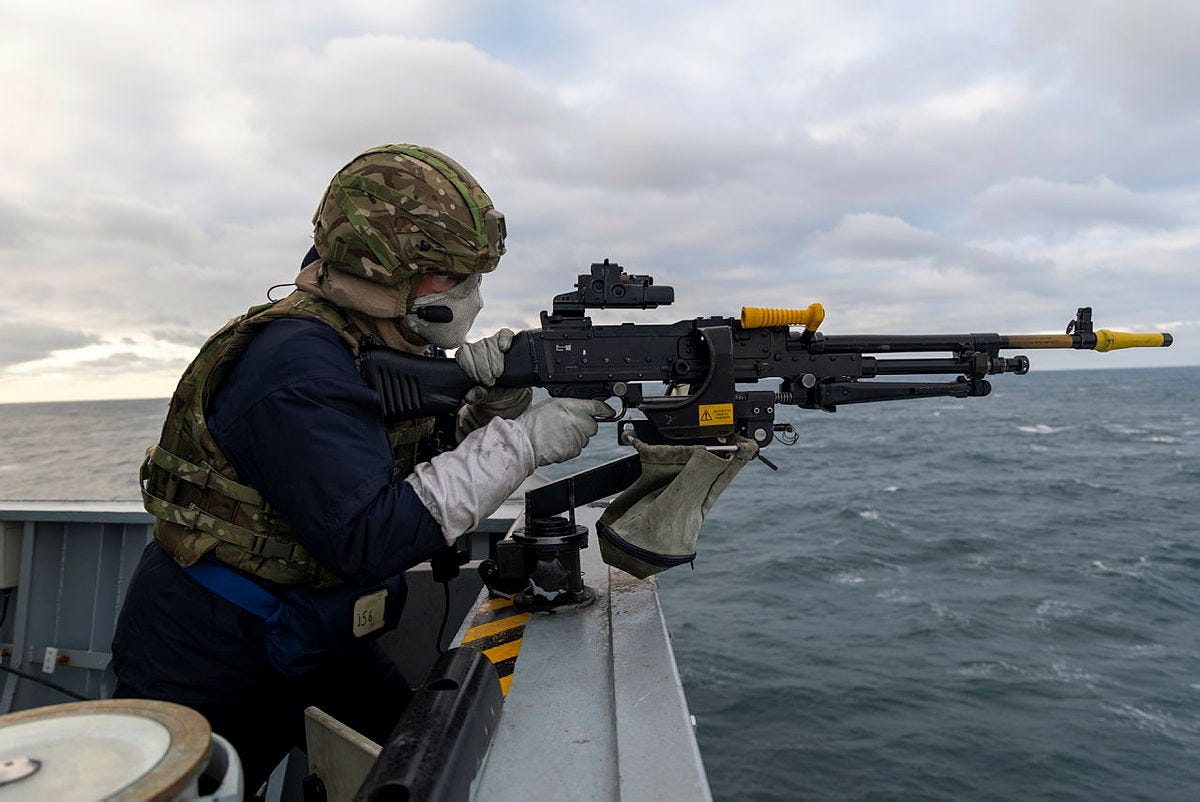
The Royal Navy is already responding. Recent reports indicate that the service is seeking rapid counter-drone solutions for ships, as part of initiatives designed to accelerate the deployment of new defensive systems. The goal is clear: develop layered protection capable of defeating large numbers of low-cost aerial threats without exhausting high-value missile inventories.
This challenge illustrates the evolving nature of naval defence. While long-range missile systems remain essential, ships must increasingly rely on a layered combination of sensors, guns, electronic warfare and emerging directed-energy technologies to manage the growing drone threat.
In effect, the close-range battle around the ship is changing.
Sensors Everywhere
To address these pressures, navies are beginning to rethink how fleets generate combat power. Rather than relying solely on individual ships operating as self-contained fighting units, the emerging model distributes awareness across a much wider network.
The network may include aircraft, satellites, seabed sensors, and autonomous vessels. Operating across the maritime environment, these and other unmanned platforms together create a persistent picture of the battlespace—a picture that extends far beyond the horizon of any single ship.
Autonomous maritime systems are particularly suited to this role. They can operate for extended periods in areas where deploying crewed warships would be expensive or risky, providing surveillance and reconnaissance while feeding data back into command networks.
As a result, the sensing network may vastly outsize the fleet itself. Rather than stationing warships everywhere, the fleet maintains observation over all domains.
Concentrating the Shooters
If sensing becomes widely distributed, the logical next step is to concentrate the platforms that deliver the strike.
Missile-armed warships remain the decisive combat element of the fleet, but their effectiveness increases dramatically when they operate within a wider information network. Rather than relying only on their own sensors, these ships can receive targeting information from multiple sources across the battlespace.
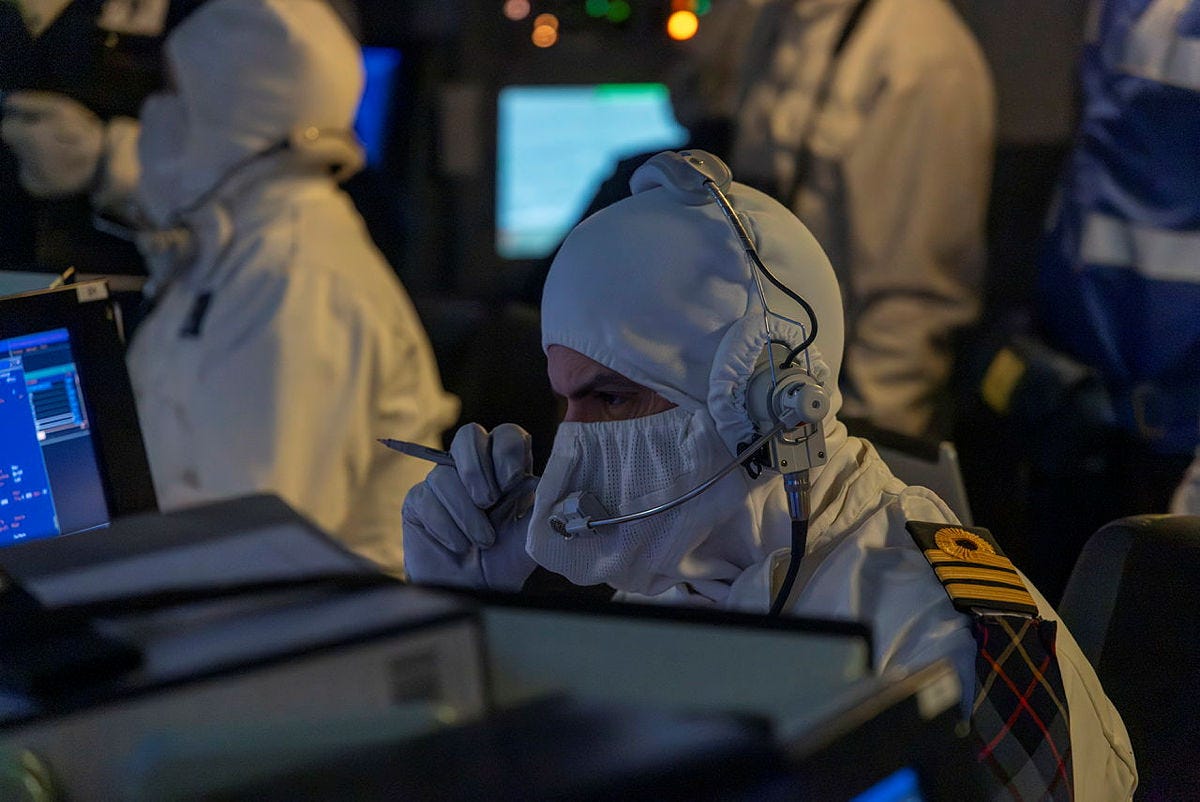
In this model, a destroyer or frigate becomes less an isolated unit and more a node within a larger combat architecture. The ship still carries the missiles and the crew that operate them, but its awareness is extended by sensors distributed across the fleet and beyond it.
For a navy with limited hull numbers, this shift could prove crucial. Ships can be positioned where they are most effective rather than just where presence is needed for awareness.
The Hybrid Fleet
This evolving structure is sometimes described as a hybrid fleet: a combination of crewed warships, autonomous platforms and distributed sensing systems working together as a single operational network.
Crewed ships deliver command, decision-making, and weapons. Autonomous systems offer persistence, coverage, and distribute risk. Data networks link the two into a cohesive force.
Multiple sensors and weapon systems are already integrated into modern combat systems, creating shared digital infrastructures on board a ship. As these platforms evolve, it becomes increasingly feasible to integrate external sensors and autonomous platforms.
The challenge is no longer purely technological. It is doctrinal: learning how to fight as a network rather than as individual ships.
A Strategic Choice for Britain
For Britain, the debate about the Royal Navy ultimately comes down to a strategic choice.
One option is to build a much larger fleet. Another is to reduce global commitments to match available resources. Both approaches carry significant political and financial consequences. A third path is beginning to emerge: designing a distributed fleet architecture that allows a relatively small number of high-end warships to operate inside a much larger sensing and information network.
This approach does not eliminate the need for ships. Warships will continue to deliver effects at sea. However, maritime power may now depend more on how effectively those ships are connected to a wider network, rather than on how many are at sea.
The Royal Navy has faced moments like this before. Periods of strategic change often force navies to rethink how they fight, not just what they sail. Today’s debate over hull numbers may signal a broader shift: moving from fleets organised by individual ships to fleets structured as integrated systems.
If successful, the future Royal Navy may be defined not just by its ships, but by the power of the network connecting them.
There's nothing new about networked naval warfare. Link 11 was around 50 years ago, since when we've had Link 16, Link 22, CEC, satellite connectivity and more.
Hull numbers remain important.
The fact that the RN doesn’t have a ship at readiness for such a contingency is so revealing. The navy that once ruled the seas and is still looked up to because of its historical legacy. A naval anchor of NATO is MIA.