

Something unusual happened this week.
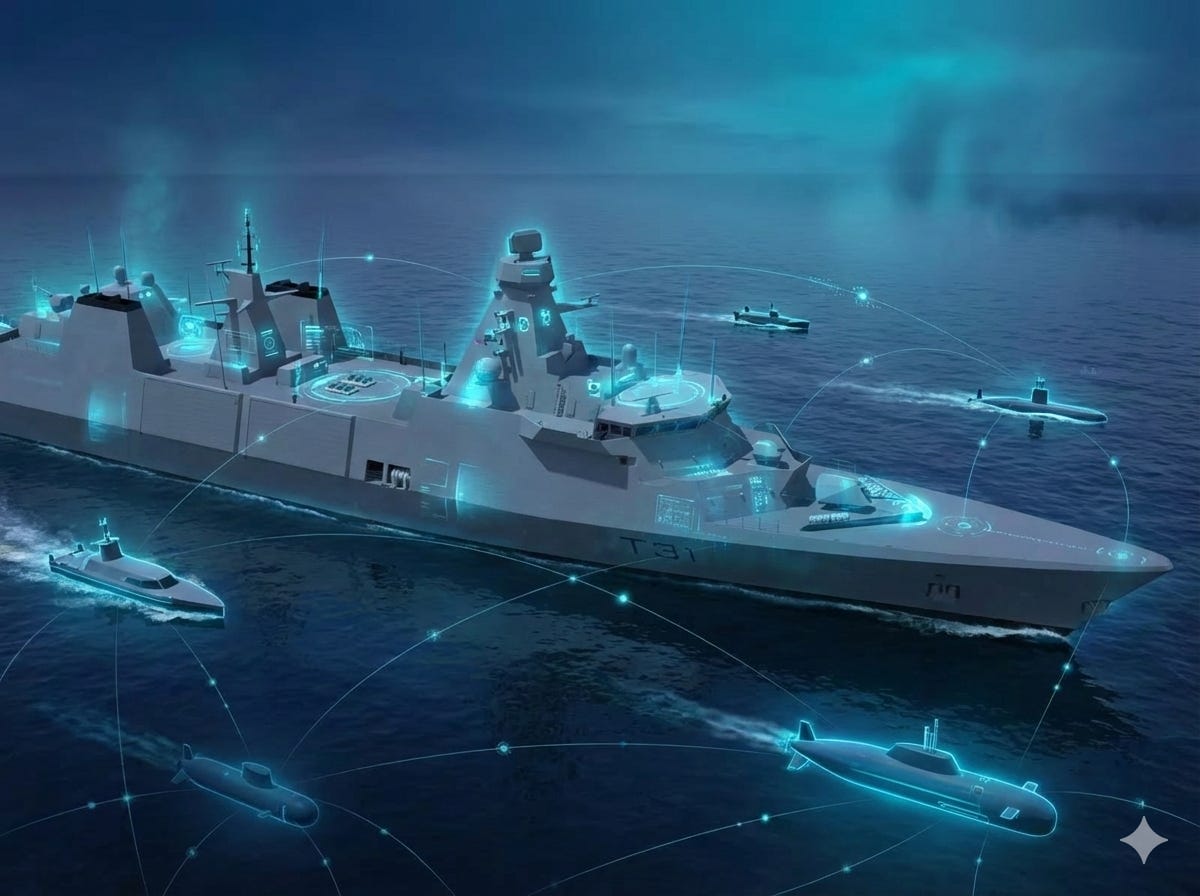
For months on Future Navy, we’ve been writing about a Royal Navy shifting from platform-centric thinking to architecture-first design — from ships as standalone tools to a software-defined fleet, where autonomy, sensors, command systems, and mission networks act as a coherent whole.
Then, almost at once, three announcements arrived:
Babcock launched ARMOR, the Royal Navy’s emerging command layer for autonomous systems. Press Release
Arondite was revealed as Babcock’s autonomy partner, providing the AI perception and mission engines beneath ARMOR.
NATO activated the AUWB-MN underwater mission network, establishing a shared allied ecosystem for uncrewed maritime operations.
Individually interesting. Together: alignment.
A Navy, an industry, and an alliance are now describing the same future — in the same language — and it’s the architecture we’ve been mapping in The AI Shipmate Series, The Digital Ocean, and Atlantic Bastion.
This isn’t hype. This is coherence.
ARMOR: The Command Spine Arrives
ARMOR isn’t another bolt-on.
It’s a command spine — the digital layer that integrates crewed and uncrewed platforms into a single, coordinated team.
It sits naturally atop the Royal Navy’s Shared Infrastructure, which already consolidates navigation, combat, and sensor systems into a single common computing environment.
Shared Infrastructure is the Navy’s digital backbone.
ARMOR is becoming its nervous system.
Instead of autonomy appearing in isolated pockets, ARMOR reframes it as a fleet-level command function. That’s the shift modern naval operations demand.
Arondite: The Autonomy Engine Beneath the Surface
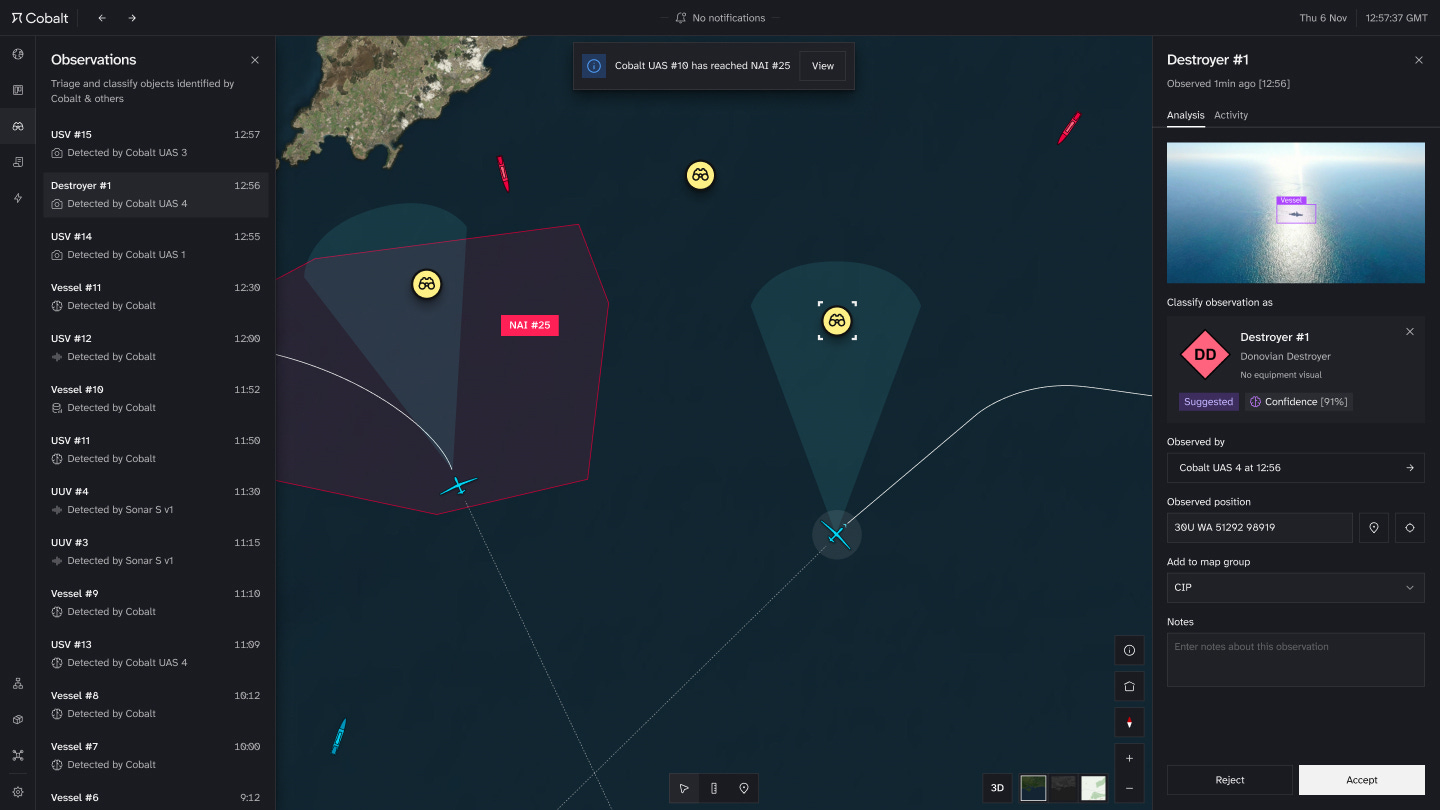
The most revealing detail this week was Babcock’s newly public partnership with Arondite — a UK company specialising in:
perception and navigation AI
mission-planning autonomy
edge-deployed decision support
contested-environment resilience
multi-UxV coordination
Suddenly, the entire autonomy stack becomes clear:
Shared Infrastructure → Digital backbone
Arondite → Autonomy and perception engine
ARMOR → Command and control layer
Combat Systems (TACTICOS, etc.) → Tactical execution
NATO AUWB-MN → Allied underwater mission network
For the first time, the UK has the outline of a sovereign, vertically integrated autonomy architecture — modular, exportable, and upgradeable at software speed.
This is the architecture we’ve been discussing for a year. Now it’s taking form.
A Concept Comes to Life: Project SPECTRE
Some Future Navy readers will remember Project SPECTRE — the deep-sea guardian concept we developed earlier this year. It imagined Type 31 as a mothership for autonomous underwater systems tasked with cable protection, seabed monitoring, and persistent ISR across the North Atlantic.
SPECTRE was written as a thought experiment — a way to explore how autonomy, Type 31, and underwater surveillance might combine into a new form of deterrence.
What’s striking about this week is not that SPECTRE existed,but how closely reality has begun to echo it.
With ARMOR providing the command spine,
Arondite is offering the autonomy engine, and NATO is standing up AUWB-MN as an underwater mission network. The ecosystem SPECTRE imagined as fiction is now beginning to appear in real programmes.
Even the idea of Type 31 as the autonomy mothership — central to SPECTRE — has emerged explicitly in industry statements and leadership commentary.
SPECTRE wasn’t meant to predict the future, but it turns out the future was heading in that direction anyway. The original Future Navy post is here:

NATO’s Underwater Network: The Strategic Context
NATO’s launch of the Allied Underwater Battlespace Mission Network (AUWB-MN) deserves close attention.
AUWB-MN establishes:
a reference architecture
a shared test environment
common data standards
interoperability between allied uncrewed systems
If AUWB-MN is the “internet” of the underwater battlespace, then ARMOR + Arondite is the browser and operating system the Royal Navy will use inside it.
This quietly places the UK at the centre of the most strategically decisive domain of the 2030s: the underwater network.
Leadership, Certainty, and the First Sea Lord’s Signal
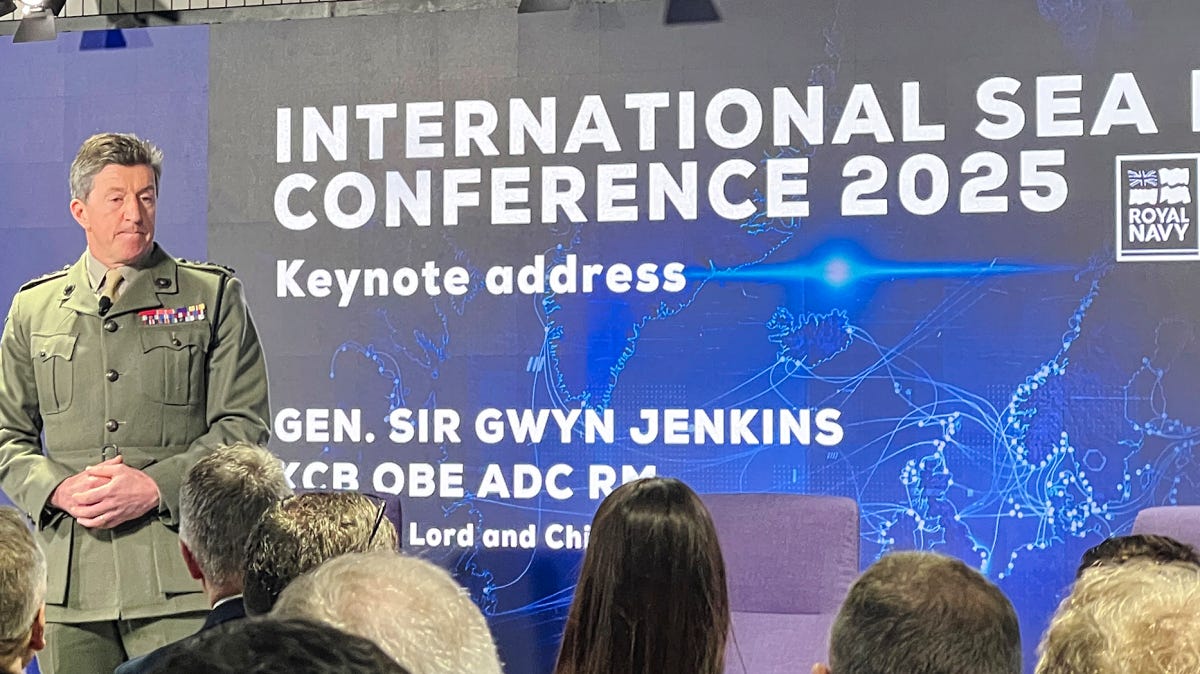
In recent speeches, the First Sea Lord has shown rare emotion and urgency — pushing for:
digital adoption at tempo
autonomy as a default assumption
a networked, software-driven Atlantic fleet
cultural change inside operations rooms
credible, not theoretical, deterrence
The ARMOR–Arondite partnership sits at the heart of that vision.
It also aligns with the Turing Institute’s AI-in-command work: meaningful human control, transparent AI behaviour, trusted decision-support — themes we explored in AI Shipmate and The Human Edge of the AI Fleet.
This is technological change, but also cultural change.
Industry Voice: Years in the Making
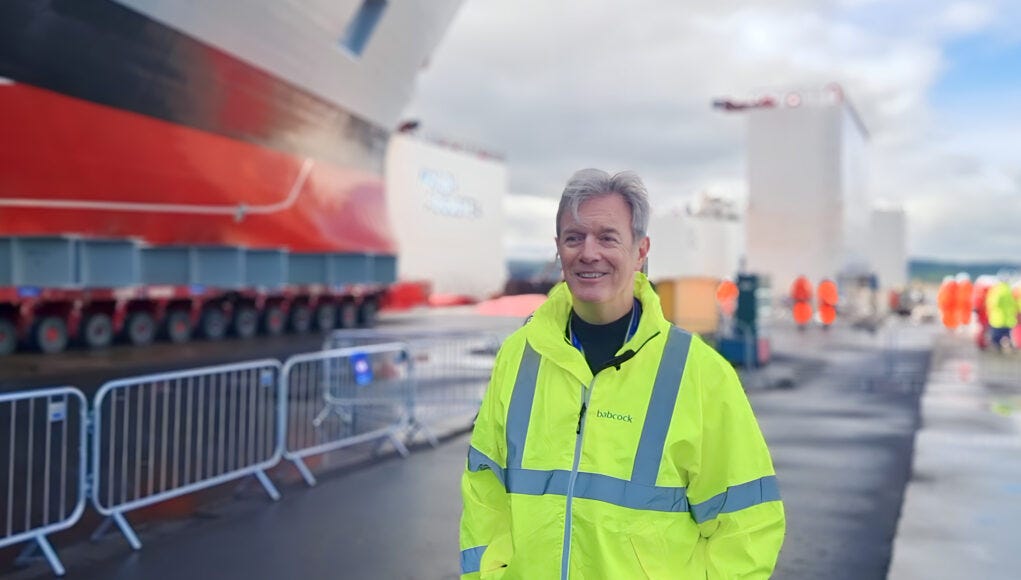
Sir Nick Hine the Babcock Chief Executive, Marine and former Second Sea Lord and one of the architects of the Hybrid Navy — captured this better than anyone when he shared the ARMOR announcement:
“Proud to launch our ARMOR Force plan to meet the Royal Navy’s Hybrid Navy call to arms… With Type 31 as the mothership of the First Sea Lord’s challenge, we can now bring the transformational thinking we began at Navy Command into life under the next generation of leaders.”
He highlighted:
General Gwyn Jenkins’ Royal Marines mindset — drive, tempo, clarity
The First Sea Lord’s “direction and certainty”, which industry has long needed
The importance of innovating alongside sailors, not apart from them
When former senior officers, current leaders, and industry converge with this clarity, it signals something simple:
The idea has matured into doctrine — and now into delivery.
Addressing the Pushback: Reliability, Maintenance, and Reality at Sea
Unsurprisingly — and fairly — the same question surfaced in early commentary:
“Autonomy is fine, but what about maintenance? Nothing is 100% reliable at sea. The ocean destroys machinery.”
All true. But autonomy doesn’t remove these concerns; it restructures them.
1. Replaceability replaces repairability
Uncrewed systems aren’t built around human access routes. They use:
sealed modular bays
line-replaceable units
hot-swappable mission modules
remote fault isolation
software-led diagnostics
You don’t fix a card mid-Atlantic. You swap a module in minutes.
2. Predictive maintenance becomes part of the mission system
Autonomous platforms monitor themselves:
vibration spectral analysis
thermal drift monitoring
power-signature anomaly detection
seal and thruster health prediction
If failure risks rise, the platform makes decisions:
“Abort. Divert. Surface. Hand off.”
Reliability becomes a network attribute rather than a single-hull attribute.
3. Human engineers don’t disappear — they move up the stack
Large ships still carry engineers, but their work shifts to:
supervising mission packages
validating autonomous behaviour
managing multi-UxV teams
maintaining USV/UUV swarms
ensuring system-level resilience
Instead of 40 people deep in machinery spaces, it’s five specialists supervising 20 autonomous systems.
This is already normal in offshore robotics.
The Ocean Hasn’t Become Kinder — But the Architecture Has Become Smarter
Autonomy isn’t built because the sea is forgiving.
It’s built because it isn’t.
ARMOR + Arondite reflects this:
autonomy at the platform level
coordination at the fleet level
resilience at the network level
human judgement at the command level
No single vehicle needs to be perfectly reliable if the system is reliable.
This is the shift legacy critics often miss:
a move from platform survivability to system resilience.
Why This Week Matters
For the first time in years, we can draw a coherent picture of the Royal Navy’s digital future:
Ships as software platforms
Autonomy as an integrated service layer
An allied underwater mission network
Modular C2 and CMS integration
AI that augments command, not replaces it.
Leadership is providing the direction that the industry has long requested.
A concept like SPECTRE moving from fiction into feasibility
This isn’t a one-off announcement.
It’s the emergence of a unified architecture.
And Future Navy readers have been tracking — and shaping — this shift from the beginning.
What’s Next for Future Navy
In the weeks ahead, we’ll explore:
the ARMOR–Arondite autonomy stack
How Type 31, Type 26, and Type 83 will exploit it
autonomous-ready carrier groups
the Digital Ocean and Atlantic Bastion
AI assurance is the real bottleneck.
The cultural evolution of naval operations rooms
The future fleet is becoming clearer. And this week, it snapped into focus.