

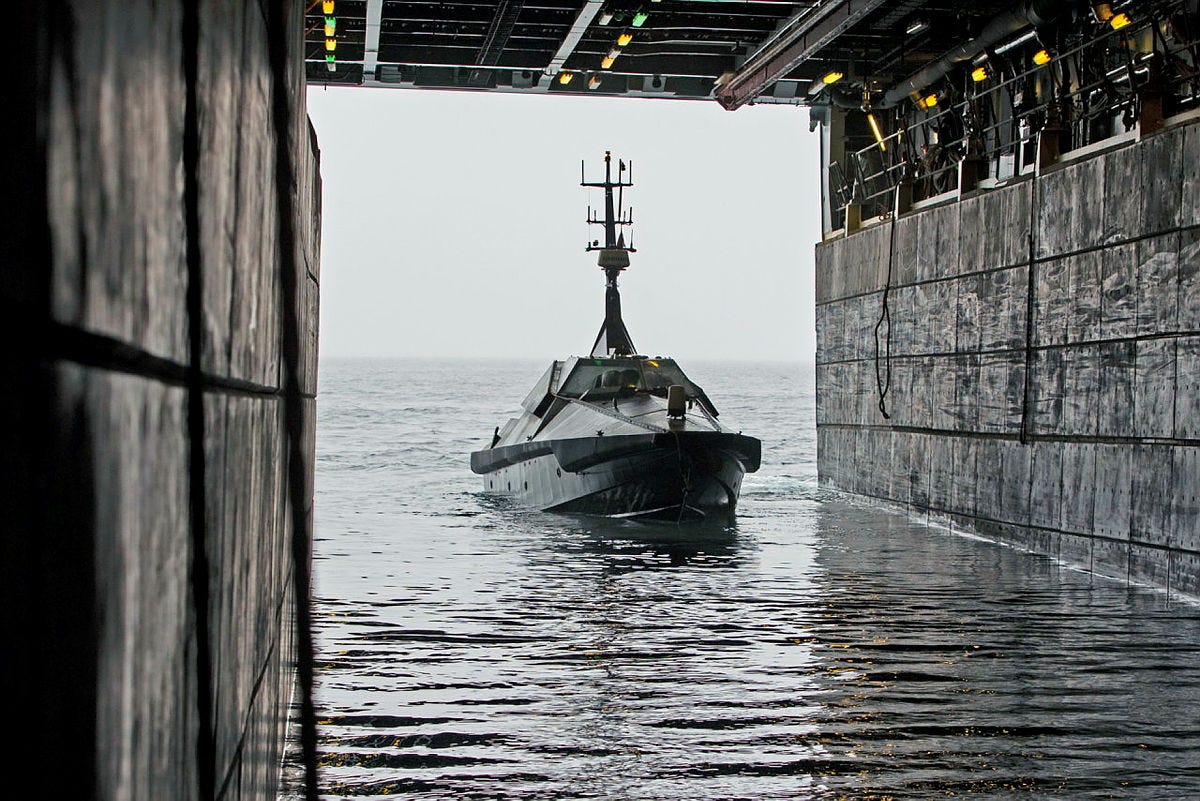
For years, warships in the Gulf have faced constant surveillance and political uncertainty. They have also endured quick-moving threats and the risk of escalation. During the Tanker Wars, Royal Navy crews realised that being present was not enough. They needed situational awareness, endurance, and good judgment. Firepower alone was not sufficient.
Yet, despite this progress, many of these same challenges persist today.
What sets the current era apart is the introduction of new technology into the region.
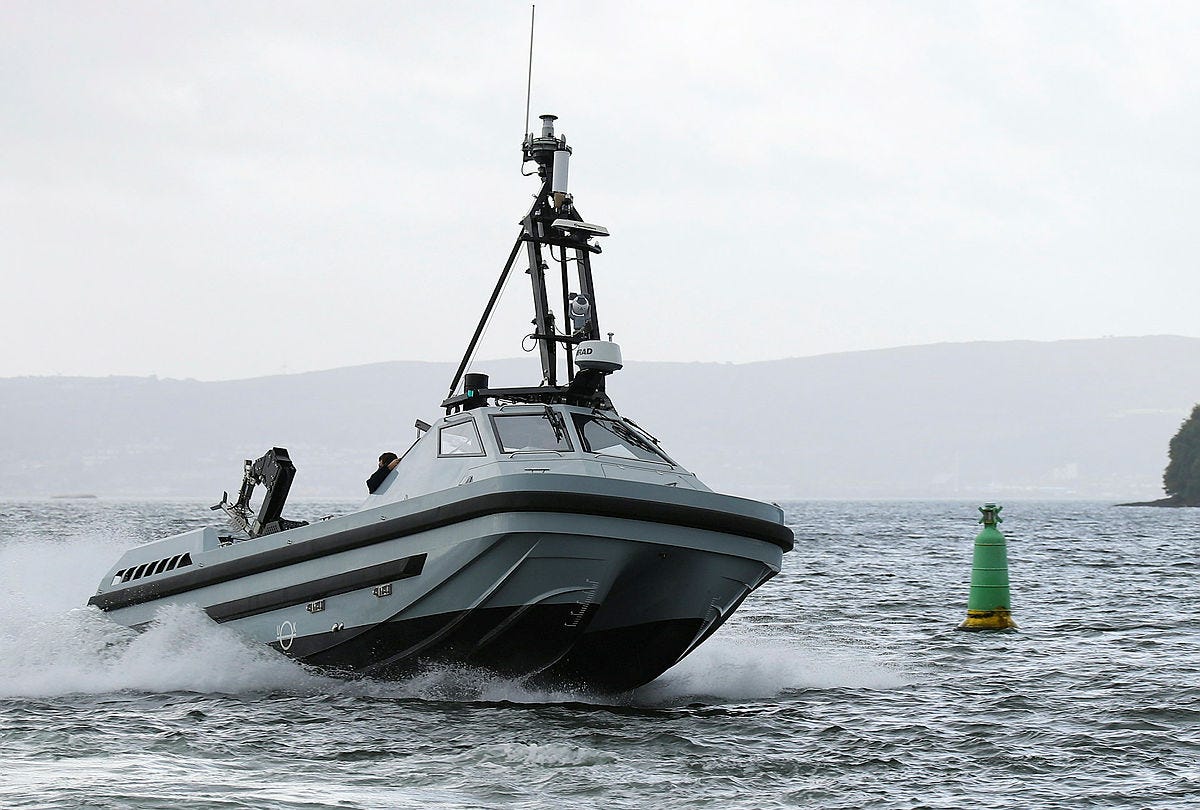
Recent news reports that the Royal Navy plans to send uncrewed surface vessels (USVs) to the Gulf. At first, this might seem like just another technology update. But something more significant could be happening. The Royal Navy is moving from simply testing maritime autonomy. It is making it a regular part of fleet deployment; as a result, this marks a major change for naval operations.
The Gulf is not a controlled test area. Hormuz is still one of the world’s toughest places for maritime operations:
dense commercial traffic,
heavy electronic surveillance,
persistent drone activity,
contested narratives,
and the constant possibility of rapid escalation.
If autonomous systems can operate effectively there, it demonstrates their suitability for wider deployment.
These systems are not simply for replacing sailors or saving money. Their main aim is to help navies monitor busy, contested seas without overtaxing limited crewed ships.
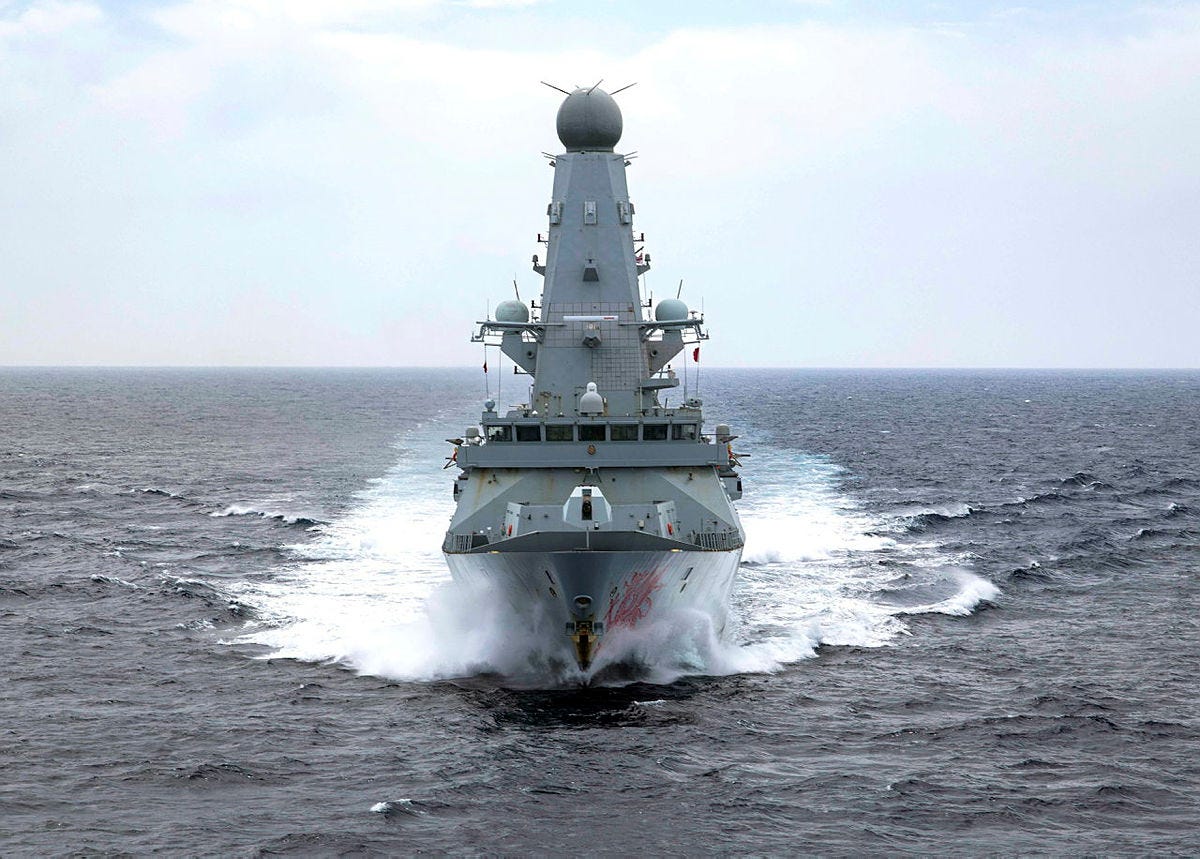
A Type 45 destroyer or Type 23 frigate is highly capable. But these ships are rare and expensive. Autonomous systems offer something different: distributed sensing, persistent surveillance, lower-risk forward presence, and continuous monitoring across wider operational areas.
In practice, these systems could act as extra eyes and ears for the fleet. However, incorporating autonomous systems into real operations is more complex than headlines suggest.
Autonomy at sea is more than adding drones. Every new uncrewed system brings challenges: secure communications,
cyber resilience,
sensor fusion,
operator trust,
rules of engagement,
and command authority.
An autonomous vessel in the Strait of Hormuz might spot and report something faster than a person could. Still, commanders need to trust the system’s reports and its data handling. They must also decide if the information holds up under stress.
This becomes especially vital in busy, politically sensitive waters, where mistakes or escalation could have serious consequences.
The complexity involved extends beyond just technical challenges.
Crucially, it is also cultural.
For more than a hundred years, naval command depended on people watching and understanding the environment themselves. The hybrid fleet changes that. Now, commanders might get information from machine-assisted systems. These systems can work together at high speed. Making this change work will require both trust and new technology. There is also a bigger strategic picture shaping these Gulf deployments.
The First Sea Lord’s Hybrid Navy:

Future Navy attended the inaugural Lord Fisher Lecture on Sea Power & Naval Transformation given by the First Sea Lord. There are moments when a speech is more than a speech. It becomes a signal.
The Royal Navy’s developing “Hybrid Navy” concept is emphasised by the First Sea Lord and the Strategic Defence Review. It points to a fleet built around crewed warships, autonomous systems, distributed sensors, and AI-assisted command networks.
Seen in this broader context, Hormuz is more than just a local deployment.
Instead, it becomes a real-world testing ground.
Lessons from there will likely influence how the Royal Navy plans for the future. These lessons may include:
Atlantic Bastion,
North Atlantic surveillance,
undersea infrastructure protection,
persistent ASW barriers,
and distributed maritime operations in the GIUK gap.
The Royal Navy is not the only one making this shift. Across NATO and in commercial shipping, autonomous systems are moving from trials to real operations. The Gulf could be the first place the Royal Navy sees if these systems work in real situations. It is not just a test.
Understanding this shift in operational practice is crucial.
Modern naval capability now grows through repeated use and improvement. Perfect planning alone is no longer enough. Systems are put into action, tested, changed, and improved in real situations. This process now looks more like software development than old-style procurement.
In essence, this is prototype warfare unfolding at sea.
Autonomous systems in the Gulf will not replace frigates, destroyers, or submarines. Skilled sailors and commanders will still be needed. But these systems could start to change how navies handle presence, surveillance, and command in challenging areas.

A few weeks ago, I thought back to my own experiences crossing the Strait of Hormuz during the last years of the Cold War. At that time, situational awareness relied on radar screens, visual lookouts, intelligence updates, and the instincts of tired watch keepers. They all worked under pressure.
The geography has not changed. Similarly, the pressure remains relentless. Now, though, the fleet entering these waters is starting to look very different.
The Royal Navy is about to find out if the Hybrid Fleet can deliver real results in one of the world’s toughest operational environments. This will test theory against reality.
Further Reading
Royal Navy USVs to be deployed for potential operational debut in Strait of Hormuz – Navy Lookout
Britain sending a drone fleet to Hormuz – UK Defence Journal
Royal United Services Institute research paper: The Atlantic Bastion explores the Royal Navy’s emerging layered autonomous ASW and surveillance architecture for the North Atlantic.
Royal United Services Institute research paper: Prototype Warfare in the Maritime Domain examines how naval capabilities are increasingly evolving through operational experimentation and rapid iteration rather than traditional procurement cycles.
Foreign Policy Research Institute analysis: Atlantic Bastion: The Future of Anti-Submarine Warfare explores the wider strategic and technological implications of distributed autonomous maritime surveillance.
Royal Navy concept paper: Maritime Operating Concept outlines the Royal Navy’s shift toward integrated, networked and distributed maritime operations.
Centre for Emerging Technology and Security report: The Next Frontier: Security Implications of Future AI Paradigms examines how AI-enabled systems, agentic architectures and distributed autonomy may reshape future operational environments.
You might find some of my thoughts on Substack on our naval situation mildly interesting but the move to automation and drones is an interesting one. The Ukrainian drone with a shot gun is evolving things rapidly. Drone Vs drone will be here by early summer and it escalates from there for any war fighting machine that can be automated. Perhaps the ultimate conclusion of that will be peace everywhere because magazine depth will be essentially how rapidly you can render enemy economic production into scrap and can your logistics out last theirs. https://dontarrestme.substack.com/p/tea-not-war-how-killer-robots-might?utm_source=share&utm_medium=android&r=7yfjif