

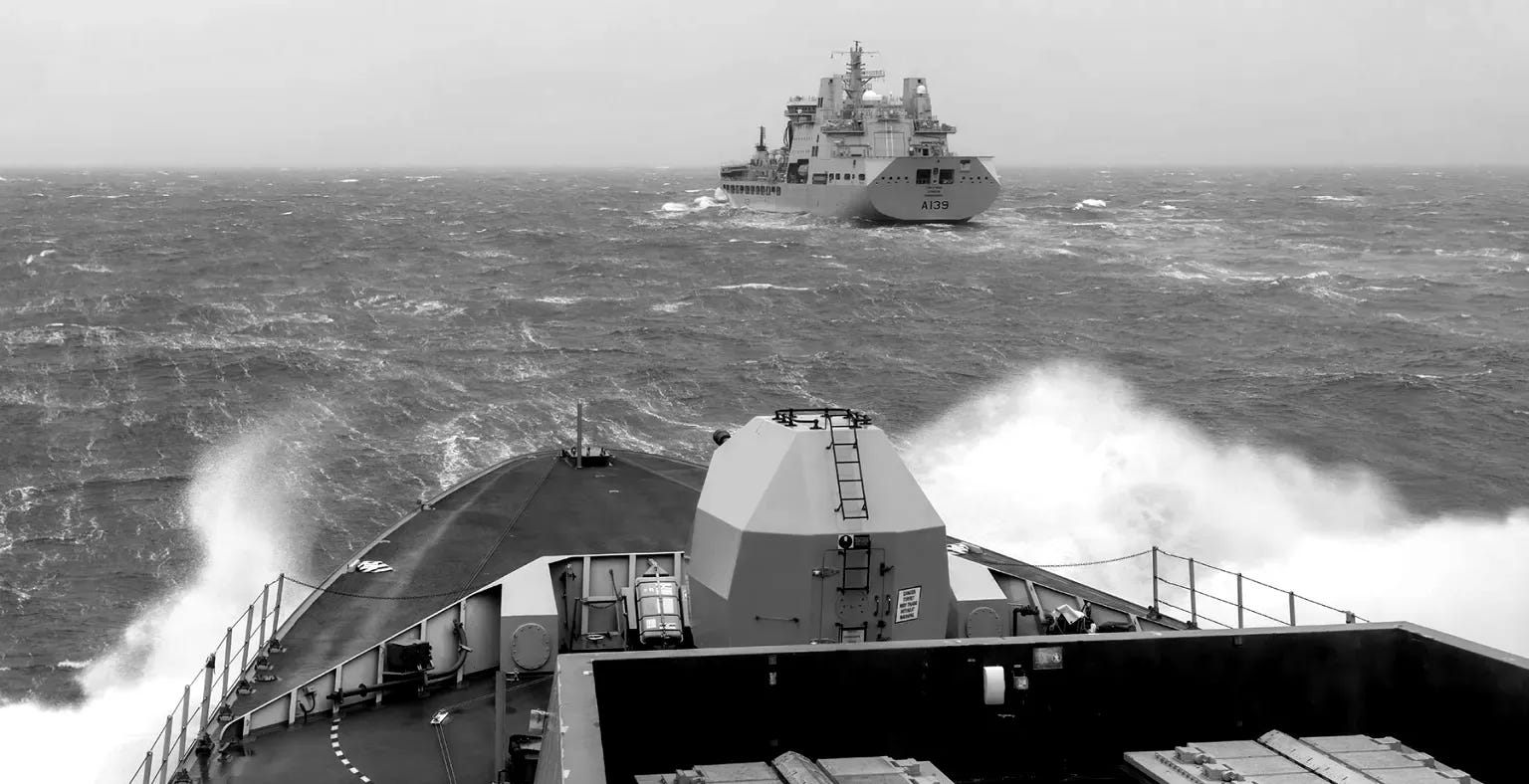
Missiles fly over the Middle East, drones test defences, and warships arrive late, stretched thin and facing public criticism. These familiar headlines bring equally familiar questions about readiness, fleet size, and whether the UK has a navy fit for today. Some criticism is fair, but much of it is just noise or misses the real issues.
While most people are still focused on the Gulf, the Royal Navy has already shifted its main focus to the north. This is not a choice, but a necessary strategic change.
The Optics of Strain
Recent Gulf tensions have exposed an uncomfortable reality.
When a crisis happens, the UK chooses where to send its forces and manages risk carefully, rather than sending overwhelming naval power. To many observers, this approach often looks fragile.
Discussions often focus on a single advanced air defence destroyer, but the real picture is broader. Margins are thinner, there are fewer ships, more commitments, and adversaries are more flexible and less bound by old rules.
The real issue is that the Royal Navy is no longer built to dominate several regions at once. Instead, it has to choose its priorities.
The Quiet Planned Shift
This shift toward prioritising is not something in the future; it is already happening.
The North Atlantic, High North, and Baltic are now at the heart of UK naval strategy. Protecting undersea infrastructure is a key task. Securing reinforcement routes and making sure the continuous at-sea deterrent survives are also central to the mission.
This thinking is behind the Atlantic Bastion concept. It uses a layered network of sensors, uncrewed systems, and crewed ships. The goal is to keep watch at all times and limit what enemy submarines can do.
This same logic shapes the Hybrid Navy. This force unites traditional warships with autonomous systems and achieves scale through systems, not just hull numbers. These principles are now leading to bigger changes, such as the creation of the Joint Expeditionary Force (JEF).
Why JEF Matters Now
JEF is often described politely. A UK-led grouping of northern European nations. High readiness. NATO-aligned. Yet this view ignores JEF’s core significance. JEF is becoming the operational answer to a structural problem.
The Royal Navy cannot build up enough strength on its own. It cannot keep up operations in the North Atlantic, Baltic, and High North while also meeting global commitments. More ships would help, but they take decades to build.
Therefore, the solution moves in a different direction. Treat allied navies as part of a single operational system. A Hybrid JEF Navy is not a fleet in the traditional sense. It is a network.
UK, Norwegian, Danish, Dutch and Baltic forces operating as a continuous layer
Autonomous systems extending reach and persistence
Shared data building a common operational picture
Civilian and commercial infrastructure folded into the defensive architecture
This is fundamentally different from coalition warfare, which only comes together during a crisis.
It is designed to exist before the crisis.
In simple terms, it is the Atlantic Bastion made multinational.
Sweden and the Expansion of the Northern System
The recent visit by the Royal Navy’s First Sea Lord, Sir Gwyn Jenkins, to Sweden underlines how serious this change has become. This was not a routine engagement. It was about alignment.
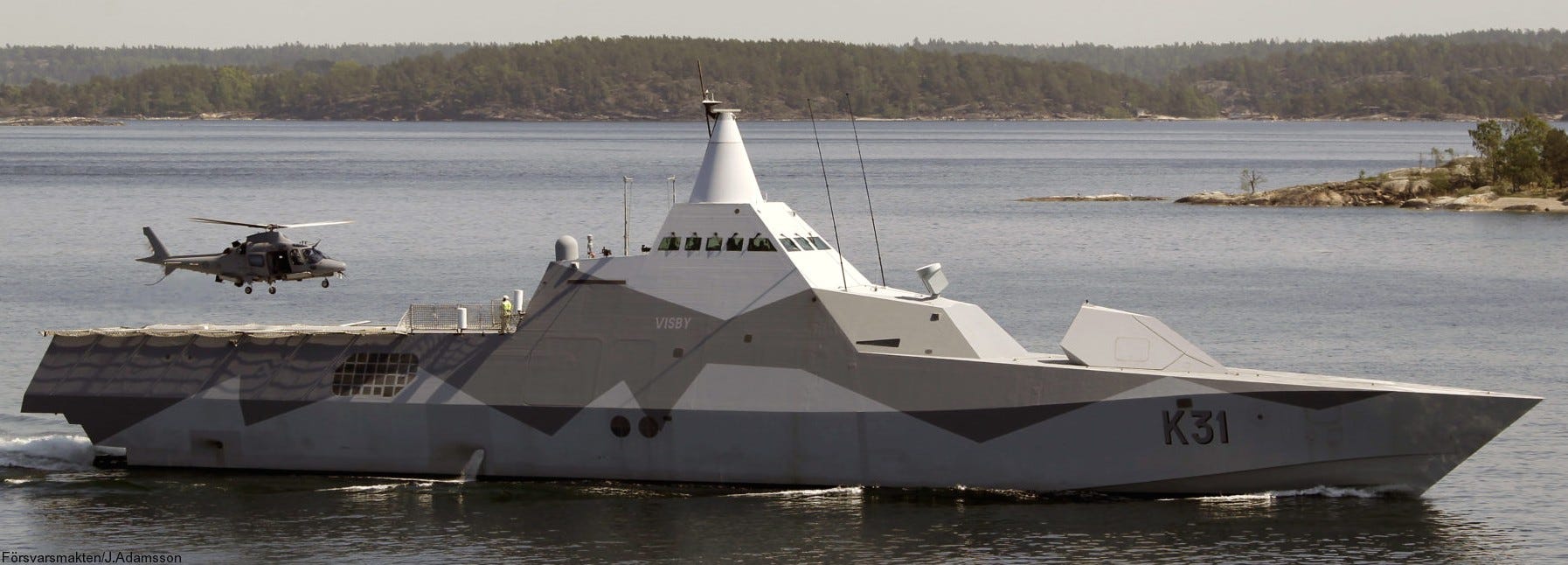
Now that Sweden is a NATO member, the geography of the challenge has changed. Sweden is already closely involved in JEF, making the Baltic no longer a secondary area. It is now part of the same operational system as the North Atlantic and the High North.
That has real consequences.
Swedish undersea warfare capability feeds directly into the wider detection network.
Baltic choke points link to Atlantic reinforcement routes
Northern European navies move from partners to components of a shared battlespace.
What is emerging is not simply cooperation, but integration. A maritime system stretching from the Baltic to the GIUK gap, designed to operate as one. The First Sea Lord’s recent presence in Sweden is a signal of intent. The UK is not just participating in that system. It is trying to shape it.
From Presence to Persistence
This change is reshaping what naval power means. For years, just being present was enough, a ship on station, visible and sending a message. Now, what matters is staying power. episodic deployment, but continuous sensing. Not national awareness, but joint understanding.
This reflects the threat.
Russian submarine activity, seabed warfare, and grey-zone attacks on infrastructure are ongoing problems. These cannot be handled off and on. They require constant attention over wide areas.
But keeping this level of awareness is expensive. That is why the approach is changing. Autonomous systems help extend reach, allies add strength, and networks bring everything together.
The Reality Beneath the Concept
The direction is clear and the concept makes sense. Still, there are real challenges when it comes to putting it into practice.
1. Command and Control at Speed
A multinational, hybrid force depends on data.
It’s not just about collecting data. SNot just collecting it, but sharing it, trusting it, and acting on it quickly matter too.
This is not simply a technical challenge. It is operational and political.
Who owns the data?
Who makes the decision?
How fast can that decision be made across nations?
The ambition is a common operational picture.
The risk is a fragmented one.
And in a fight defined by speed, fragmentation is failure.
2. Detection Is Not Deterrence
The Atlantic Bastion concept relies heavily on persistent surveillance.
It assumes that knowing where the enemy is and limiting their movement helps deter them.
That is true.
But it is not enough.
Just spotting the enemy does not guarantee deterrence. An adversary might accept being seen if they can still reach their goal or cause problems elsewhere.
A network that sees everything but cannot respond decisively risks becoming passive.
For JEF, this raises a hard question.
Where does the consequence sit?
3. Industry and Speed
The Hybrid Navy depends on swift adaptation.
Software-defined capability. Autonomous systems. Iteration in contact.
Prototype warfare means fielding early, learningThis is consistent with the idea of prototype warfare. Field early, learn fast, and refine through use. Do not waitAvoid waiting for perfection.
But this requires a different mindset.
Less certainty. More speed. Greater tolerance of risk.
Without that shift, the concept will outpace the system designed to deliver it.
Back to the Gulf
ThisWhich brings us back to the start. Criticism of UKwhere we started. The criticism of UK military capability in the Gulf is not entirely misplaced. It reflects real constraints and trade-offs, but alsoreal trade-offs. But it also reflects an outdated expectation.
The Royal Navy is no longer built to be everywhere in force at all times. Instead, it is changing into something different.
A force that concentrates on a primary theatre.
That integrates allies into its core structure.
That uses autonomy to extend reach.
That builds deterrence through networks rather than platforms alone.
The Gulf still matters. It always will. But it is no longer the organising principle.
The Strategic Bet
The UK has made a bet.
By focusing on the North Atlantic and working closely with JEF, the UK aims to build enough strength, awareness, and deterrence to succeed where it matters most. Using a hybrid model helps make up for having fewer ships. Acting early should help shape the situation before any conflict starts.
It is a logical choice, but also a risky one. If integration fails, technology falls behind, or the enemy finds ways around the network, there will be little room to recover.
The Hard Truth
The criticism sparked by events in the Gulf points to a bigger change in naval strategy. It is not just about one deployment, but about a larger shift that is already happening. From ships to systems. From national force to integrated network. From presence to persistence.
The direction is clear.
The debate now is not about strategy.
It’s about whether the system can deliver it fast enough.
Further Reading
RUSI – The Atlantic Bastion (2025)
A foundational paper on the UK’s emerging northern strategy. Explains the layered sensor network, deterrence logic, and the limits of detection-only approaches.RUSI – Prototype Warfare in the Maritime Domain (2026)
Essential reading on how navies must adapt faster, fielding early capability and iterating in use. Directly relevant to the Hybrid Navy concept.Ministry of Defence – Strategic Defence Review 2025
Sets the “NATO First” direction and frames the shift toward the North Atlantic and integrated deterrence.NATO – JEF and Northern Flank Integration Briefings
Useful for understanding how JEF complements NATO force structure, particularly in the Baltic and High North.Navy Lookout – Analysis on Project CABOT and North Atlantic ASW
Clear, accessible breakdown of how the Royal Navy is approaching persistent ASW and seabed defence.UK Defence Journal – Coverage of Royal Navy readiness and deployments
Helpful for tracking the public narrative and criticism around fleet availability and operational strain.Maritime Journal – Autonomy at Sea Special Report (2026)
A useful industry view of how autonomy is evolving in practice, particularly around perception, machine vision, and human-machine teaming.