

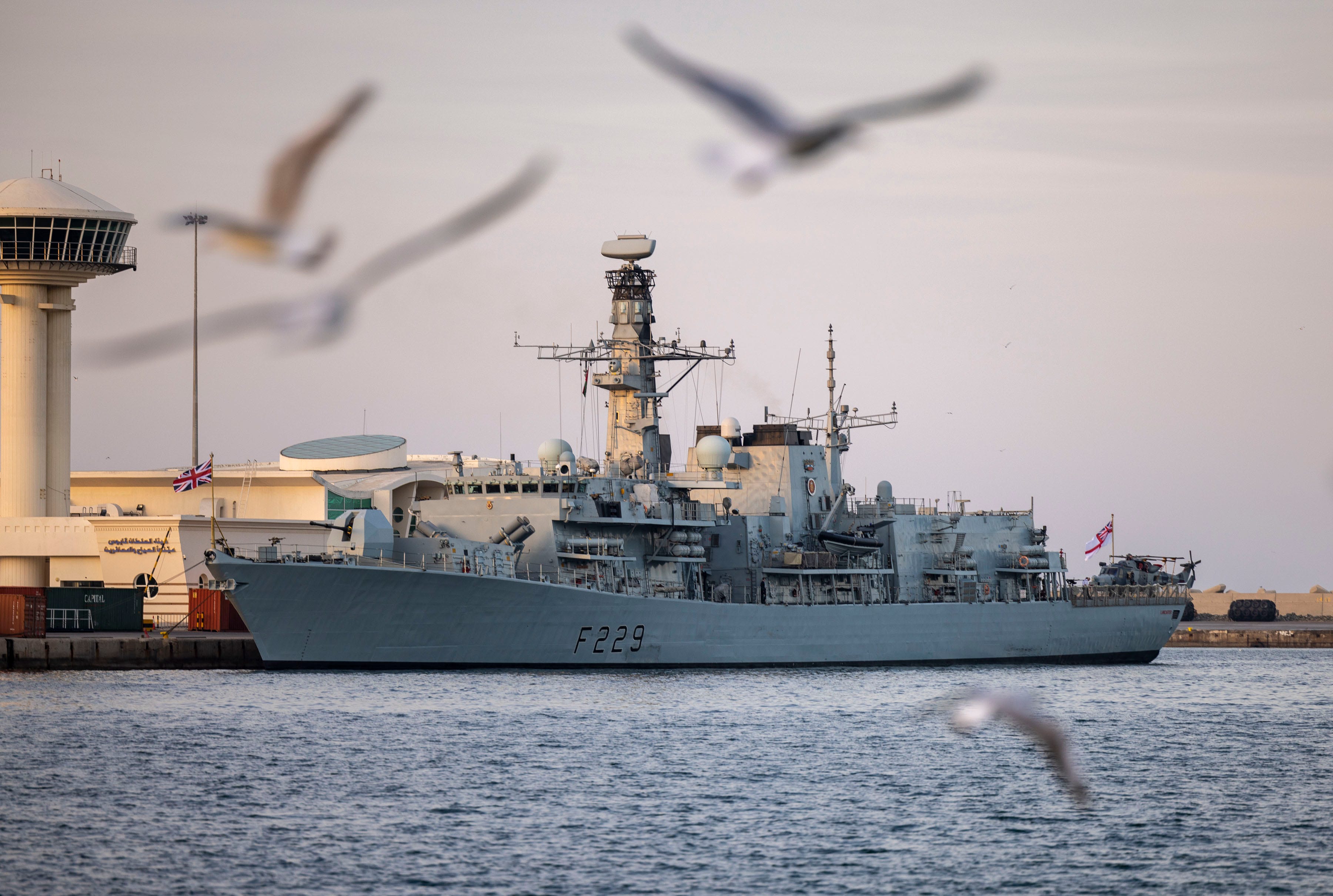
The Royal Navy concluded 2025 with a stark reality: HMS Lancaster will not be returning home. Instead, she will be decommissioned in Bahrain, marking the end of her 35 years of service far from the UK. For many, this was merely a footnote. However, for those of us who served on HMS Norfolk, the first Type 23, it meant much more. A class of ship that I helped pioneer is coming to an end, not in a triumphant ceremony in Portsmouth, but quietly overseas.
This situation raises a fundamental question that lies at the heart of the Future Navy’s analysis: How far can new technology take us if the number of actual ships continues to decline?
Lancaster: proving the future while living the past
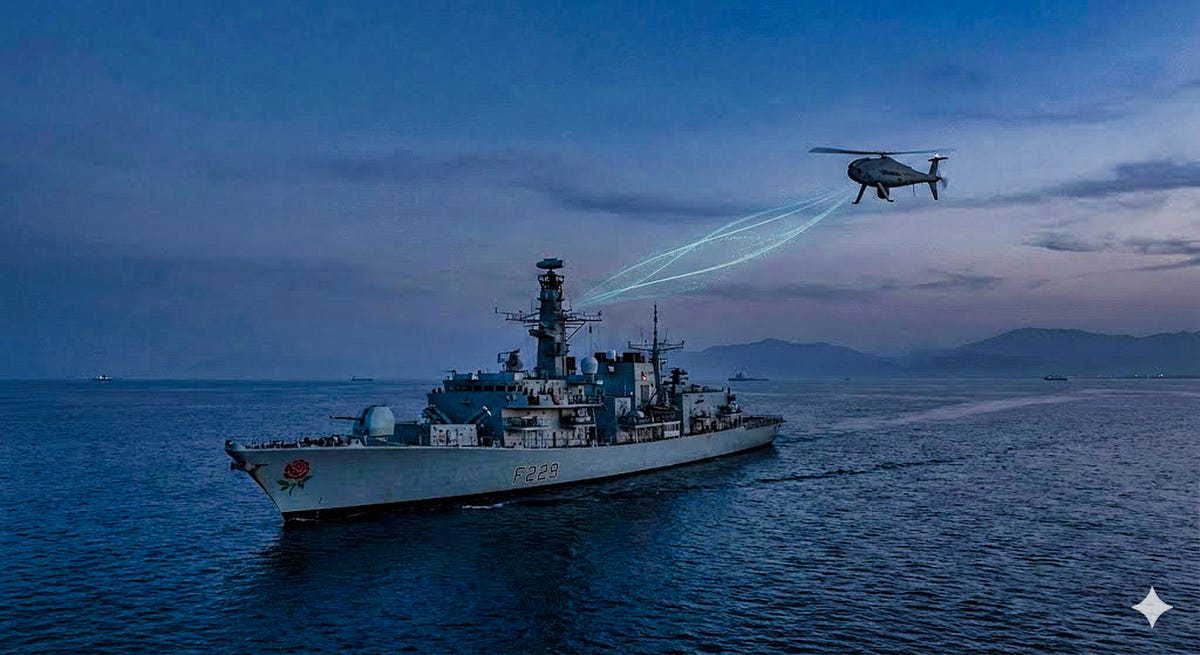
Even in her final months, Lancaster was being upgraded.
She became the only frigate fitted to integrate the Peregrine RWUAS, a rotary-wing autonomous aircraft designed to extend a ship’s eyes and reach. With two Peregrines embarked, she delivered results immediately:
A counter-narcotics interception in March 2025 was based entirely on drone-collected intelligence.
No theory.
No concept slide.
A real operational effect, delivered by a hybrid crewed–uncrewed team. It was Lancaster showing the Navy the future it says it wants. And then she left service. A symbolism that’s hard to miss.
From Norfolk to now: some truths don’t change.
When I served on Norfolk, the Type 23 story felt like future-proofing.
Lean manning, modern sensors, strong ASW pedigree. But even then, the tension was obvious: Technology evolves — but a ship can still only be in one place at a time. For 30 years, the RN has repeated a familiar pattern:
A new system arrives. We’re told “this reduces the need for hulls.” The fleet shrinks again. Worldwide tasking doesn’t.
We discover the geometry hasn’t changed. Lancaster’s distant retirement is not a failure of technology. It’s a failure of mass.
2025: a fundamental change in tone — but built on thin ice
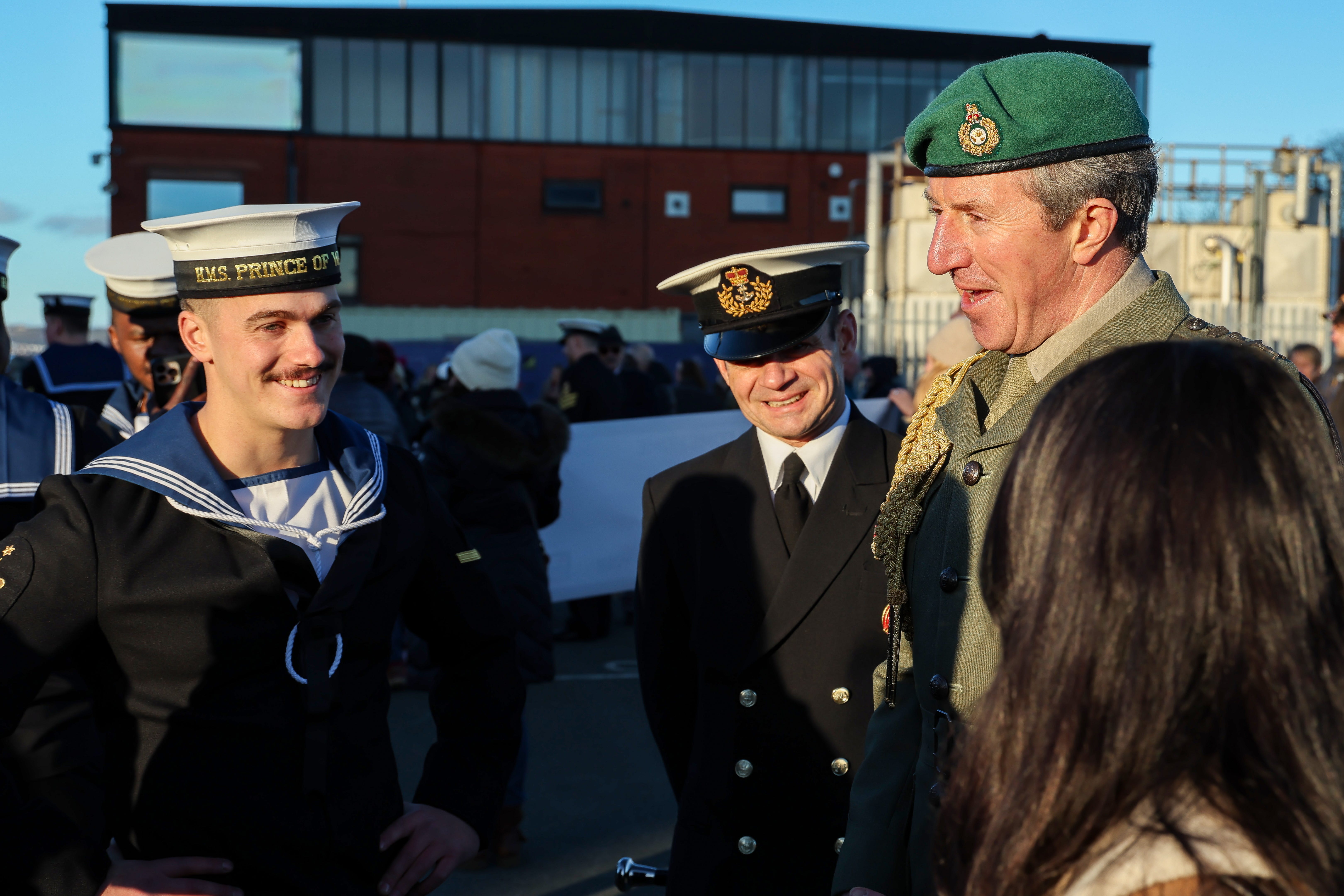
What makes 2025 interesting is that, for once, the rhetoric at the top has shifted. General Sir Gwyn Jenkins, the new First Sea Lord, isn’t pretending autonomy alone can fix things. His direction is stripped of illusion:
100 days to produce a real warfighting plan.
4 years to regain credible combat readiness.
2 years to put uncrewed mass to sea with the surface fleet.
5 years to build a hybrid carrier air wing.
This is not about a sci-fi nav, it’s about a usable one.
Fix the submarines first.
His first act — a Submarine Maintenance Recovery Plan — is brutally pragmatic: if the boats don’t sail, nothing else matters.
Restore mass, fast
His second act pushes hard on hybrid assets to buy back numbers quickly: uncrewed escorts, persistent drones, and the headline move — a loyal wingman for the carriers.
Project VANQUISH: exciting, important — but not a hull
VANQUISH is bold: a jet-powered, autonomous aircraft launched from a ski-jump, flying alongside F-35Bs. A demonstrator is expected in 2026.
It’s precisely the kind of capability Future Navy supports:
extends reach
adds resilience
absorbs risk
multiplies a small fast-jet force
Here’s the unvarnished truth: it does not add a single extra frigate or destroyer to the fleet. While a loyal wingman can enhance combat capabilities, it cannot enforce sanctions, escort merchant ships, or provide visibility where a flag needs to be flown. It also cannot operate effectively across two oceans. This is the critical distinction:
Technology enhances mass; it does not replace mass.
Every time we confuse the two, we recreate the same cycle that led to Lancaster’s current situation. The hybrid fleet concept only works if there is a proper fleet in place. Jenkins’ plan represents the Navy’s strongest strategic direction in years. However, its success relies on a foundation that remains alarmingly fragile.
A navy with:
6 destroyers
7 frigates
2 Aircraft Carriers (incomplete air wing)
Ageing auxiliaries
Delayed Type 26/31 builds
An overstretched submarine fleet
Cannot rely on “innovation” alone to overcome fundamental limitations.
HMS Lancaster demonstrated that hybrid operations can be effective. However, her retirement highlighted our diminishing number of hulls to support such operations. The future Navy must embrace autonomy, AI, digital twins, loyal wingmen, and uncrewed Lancasters, as these technologies expand the fleet. Nonetheless, they cannot replace actual ships. A hybrid navy still requires a strong ship presence.
Lancaster’s message for 2026
Lancaster’s final mission offered us a glimpse into the future, while her retirement served as a reminder of the fragility of the present. If Britain intends to maintain a fleet capable of real deterrence in the 2030s, the equation is straightforward:
Uncrewed vessels + crewed vessels = credible mass
Innovation + availability = usable power
A hybrid future + actual hulls = effective deterrence
As someone who witnessed the beginning of the Type 23 story onboard HMS Norfolk, watching it close with Lancaster feels both fitting and instructive.
A hybrid fleet is no longer a theory — it is arriving, and Jenkins has set the tempo for delivering it. But the lesson Lancaster leaves us is simple and uncomfortable:
new technology expands our power,
but only hulls give it somewhere to live.
If we fail to align the two, we risk repeating Lancaster’s ending — not as a one-off, but as a pattern.
And in a decade defined by competition, that is a luxury the Royal Navy cannot afford.