

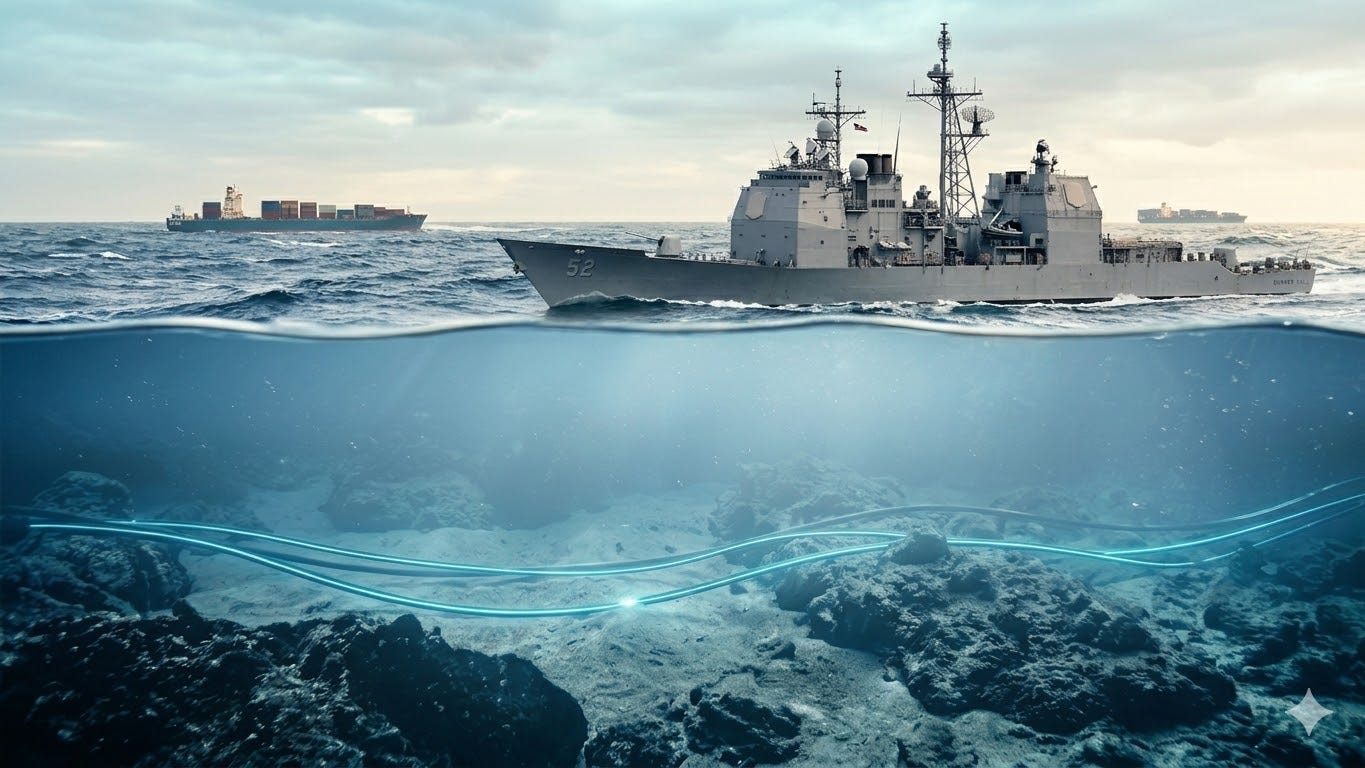
We keep returning to an old solution for a modern problem: send a warship, provide an escort, reassure the market. It is visible and decisive, in line with the traditional view of maritime security. But escorts do not truly secure trade. They never really did.
In constrained waters, presence matters. It always has. A well-run escort can deter, disrupt, and respond, thereby reducing risk for those moving through contested space. But it cannot remove that risk. Even at their best, escort operations rely on timing, detection, and a degree of luck. The geometry is unforgiving. The threat only needs to be right once, while the defender must be right every time. That was true decades ago, and it is even more true now.
What has changed is the nature of the threat itself. It is no longer singular or easily defined. Instead, it is layered, distributed, and often ambiguous. Uncrewed systems operate at the edge of detection, small and low-signature, blending into the background of an already crowded maritime environment. Surface vessels can appear indistinguishable from civilian traffic until the moment they are not. Mines remain as relevant as ever, cheap to deploy and disproportionately effective. Much of the targeting data that enables these threats does not even originate in the immediate battlespace. It is gathered, processed, and passed along from elsewhere, compressing decision-making into ever-shorter time windows and reducing clarity precisely when it is most needed.
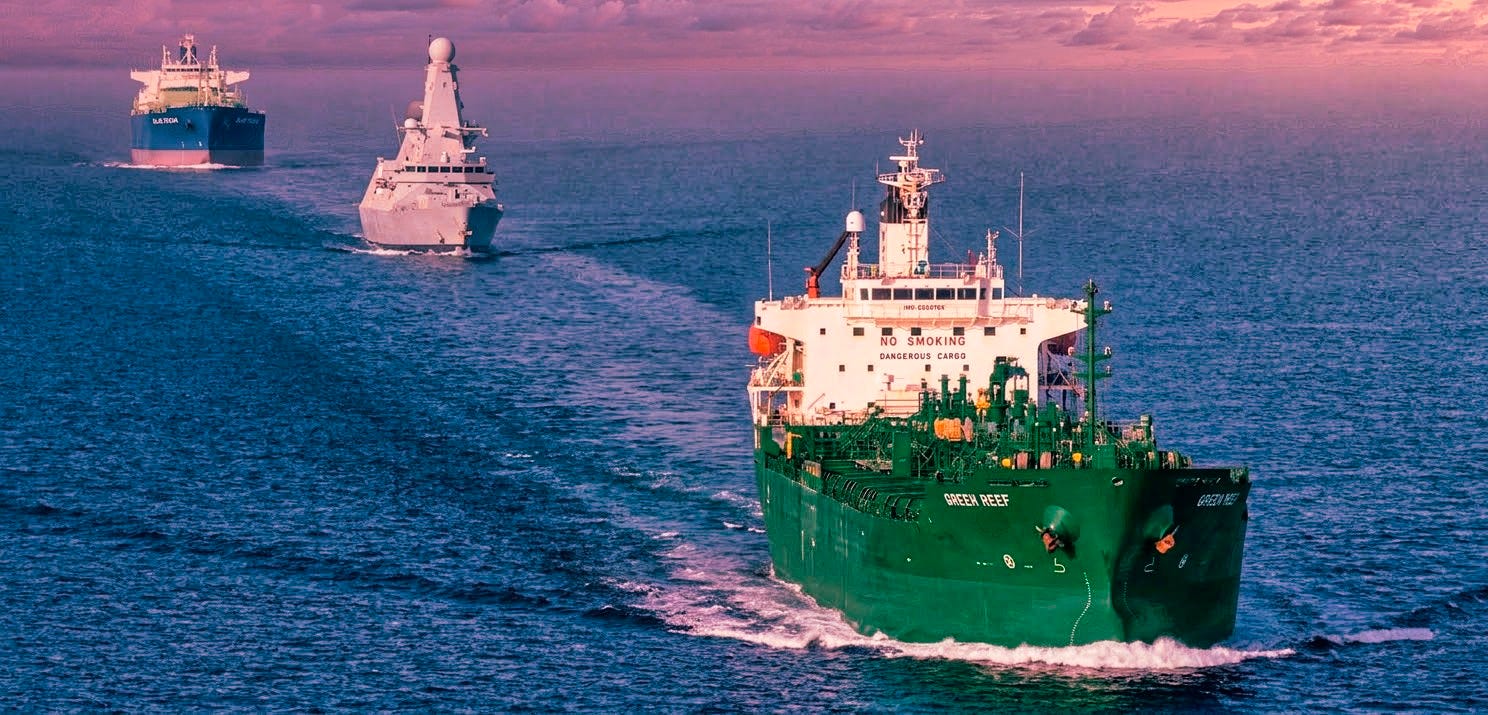
Against this, we continue to default to the idea of escort. Yet there is a harder truth that sits beneath this instinct. A handful of warships cannot scale to protect a global trading system. Thousands of vessels move through multiple choke points every day, carrying energy, goods, and raw materials that underpin the global economy. This is not a series of discrete events but a continuous flow. Navies underpin that system. They deter, reassure, and, when required, fight. But they do not, and cannot, provide persistent protection to every ship in every place at all times. That has never been their role, even if our language sometimes suggests otherwise.
What we are defending is also broader than we tend to acknowledge. Maritime security often centres on ships, cargo, and oil. Yet, the same seabed carries cables that make up the global economy’s nervous system. Financial transactions, cloud services, AI workloads, and daily communications all depend on infrastructure beneath shipping routes. These cables pass through the same choke points and face many of the same risks.
The current environment has begun to expose a weakness we have long assumed away. The problem goes beyond mere cable damage. If we constrain access for repair, cables may remain degraded for extended periods.
There is also a more uncomfortable development emerging. Multiple critical corridors are now under pressure simultaneously, not just for transit but also for maintenance and repair. The issue is no longer simply whether cables can be cut. It is whether they can be fixed in a timely manner at all. Much of the technology sector’s resilience has been built on logical redundancy. This assumes that physical access to infrastructure would remain available. That assumption is now under strain. When recovery depends on the same contested geography as the disruption, redundancy becomes far less effective than it appears on paper.
If those routes degrade or become inaccessible, recovery timelines can stretch from hours to weeks, possibly longer. Most have not yet fully absorbed this part of the problem. We do not secure individual ships as they move through contested waters. We secure a tightly coupled system of trade, data, and infrastructure that shares the same geography and, increasingly, the same vulnerabilities. When that system comes under pressure, it does not fail cleanly or predictably. It degrades in ways that challenge our ability to manage and recover.
Seen through that lens, the limits of a platform-centric approach become clearer. This is not an argument against naval power. Instead, it argues for broader thinking. We need a maritime security ecosystem that sees security as distributed, shared, and persistent—not concentrated in a few high-value assets.
In such a system, commercial vessels are not just passive participants. They become active nodes, contributing to awareness through behaviour and reporting. Persistent surveillance—including uncrewed systems above, on, and below the surface—extends presence beyond what crewed ships alone can achieve. Data fusion becomes central, with the operational picture shared across networks rather than held within a single operations room. Industry also has a role, as insurance frameworks, routing, and risk management shape behaviour in ways that naval presence alone cannot.
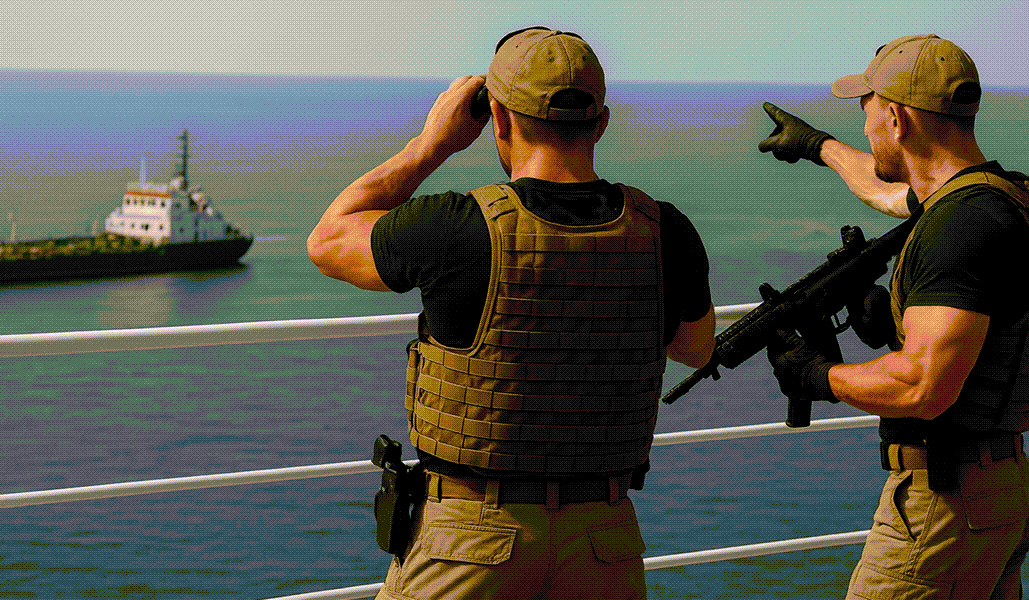
Within this ecosystem, naval forces remain essential, but their role continues to evolve. They now act as intervention nodes: concentrated, informed, and ready to deliver decisive effect when needed. A wider system supports them, providing context, awareness, and reach.
We are still, in many ways, organised around a model built for a different era. Then, threats were clearer, fewer, and easier to attribute. Presence could imply control. That model is now under strain. The scale, complexity, and interdependence of the modern system have outgrown it.
We do not secure a trillion-pound trading system with a handful of grey hulls. We secure it with a network. And at present, we have only partially formed that network.
The instinct to send ships is not wrong. It is a necessary part of the answer, but no longer sufficient on its own. The real question is whether we are prepared to build a system in which escorting is just one part of a broader maritime security approach.
Further Reading
RUSI – Atlantic Bastion and undersea infrastructure analysis
A strong foundation for understanding the strategic importance of subsea cables and the North Atlantic as contested space.NATO – Allied Underwater Battlespace Mission Network (AUWB-MN)
Emerging work on integrating crewed and uncrewed systems into a shared underwater operational network, highlighting the shift toward system-level thinking.U.S. Navy – CNO Fighting Instructions
A useful articulation of how modern naval power depends on people, infrastructure, and systems, not just platforms.International Cable Protection Committee – Submarine cable protection and resilience reports
Essential reading on the physical vulnerability and repair challenges of global cable infrastructure.Lloyd’s of London – Maritime risk and global trade reports
Provides the commercial perspective on how risk, insurance, and behaviour shape maritime security outcomes.Helsing – AI-enabled maritime sensing and autonomy
Insight into how distributed sensing and AI are reshaping awareness across the maritime domain.
As the drone threat develops, we'll need to arm merchant ships again. No doubt. Only decentralised defence will stand a chance.
Perhaps just like airforce thereshould be a dedicated underwater force