

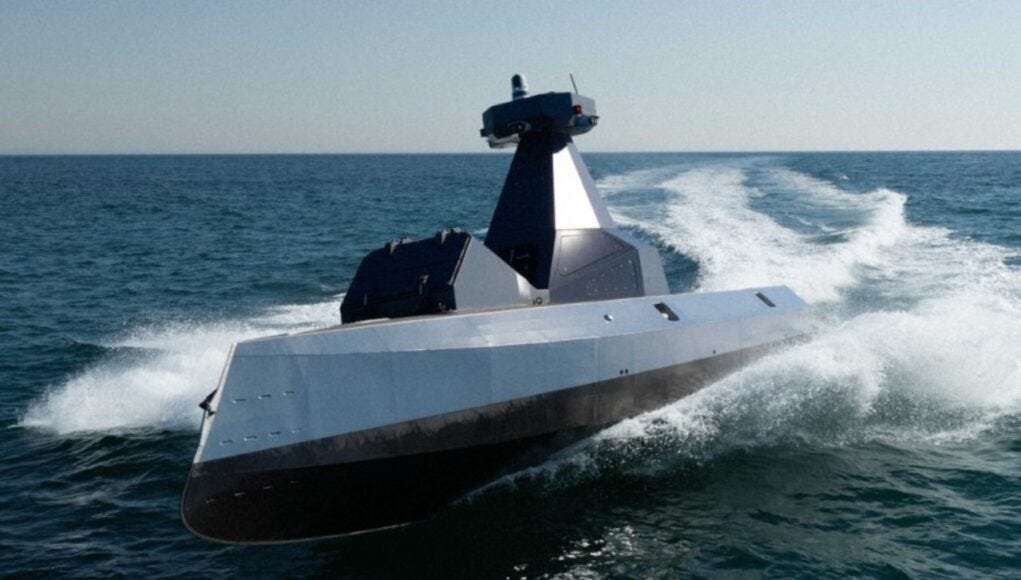
Firing a missile from an autonomous boat is impressive. But keeping four of them running through a Falklands winter, while working with a patrol ship, aircraft, shore headquarters, and military logistics, would teach us much more.
STARK’s new 12-metre Vanta 12 is another interesting addition to the fast-growing field of maritime autonomy. With its long endurance, high speed, surveillance sensors, and ability to carry weapons like Sea Venom, it raises questions about its place in the Royal Navy’s Hybrid Navy.
It’s tempting to look for a ship to carry the Vanta 12. There are already proposals for frigates to act as command vessels for autonomous groups, and the Type 31 has many features that could make it fit for that job. But the Vanta 12 points to another option. Maybe the first question isn’t which ship should carry it, but where the Royal Navy could run a few of these vessels long enough to see if the whole system works.
The Falkland Islands could be a very useful place to find out.
An operational environment, not a demonstration range.
One reason the Falklands are appealing is that much of the force structure is already in place.
British Forces South Atlantic Islands is headquartered at Mount Pleasant and provides the joint command structure for British military activity across the region. East Cove Military Port, a short distance away, is the primary maritime logistics node for British forces in the South Atlantic and the operational base for the Falkland Islands patrol vessel.
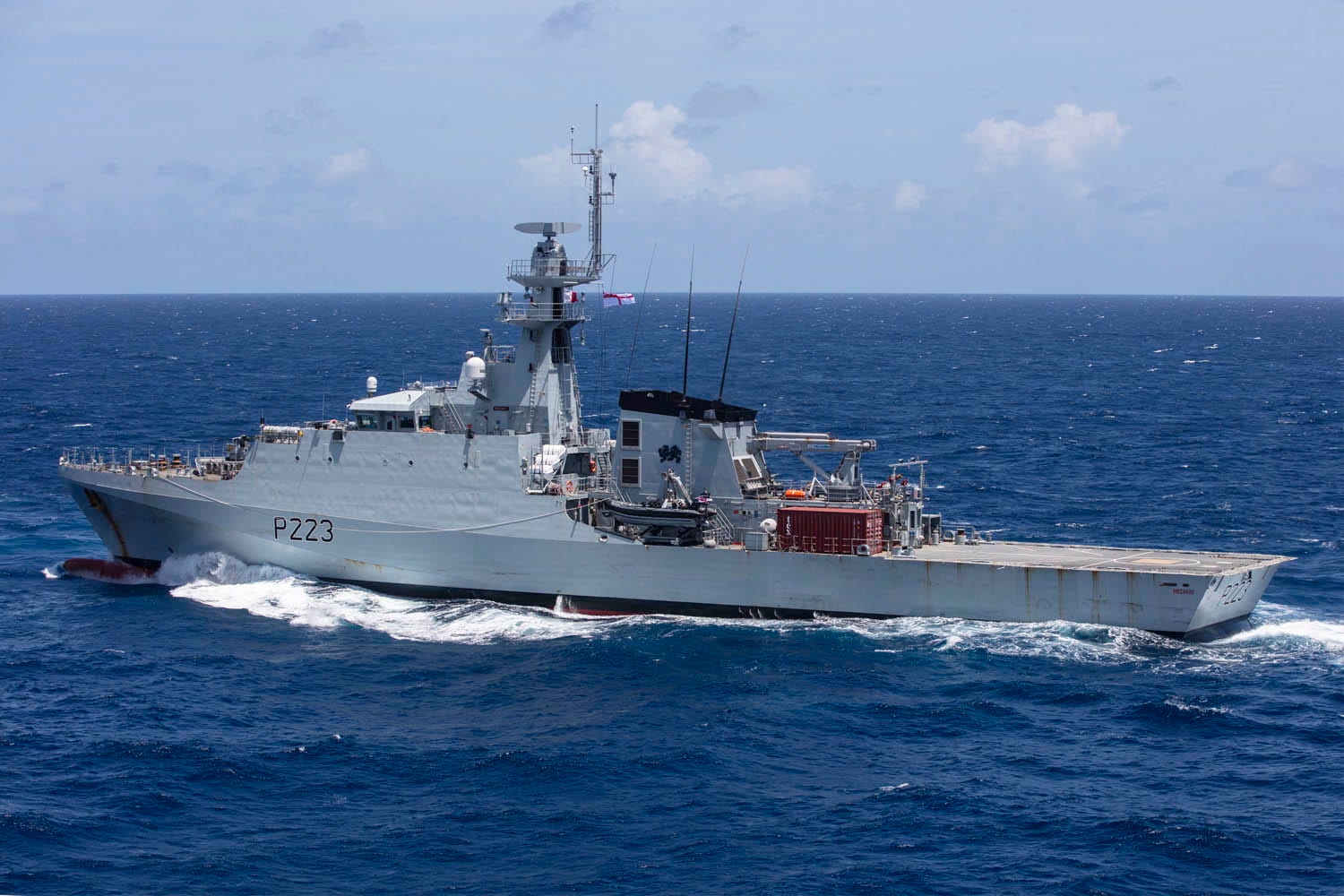
HMS Medway assumed the permanent Royal Navy role from HMS Forth in January 2026. During almost six years in the South Atlantic, Forth sailed 155,000 nautical miles, working with the RAF and Army while conducting fisheries protection, maritime security and wider patrol duties around the islands and South Georgia. That record demonstrates the value of the OPV, but it also illustrates the size of the task being placed on a single ship.
The wider force at Mount Pleasant already provides air defence, aviation, land forces, logistics and command infrastructure. This is therefore not an empty stretch of ocean into which an autonomous experiment would have to be inserted. It is a functioning joint operational environment carrying out a real mission every day.
That’s exactly why it’s such a good place to test this idea.
Right now, there’s a gap between what the surveillance system can spot and when it makes sense to send a crewed ship to check it out. An autonomous surface force could help fill that gap.
Adding an autonomous layer.
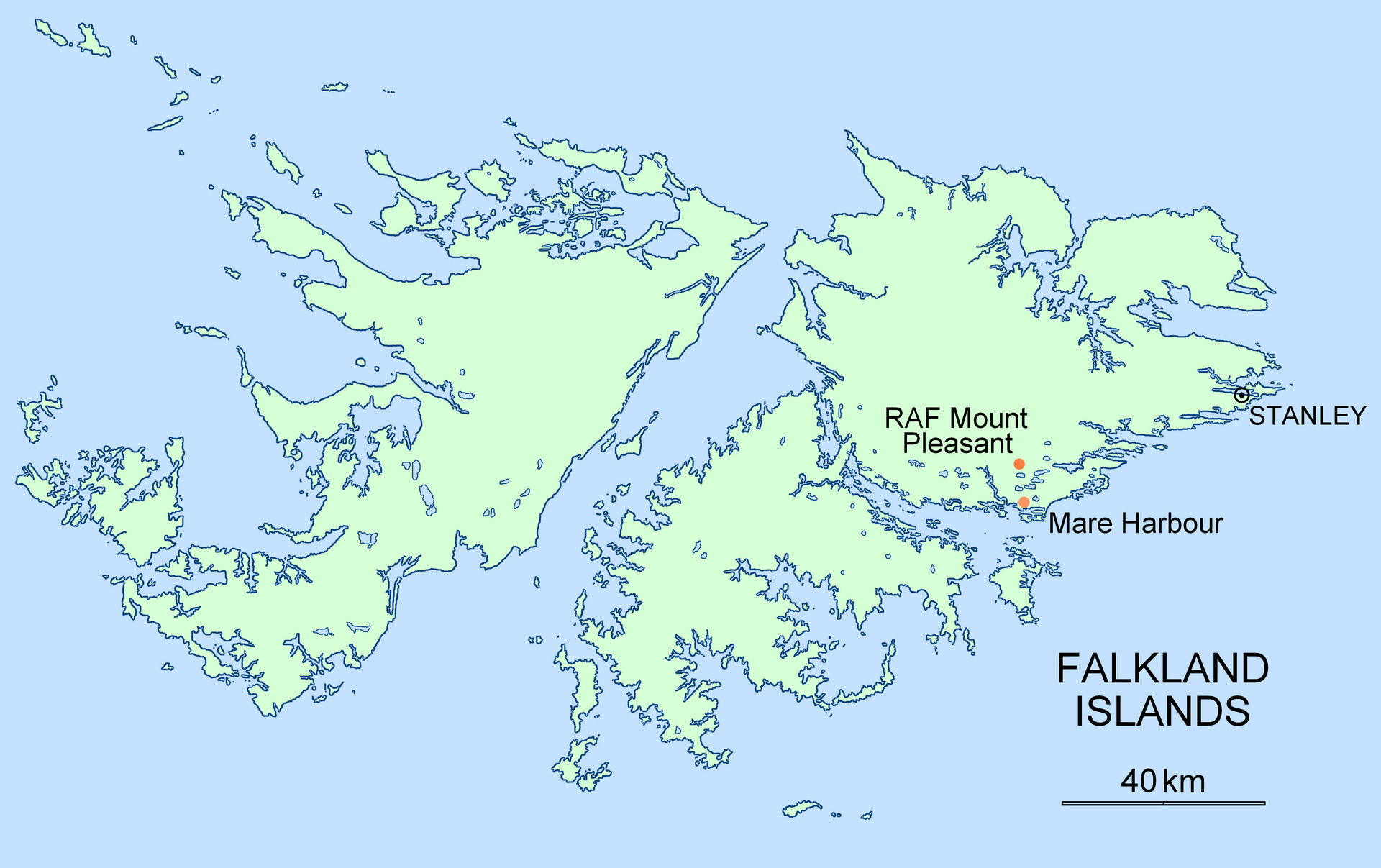
Picture four Vanta 12s based at East Cove Military Port (Mare Harbour). This isn’t a suggested force size, just a practical number to test the idea. Four is enough to keep operations going, rotate vessels for maintenance, and see if managing several autonomous platforms adds value or just creates more work.
I wouldn’t start by using them as missile boats.
Their main job at first should be surveillance and investigation. They could patrol certain areas, check out contacts, provide radar and camera information, and stay in places where it wouldn’t make sense to keep Medway all the time.
This wouldn’t mean four replacements for an OPV. HMS Medway can board ships, help out, use judgement at sea, and provide the visible presence that’s still important for maritime security. An autonomous craft can’t just copy those roles. But it could give another set of eyes, sometimes tens or even hundreds of miles from the patrol ship.
This would change how the ship is used. Instead of heading toward every contact, Medway could stay focused on its main job while an autonomous vessel checks things out. If something needs attention, the patrol ship can still respond. If not, it saves time and effort.
This is where the Hybrid Navy offers more than just putting drones on ships.
The force, not the ship, should control the autonomy.
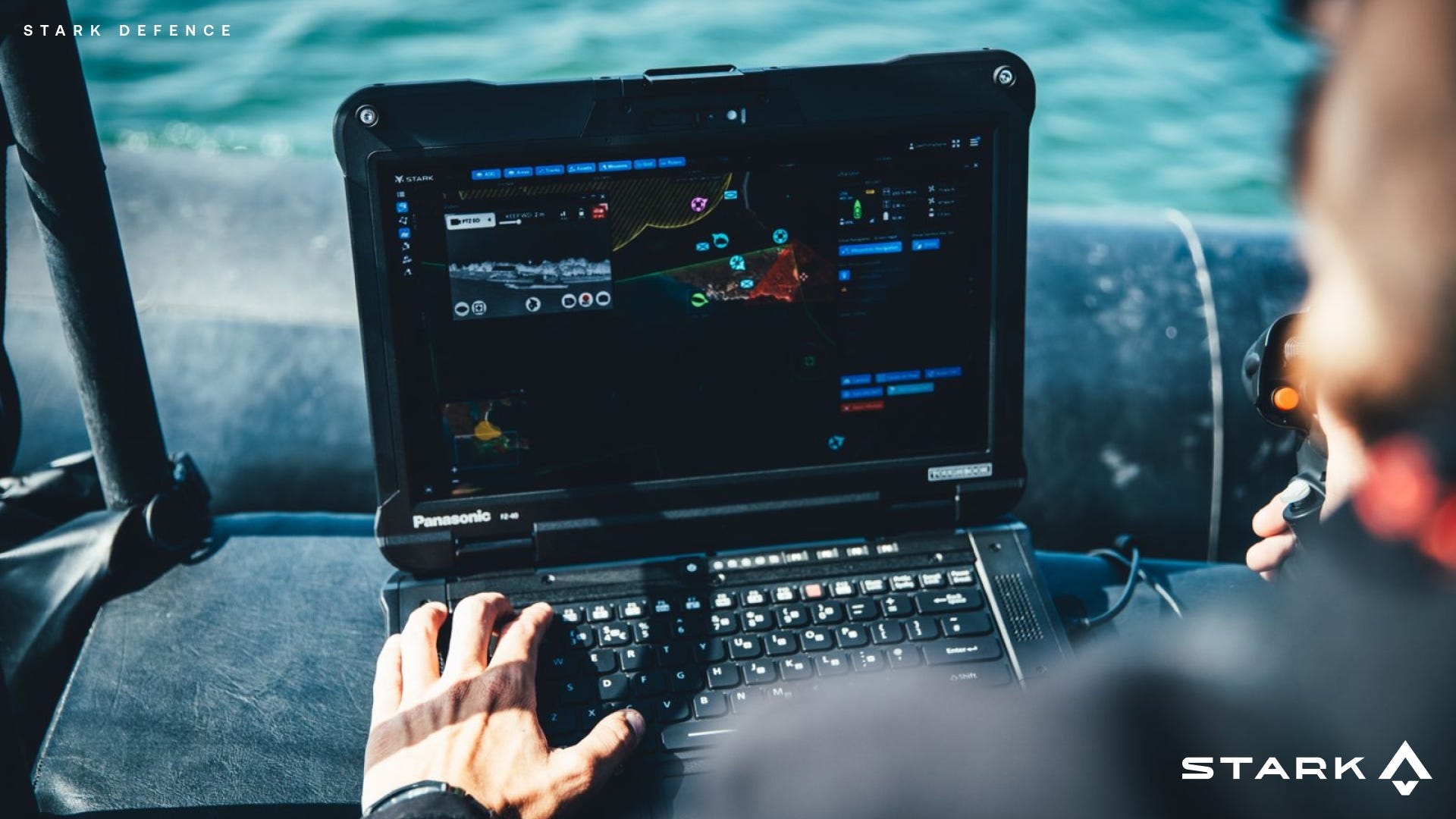
How the command is set up is just as important as the vessels themselves. I wouldn’t have HMS Medway always control the Vanta force. Instead, a small team ashore could be part of the BFSAI command, plan missions, check on the platforms, and bring their information into the bigger operational picture.
Medway would have access to the same information and could take control of individual vessels when needed. This difference is important because it challenges the old idea that an autonomous vessel always needs to be tied to a parent ship.
A Vanta could work for shore headquarters on one mission, help Medway on another, or even be assigned to a visiting warship during an exercise. It becomes a shared asset, not just equipment tied to one ship.
This could be one of the biggest changes autonomy brings. Sensors and weapons don’t have to be on the same platform as the person in charge. The ship becomes part of the network, not always its centre.
Then it’s time to push the limits and see what breaks.
The Falklands would let the Navy go beyond the usual conditions of a technology demo. The Royal Navy is already experimenting with mesh networks linking ships, drones and uncrewed systems. During Trident Sprint, data has been exchanged directly between nodes rather than relying on a single hub or continuous satellite connection. The Navy has also deliberately worked in disrupted, degraded, intermittent and low-bandwidth environments as it develops the digital foundations of the Hybrid Navy.
These ideas need to work outside of exercise conditions.
A deployment in the Falklands should make things tough on purpose. Sometimes GNSS should be unavailable, satellite links should be cut, bandwidth should be limited, and control should switch between Mount Pleasant and Medway. Sometimes, vessels should be taken off the network without warning.
The key question isn’t just if communications can be restored, but what the autonomous force does while they’re down.
Does a Vanta keep patrolling as ordered? Does it go to a set communications point? Does it return to East Cove? Can operators on shore predict what it will do before the link is lost?
These answers are important because a Hybrid Navy that always needs a network has a big weakness. If losing the network stops it from working, an enemy doesn’t have to sink the vessel—just cut it off. So the system needs to keep working, even when the perfect digital connection is gone.
The South Atlantic will test more than just software and networks.
There’s another reason the Falklands are a good test site: the environment will challenge the physical systems as much as the networks. Endurance claims can look impressive on paper. A vessel that can travel over a thousand miles and spend weeks at sea offers options a regular ship’s boat can’t.
But endurance isn’t the same as being ready for action.
The real questions are less glamorous. How often do sensors require cleaning or calibration? How much maintenance does an uncrewed vessel actually need? Which components suffer from saltwater exposure? How quickly do seals, bearings and machinery begin to cause problems? What spares have to be held at East Cove? What happens when a software update introduces a fault? How much engineering support is required for every day the vessel spends at sea?
The South Atlantic often exposes overly optimistic assumptions. Medway’s 2026 midwinter deployment to Tristan da Cunha covered more than 5,000 miles in conditions that included heavy South Atlantic seas. That is a rather different environment from a carefully controlled demonstration area.
That’s why one of the most valuable things to measure in a Falklands test is simple: out of every thirty days, how many days can a four-vessel autonomous force actually operate usefully?
That number would reflect reliability, weather, maintenance, communications, manpower, and logistics. It could tell us much more about the Hybrid Navy’s future than another successful missile test.
People need to be measured just as carefully as the technology.
Autonomy also brings a manpower puzzle that needs to be tested.
If four supposedly autonomous vessels require four sailors permanently sitting at consoles steering them, supported by engineers, mission commanders, sensor operators and communications specialists, we may simply have moved the crew ashore.
There might still be benefits in risk and endurance, but the Navy’s people problem may not be solved. The objective should be for a small team to oversee several autonomous systems, stepping in only when human judgement is needed, not controlling every move. It’s a practical opportunity to discover what that means in practice, and whether the Navy can do so in a way that is truly useful. If it can, the Hybrid Navy will have a stronger foundation than another demonstration could provide.
Can one operator genuinely supervise several vessels during routine operations? How much attention does each platform demand? What happens when two autonomous vessels encounter unexpected situations at the same time? How many engineers does the detachment really need, and how much specialist knowledge has to remain in the UK?
Most importantly, does adding autonomy lighten the workload for the current force, or just create another group for BFSAI to support? These are exactly the tough questions an operational trial should answer.
Weapons should come later.
I would only focus on weapons after navigation, communications, maintenance, manpower, and command arrangements are well understood.
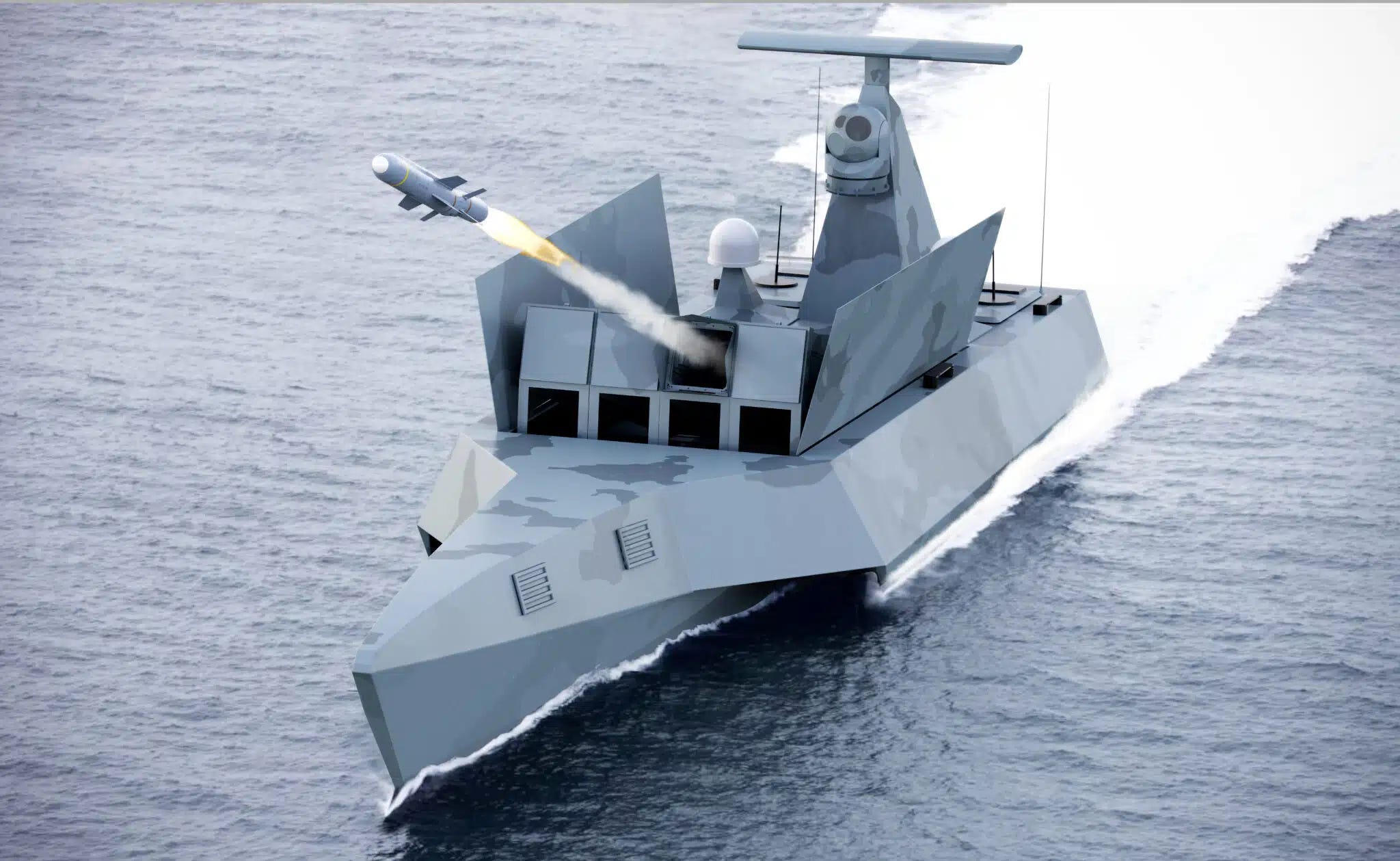
The attraction of Sea Venom is obvious. MBDA already describes the weapon as suitable for integration with uncrewed surface vehicles, and its secure two-way datalink allows operator-in-the-loop supervision, including target changes, aim-point refinement and mission abort.
This gives a real way to keep a human decision-maker involved in the engagement process. But just putting Sea Venom launchers on Vanta doesn’t automatically make it a useful weapon system.
The more important test is whether the whole process can work together.
One sensor might detect a contact, a Vanta might investigate it, and the system could correlate it with information from elsewhere in the force. Once its identity and behaviour were established, the commander could decide what response was appropriate. If an armed response were authorised under the applicable rules of engagement, the commander could then assign the most suitable platform as the effector.
That could be a Vanta, or it could be something else. The key point is that the sensor, the commander, and the weapon don’t all have to be on the same platform anymore. That’s a much bigger change than just building an unmanned missile boat.
Why the Falklands?
None of this means we have to act as if another conflict in the South Atlantic is bound to happen. The UK government’s stated position remains that its military presence is defensive and that it reviews and maintains force levels at what it considers appropriate for the defence of the islands.
So, the main reason for using the Falklands isn’t just to add another weapon to the defence. setup. It’s really about the unique features of the Falklands.
The UK already controls the military command structure, airfield and maritime support arrangements. East Cove provides an established logistics base. HMS Medway provides a permanent crewed maritime presence. The wider force continues to perform its normal operational responsibilities, whether an experiment is underway or not.
At the same time, the geography, distance from the UK, weather, and communication challenges make the Falklands tough enough to reveal weaknesses that might stay hidden in shorter tests closer to home.
Civilian shipping, environmental responsibilities, and standard rules governing safe maritime operations also apply. East Cove sits alongside environmentally sensitive areas, ensuring autonomous vessels would operate within real regulatory and safety constraints rather than inside an artificial military bubble.
It’s hard to recreate that mix on a training range. The Falklands are controlled enough for structured tests, but remote and operational enough to make the results matter.
The real goal isn’t just the South Atlantic.
The aim isn’t to set up a permanent drone flotilla in the Falklands just for its own sake. The real value is in what the Royal Navy can learn.
If a small group of autonomous vessels could be sustained from East Cove, commanded from ashore, handed across to HMS Medway when required and kept useful through South Atlantic weather and disrupted communications, almost every part of that experience could be applied elsewhere.
The Baltic presents different threats, but many of the same questions about distributed surveillance and command. The Gulf adds congestion and a more demanding threat environment. The GIUK gap and North Atlantic make communications, endurance and weather even more important. Eventually the same lessons would shape how autonomous systems operate alongside Type 31, Type 26 and whatever form the Common Command Vessel ultimately takes.
Failures would be just as important as successes.
If a supposedly persistent autonomous vessel spends half its time alongside waiting for maintenance, we need to know that. If six vessels require a large specialist team to operate them, we need to know that too. If the system stops being useful whenever satellite bandwidth disappears, it is better to discover that at East Cove than during a future confrontation.
That’s why I believe the Falklands could play a role in the Hybrid Navy that goes far beyond just defending the islands.
Find the weaknesses before combat does.
The Hybrid Navy is advancing fast. Autonomous vessels are getting better, networks are improving, and weapons are starting to move away from traditional crewed ships. But there’s a risk of confusing technical progress with being truly ready for operations.
The Royal Navy needs to do more than show that autonomous systems can navigate, sense, and shoot. It must also know what happens when they’re cold, wet, disconnected, low on spare parts, and run by tired people working alongside a force that still has its regular duties.
The Falklands offer exactly that kind of environment.
This reminds me of history. In 1982, the South Atlantic exposed weaknesses in equipment, logistics, communications, and assumptions—with harsh results. It showed that technology must survive not just enemy contact, but also distance, weather, exhaustion, and failure.
Over forty-four years later, we can use the same environment on purpose to find the Hybrid Navy’s weaknesses before someone else finds them in combat. So the real question isn’t just whether Vanta 12 could help defend the Falklands. It’s whether the Falklands can help us learn how to build a Hybrid Navy that really works.
Further Reading
Steve Prest, “Hybrid Navy: Building the Maritime Operating System”, RUSI, 24 August 2026
https://www.rusi.org/explore-our-research/publications/commentary/hybrid-navy-building-maritime-operating-systemCommander Edward Black, “Prototype Warfare within the Hybrid Navy Adventure”, RUSI, 19 March 2026
https://www.rusi.org/explore-our-research/publications/rusi-newsbrief/prototype-warfare-within-hybrid-navy-adventureRoyal Navy, “Technology demonstration boosts Royal Navy’s information warfare abilities”, 17 October 2025
https://www.royalnavy.mod.uk/news/2025/october/17/20251017-trident-sprintNATO CMRE, “Maritime Unmanned Systems Enablers”
https://www.cmre.nato.int/ar25/maritime-unmanned-systems-enablers/Royal Navy, “RFA Lyme Bay deploys with autonomous minehunting systems”, 25 May 2026
https://www.royalnavy.mod.uk/news/2026/may/25/20260525-lyme-bay-sails